I am a UK based professional gemstone supplier and GIA graduate gemologist. I specialise in rose cut cabochons as well as standard cabochons, and I have a carefully nurtured reputation for high quality. Currently I carry mainly semi-precious stones and I also have a range of pearls in white and natural colours; strings and half-drilled, round and keshi. This blog is attached to my website - www.joopygems.com - and is where you'll find information about new arrivals in my shop, discounts and offers, as well as an opportunity to leave comments and feedback.
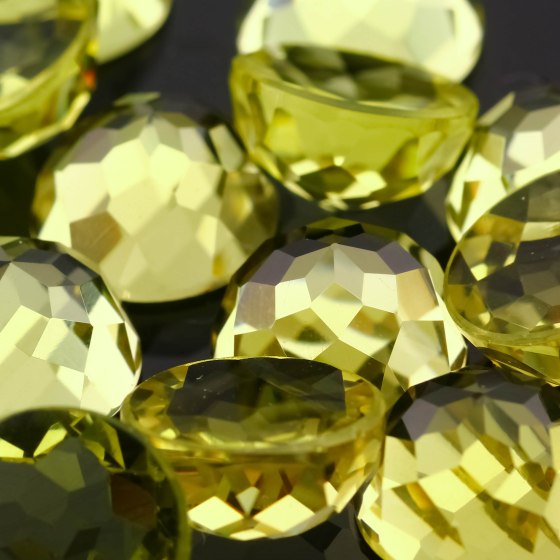
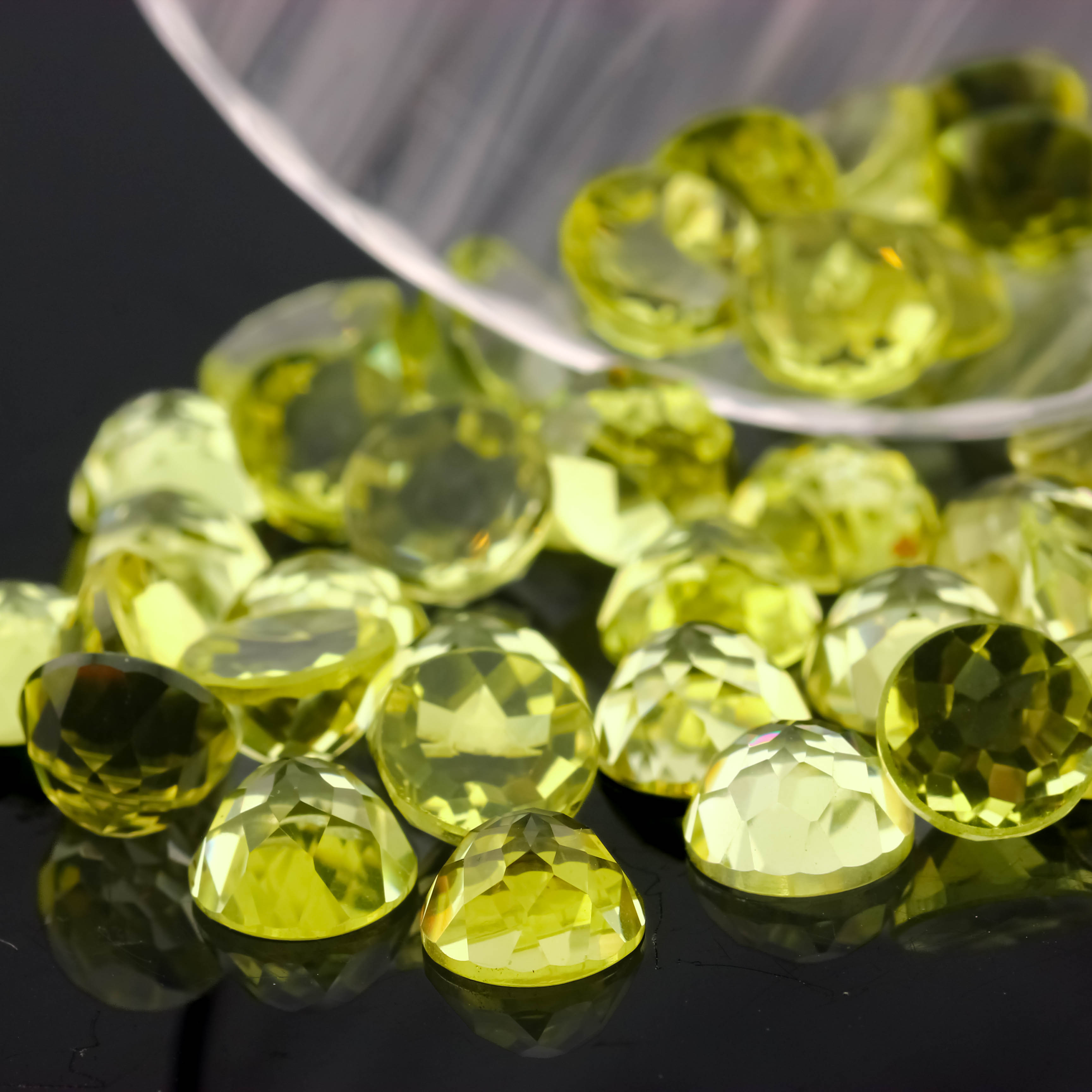
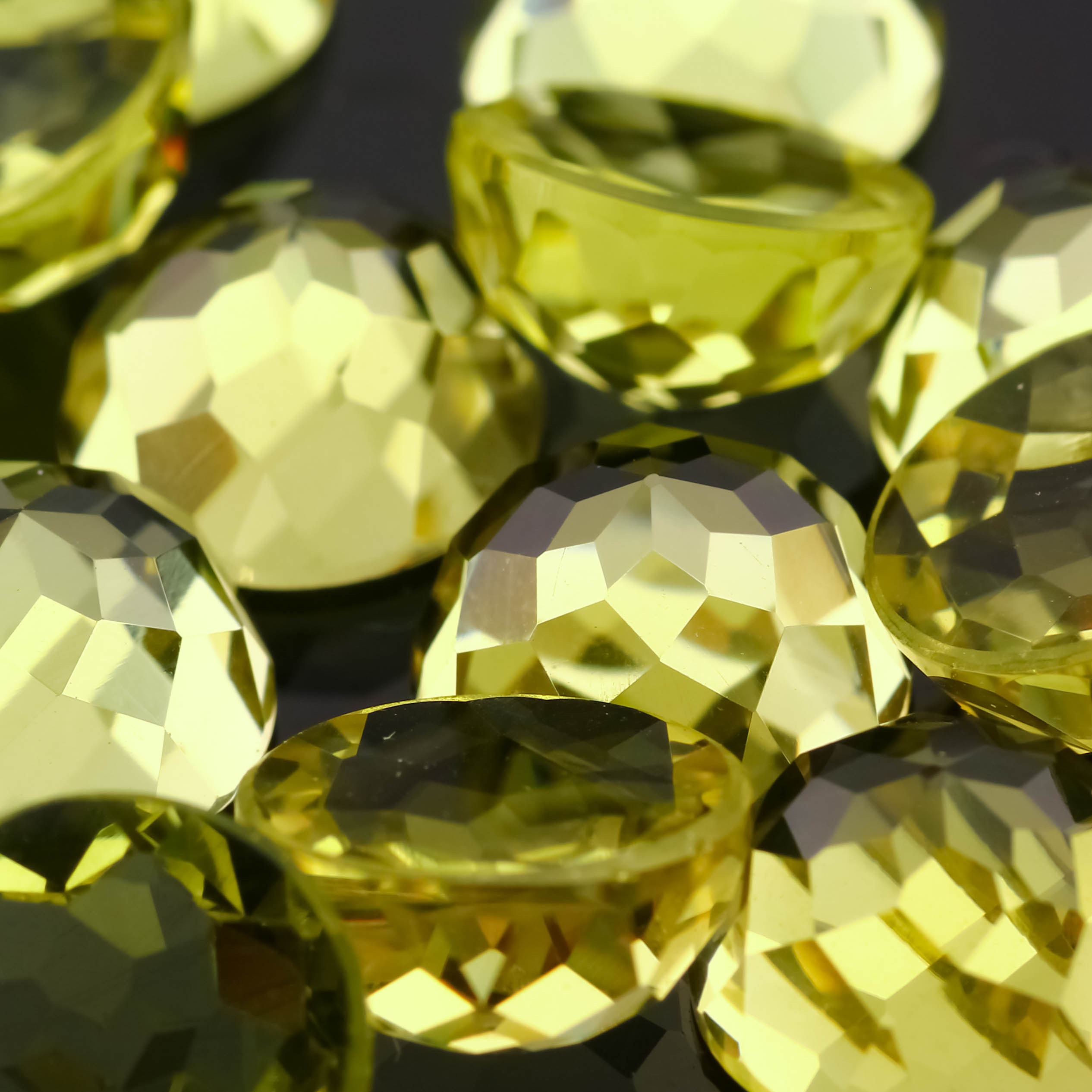
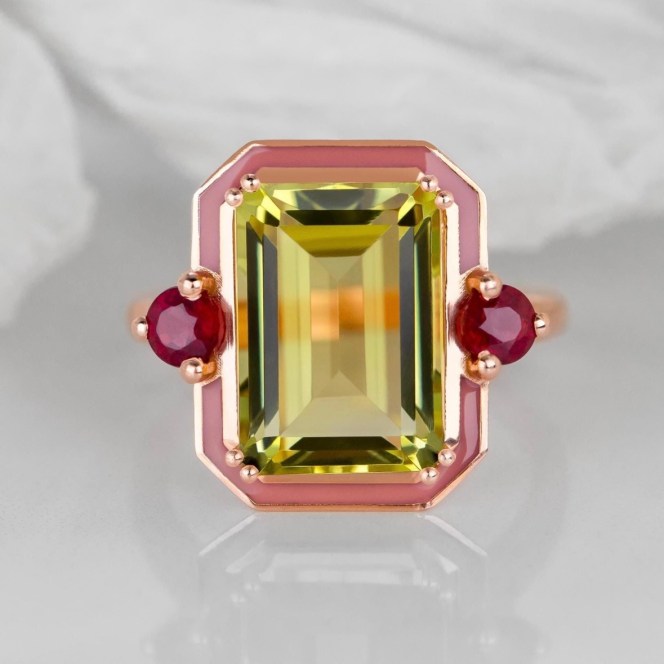
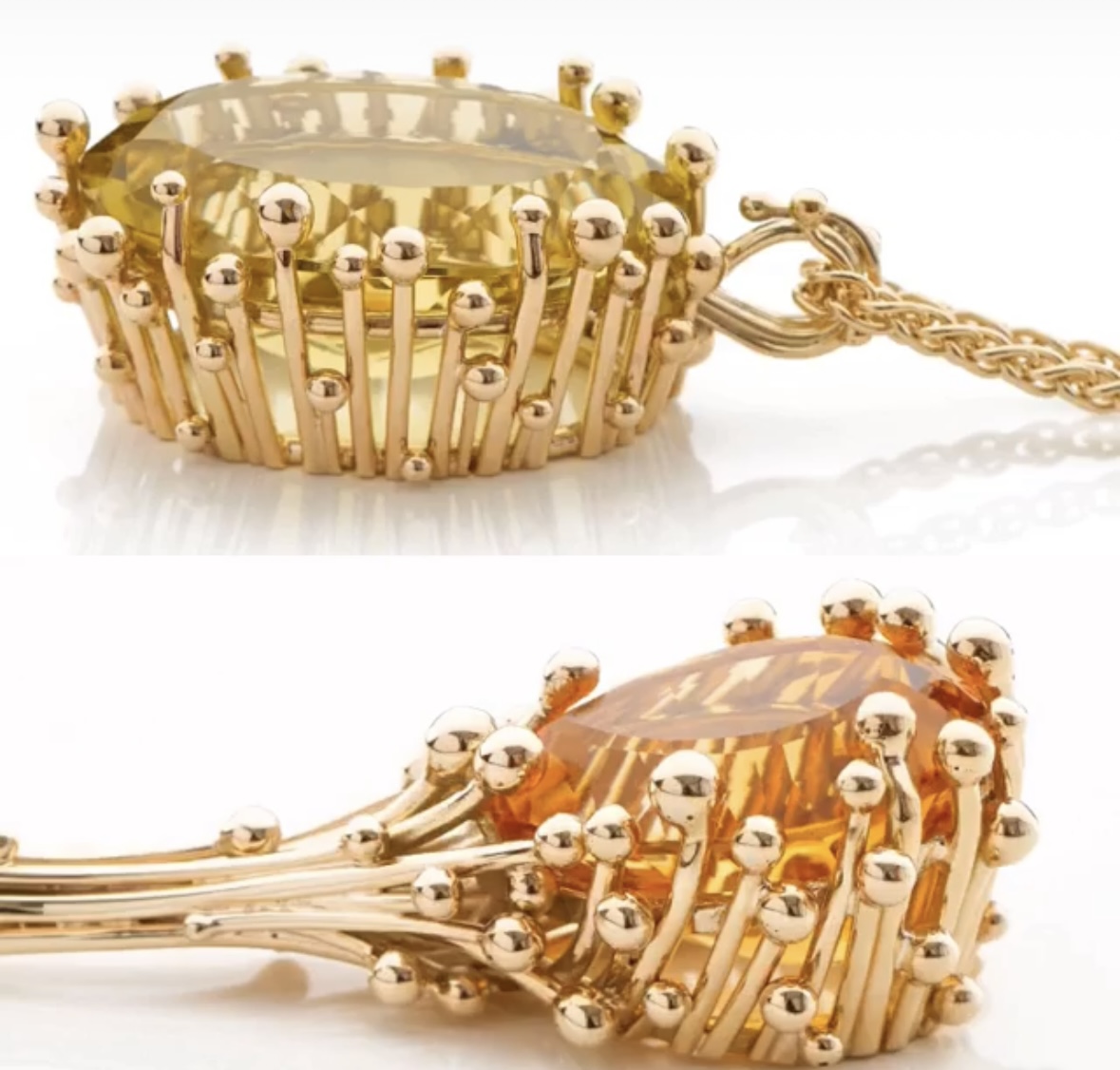
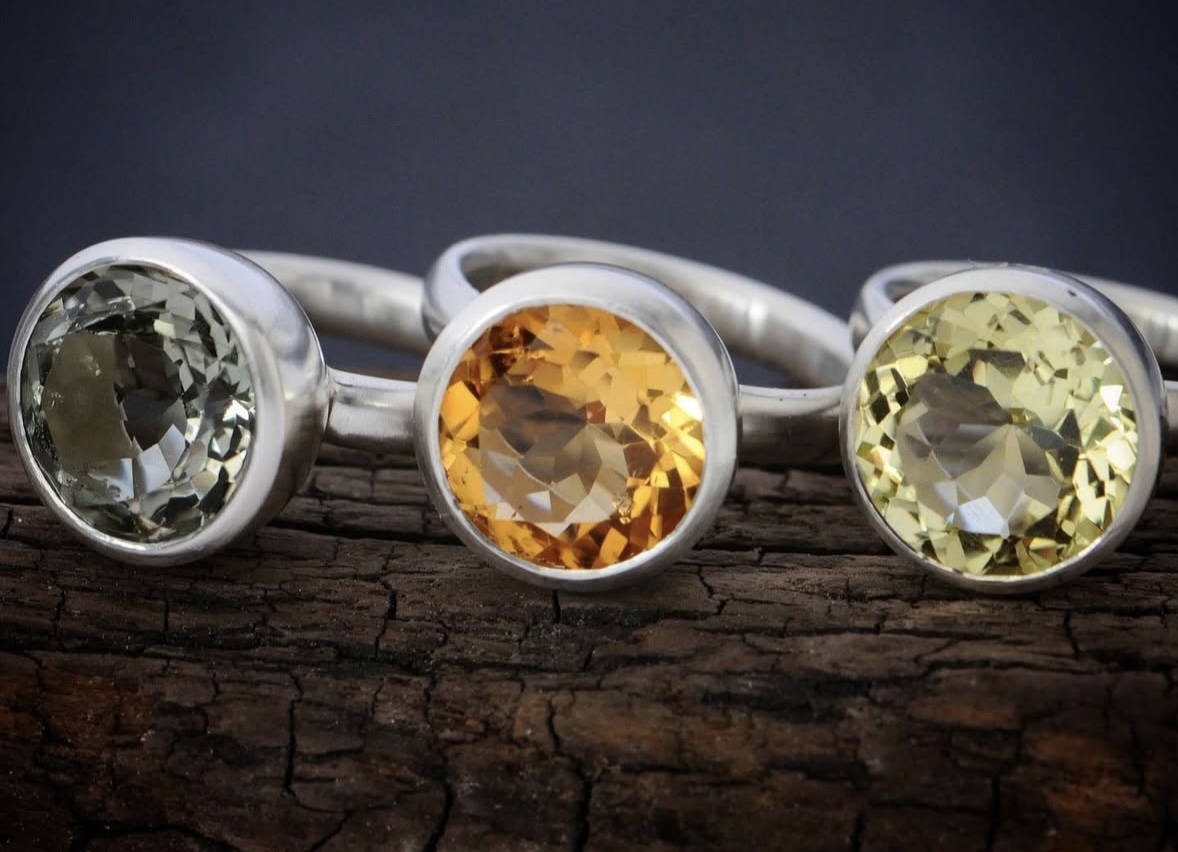
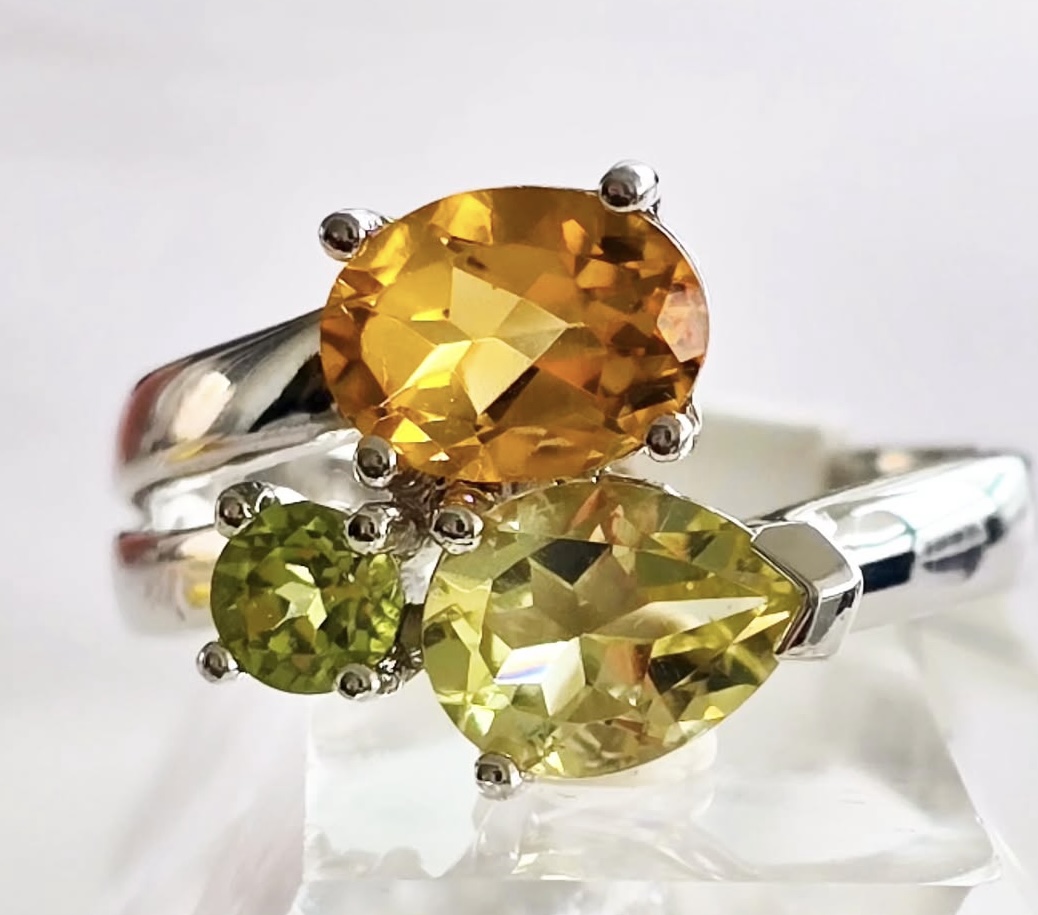
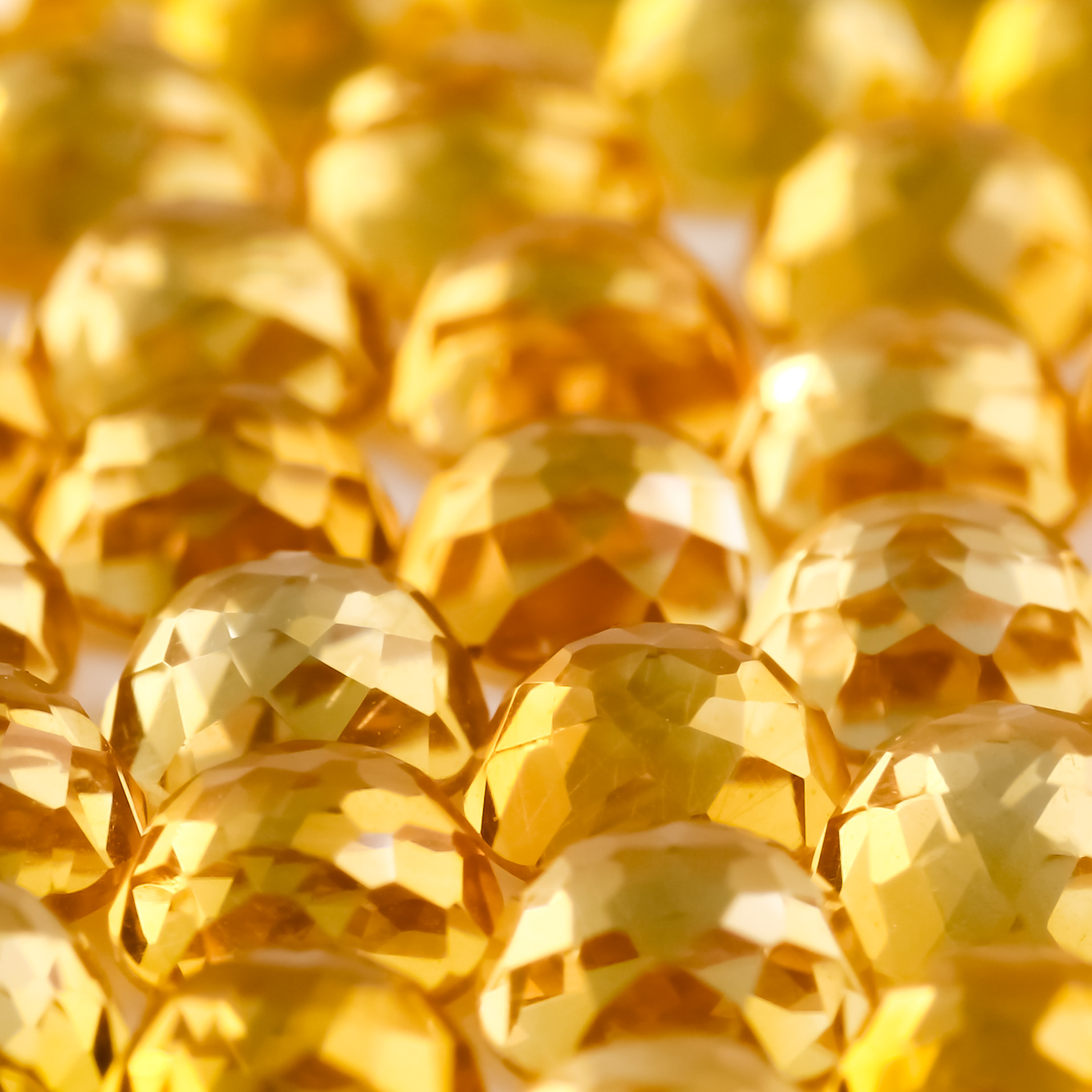
Quartz is one of the most ubiquitous gemstones; whether amethyst, citrine, rose, smoky or lemon, it’s plentiful and reasonably priced and you’re not going to have to part with a limb to buy it. It comes in so many different colours, including the fascinating and beautiful rutilated varieties. I want to talk a bit about lemon quartz, as it’s one of the family of treated quartzes and is a bit of an unsung hero. It’s a stone that cuts and polishes nicely and you can have it in pretty large sizes due to the relatively low carat price. Whiskey quartz, lemon quartz; nice lustrous stones in good sizes. Lemon quartz is irradiated with cobalt 60 gamma rays at very low dose (the stones aren’t glowing!) and then heated. The other thing that people aren’t generally aware of is that comes in different intensities of colour – and I don’t just mean that bigger stones are more saturated; you can get it from pale to much more intense yellow-green. My supplier tells me that people use it as a substitute for peridot, but I don’t think it’s that dark. It is on the same fresh, citric yellow-green spectrum, however. I used to sell mine – which is darker than standard lemon quartz – as green-gold quartz, to differentiate it, but it was too much of a differentiation, as people didn’t know what I was talking about and after I got asked a few times if I stocked lemon quartz, just changed the title! But it does have good saturation and is more of a yellow-green than pale yellow; I think you need it with a bit of saturation otherwise it looks a bit wan. The colour is more like a chrysoberyl and I think it really comes into its own when it’s mixed with other gemstones. I love the combination with citrine, which you would think would be a clash; the warm gold and the cool lemon, but it works. I also absolutely love it with the ruby, and I never would have thought about pairing these two, but they look amazing. In fact, I think I do like this stone best when it’s warmed up with gold, or golden stones, as they just seem to make it glow.
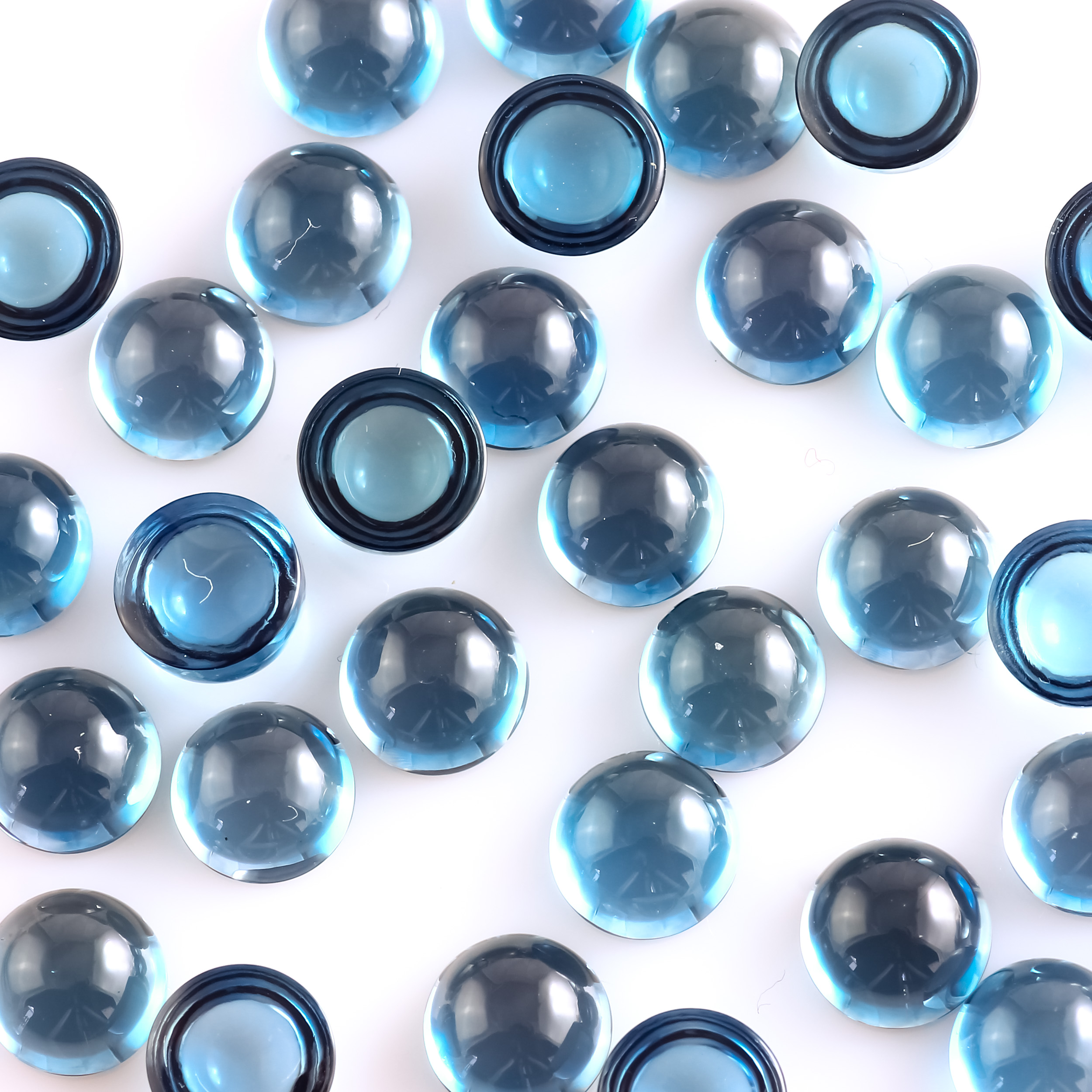
I haven’t done a newsletter for a while, but now, this November I have some new London blue to report, as well as restocks or white topaz in 6mm and 8mm. The London blue is priced very keenly and going fast, so hop on over to my newsletter or my website to see exactly what we have on offer! Also the usual round up of news and events going on in the gem world!
Colour is such a subjective matter; what’s your favourite? I like purple but my friend can’t bear it; my daughter loves brown, but I’m with Winston Churchill there: “I cannot pretend to be impartial about the colours. I rejoice with the brilliant ones, and am genuinely sorry for the poor browns“. When it comes to gemstones, the question of colour should not be subjective; unfortunately, it very often is. All gemstones will have a top colour; the most-prized shade within each stone’s shade range that commands top dollar. For example, in tanzanite it’s a pure blue similar to sapphire. In emerald it’s a bluish-green to green with strong to vivid saturation and medium to medium-dark tone. This may not be your preferred shade – for example I am more fond of the more violet tanzanites – but it is simply the one that will command the highest price. With a stone like tanzanite, which is highly pleochroic, cutters must often decide whether to cut a larger stone that is not oriented for top colour, or a smaller one that is.
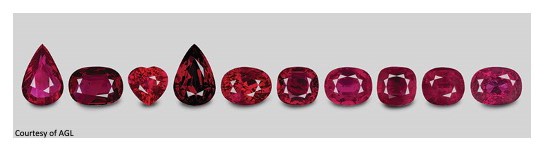
The problem is, this is by no means straightforward. Over the years, trade and commercial names have arisen to describe top colour. Most of these will have their roots in something quite meaningful and specific, but because the names themselves are not specific, it gives sellers a great deal of leeway to include a huge variety of shades until the name becomes practically meaningless. Ruby is a really good example; the term ‘pigeons’ blood’ has for years been the gold standard in terms of colour. It’s meant to refer to stones with a glowing red fluorescence, but just look at the shade range as illustrated in this AGL photograph. A 2015 study examined 500 rubies on just one trading network with 90% described as ‘pigeons’ blood’. But with per carat prices ranging from $450 to $50,000, the description is meaningless. In fact the term that the GIA use is ‘fanciful’.
Sapphire is another good example: Kashmir sapphire is the gold standard, which is traditionally a violet to violet-blue stone with high saturation and a velvety lustre; Ceylon sapphires are traditionally lighter with higher lustre. Australian stones tend to be more green with a darker tone. The obvious problem here is that not all stones from these locations will exhibit these properties and stones that do, aren’t necessarily from these locations. It’s also very difficult to know, once a stone has been dug out of the ground, where it has come from, so you could be paying top dollar for Kashmir sapphire with no actual proof that’s what it is. Sellers will offer mixed bags of dark sapphires to their wholesale clients that might be from a mix of locations – Nigeria, Vietnam, China, Thailand, Australia and label them as ‘Australian’ and this is more acceptable as these are much lower value and the deposits are very similar.
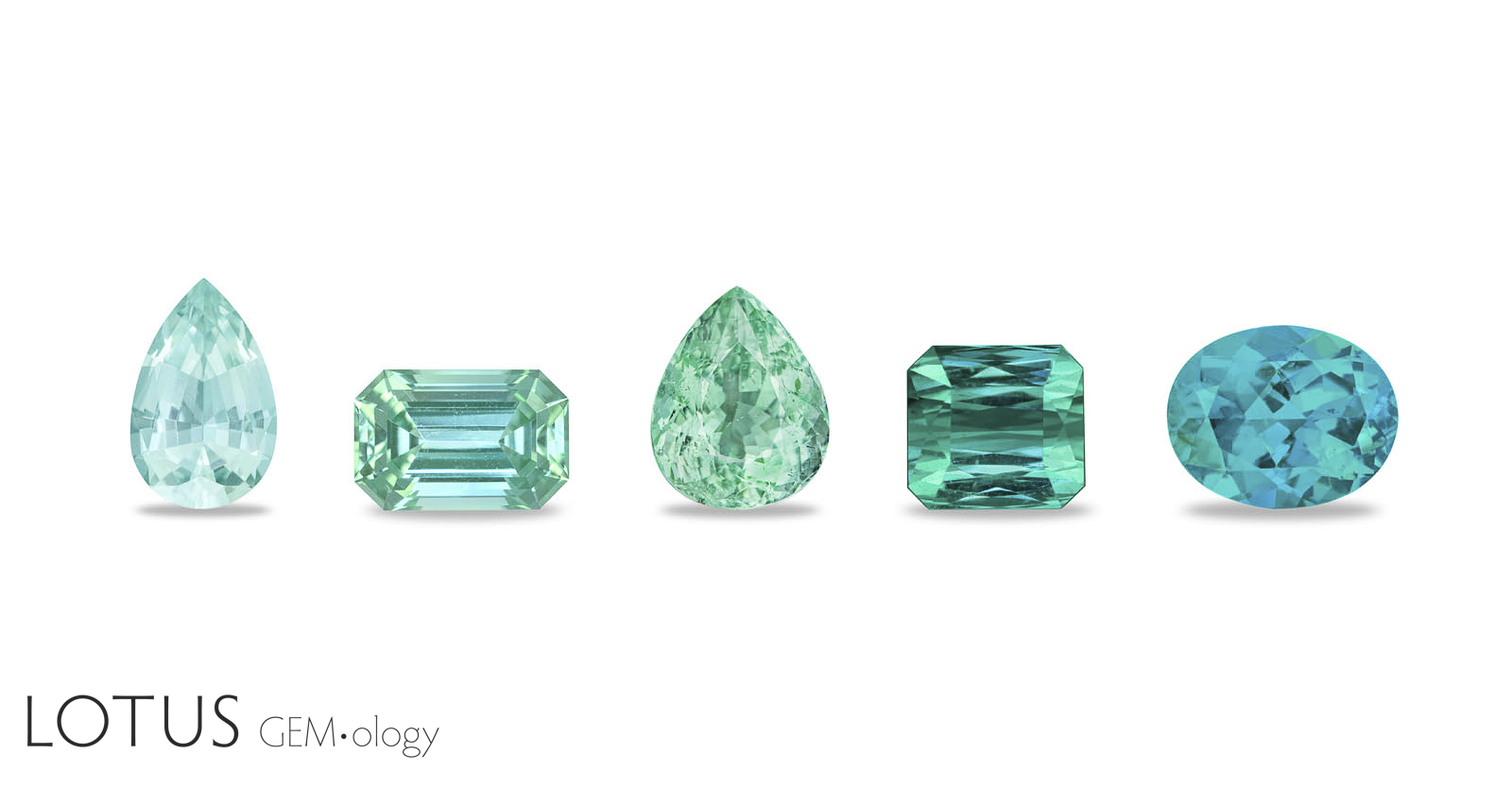
Paraiba tourmaline is another example. Coloured by copper, these stones are extraordinary, neon aqua stones (sometimes described as ‘Windex’!). They were discovered relatively recently, in 1982 and found only in Brazil, named for the province where they were found. Whilst subsequent deposits of copper bearing ore was found in Mozambique and Nigeria, most stones did not approach the extraordinary saturation and hue of the Brazilian stones. But have a little look on ebay; go on, put ‘paraiba tourmaline’ into the search box and what comes up is anything with the slightest aqua hue, from watery pale greens and light blues. In the picture below (courtesy of Lotus Gemology), from left to right, all of these would appear to qualify as paraiba, but only two of them owe their colour primarily to copper (stones 3 and 5 working from left to right). They appear almost identical and all equally breathtaking, but the term Pariaba will cause the price to skyrocket.
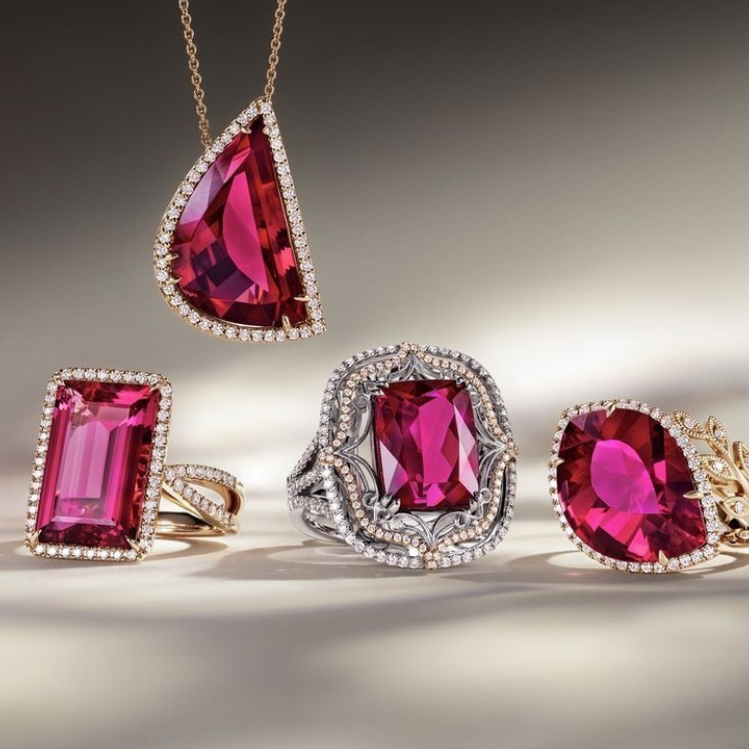
Other forms of tourmaline are equally poorly defined – slap the word chrome or rubellite on the front of it and you’ve got a nice price hike, but the definition appears to be tourmaline that’s quite bright green and tourmaline that’s very bright pink – and many chrome tourmaline stones are actually coloured by vanadium!
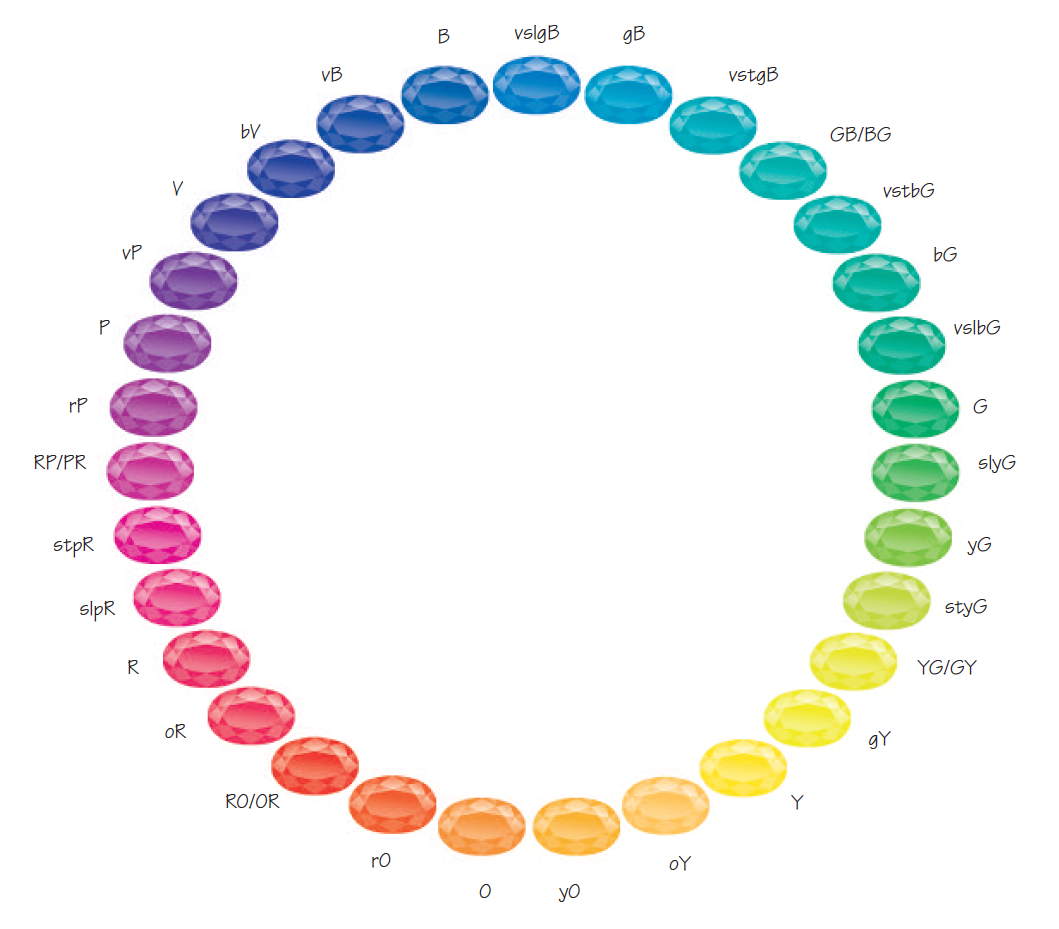
The GIA has long sought to take the flights of fancy out of colour description and has developed a system of colour classification that relies on extremely fine shade distinction and a very objective language: for example, colours run from, say, very strong blue-green to blue green, to very slightly blue-green, to green, and so on. These colour definitions allow a really accurate description and are anchored to a colour chart (see below, courtesy of GIA). What this method lacks in romance it does make up for in accuracy and it does something else as well; it restricts the colour solely to a gemstone’s hue.
What do I mean by that? A gemstone is not merely red, blue, green. That is its hue, and it does matter; it plays a big part in the value. But there are other factors which are also very important in a stone’s value; in fact you could say the colour exists in three dimensions. Hue is one, but equally important are saturation and tone: how intense is the colour and how dark? The GIA deals with these separately for example a Kashmir sapphire can be operationalised as violetish blue to pure blue hue, with moderately strong to vivid saturation and medium-dark tone. Each aspect is described separately. Another problem with trade or commercial names is that they often only refer to hue, and so they tend to elevate hue above all other colour aspects; in reality a stone’s value is based on a combination of hue, saturation and tone. In addition to this, a stone may display colour zoning or pleochroism; it may have inclusions, it may appear a different colour under different types of light, and let’s not forget about cut. This can also affect the appearance of colour, not just in terms of how the stone is oriented but a stone cut to save weight will not return light to the eye in the same way as one cut to ideal dimensions and may appear dark, or have dead areas. It’s a good idea to have a solid handle on colour and value, as traders will always favour those inconsistent and ill-defined colour names over more precise definitions as it allows for a much wider range of stones to be funnelled into the top price brackets. As with everything in this business, a little bit of knowledge goes a long way and caveat emptor!
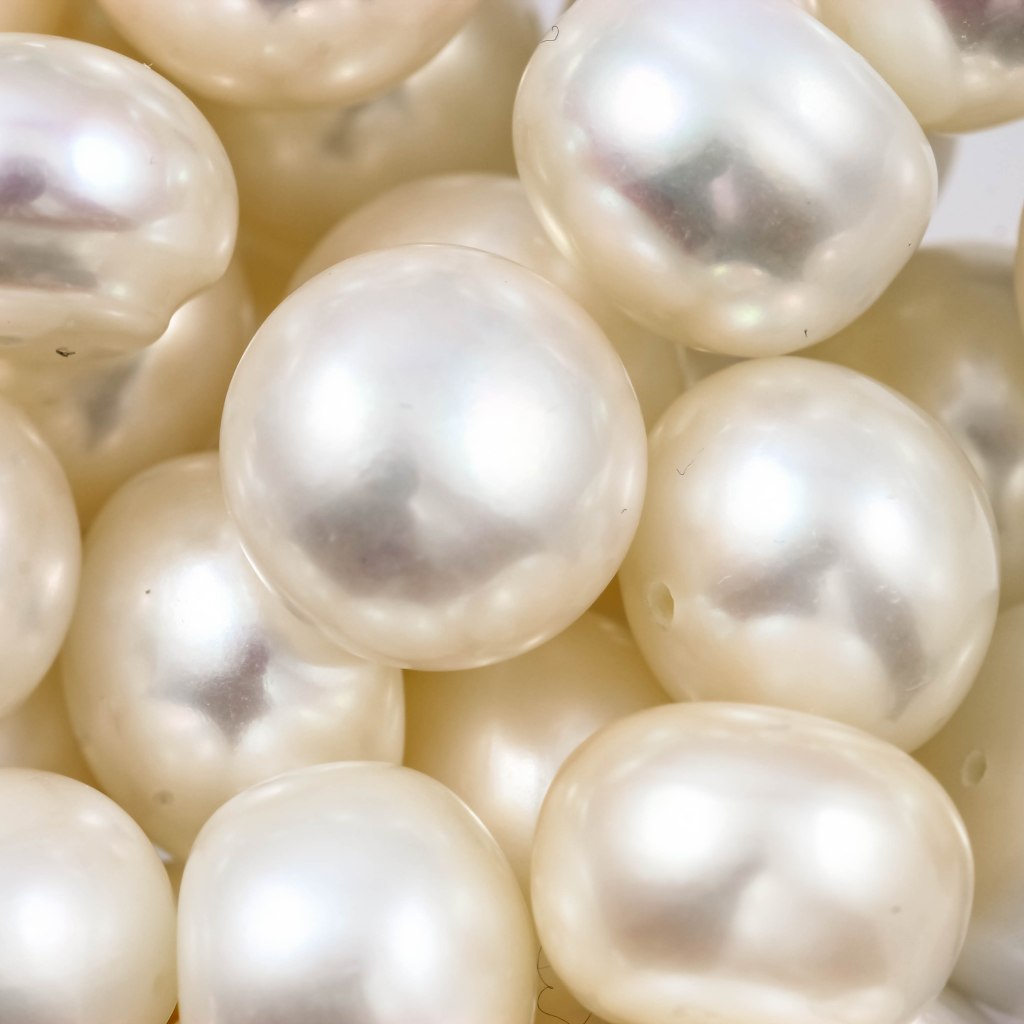
According to Grace Kelly, at least! Jackie Kennedy considered them ‘always appropriate’. Either way, I thought I’d excitingly write a piece about pearl processing! I’ve had a few questions through in the past week or so asking about this, in particular dyeing and bleaching so I thought I’d have a run through of how pearls are made, what happens to them and the difference between processing and treating. As everyone no doubt knows, pearls form naturally when a piece of grit or parasite or some other foreign body enters the mollusc and irritates the soft tissue in the shell. The mollusc tries to reduce the irritation by coating it in layers of smooth nacre and this is the surface of the pearl that we see. It’s really easy to check if a pearl is real because even with a loupe you can see the overlapping platelets that make up the nacre; it’s a really distinctive pattern.
With cultured freshwater pearls, this natural process is imitated: molluscs are seeded with often multiple pieces of donor soft tissue from another mollusc and the pearls form around these pieces of tissue. Pearls take around 24-72 months to grow with cooler waters and longer growing periods associated with better shape and lustre, and a thicker layer of nacre. Potato pearls are those pearls that are grown very quickly and they often have a thin layer of nacre and very off-round shape.
Once the pearls have been harvested, they are washed, dried and sorted. As you can imagine, pearls grow in all shapes and sizes so they have to be graded by shape, size, as well as quality. Since pearls naturally are often quite discoloured, with dark patches and splotches, they are often then universally bleached. This step has become so ubiquitous that it is now regarded as a process rather than a treatment. This is interesting, because by most gemological definitions, the bleaching would be considered a treatment. But because so many freshwater and indeed Akoya pearls require it to be considered acceptable, the pearl industry considers it part of the standard procedure.
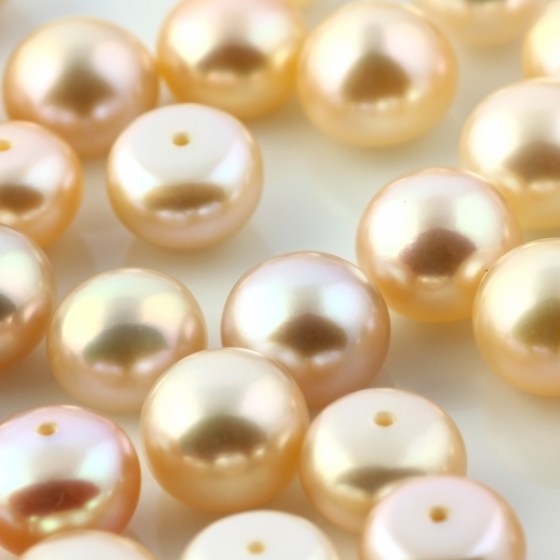
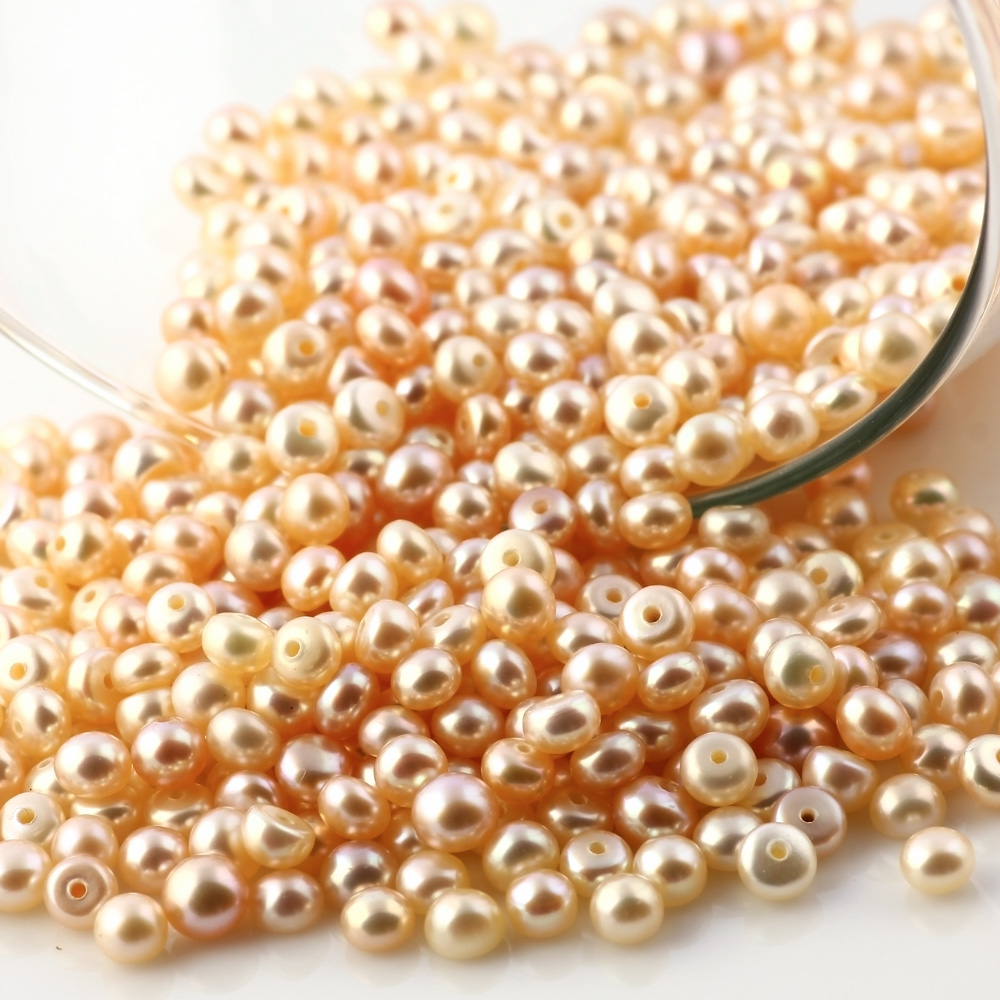
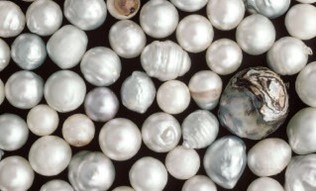
Pearls Before Cleaning, Sorting and Bleaching
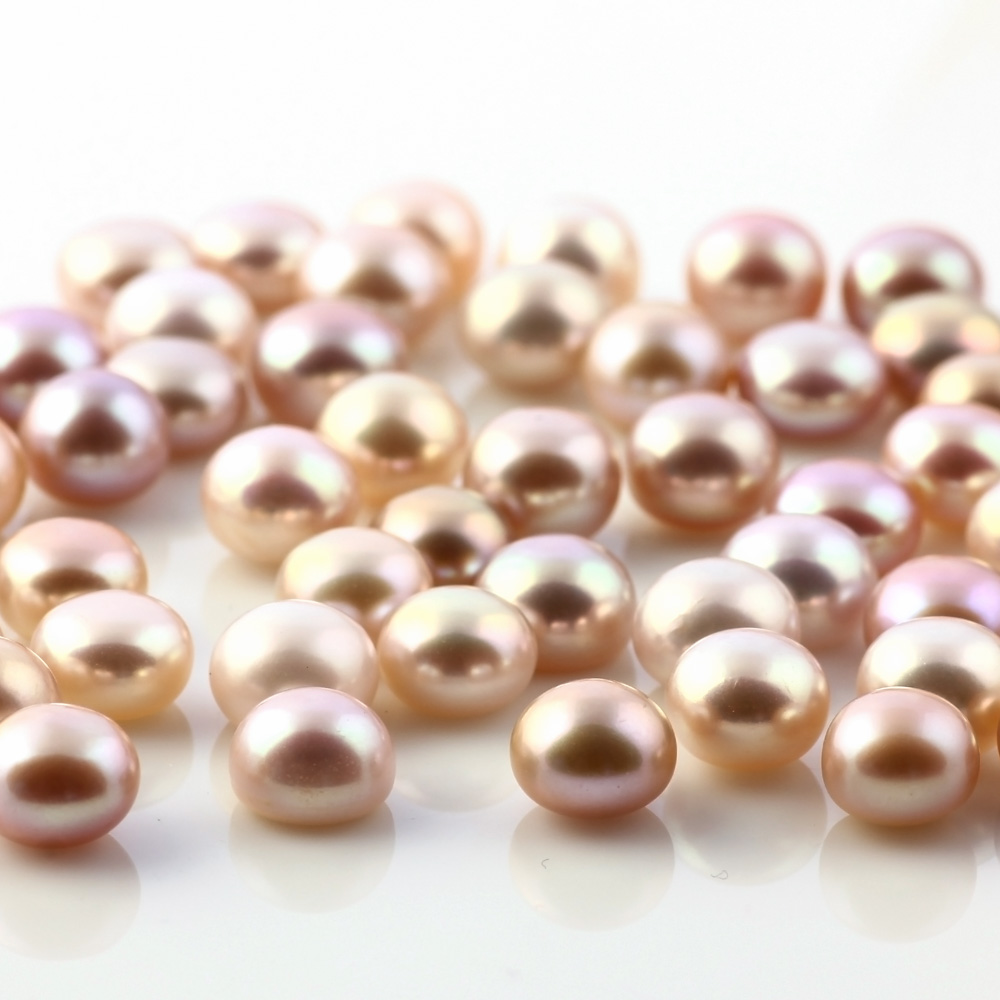
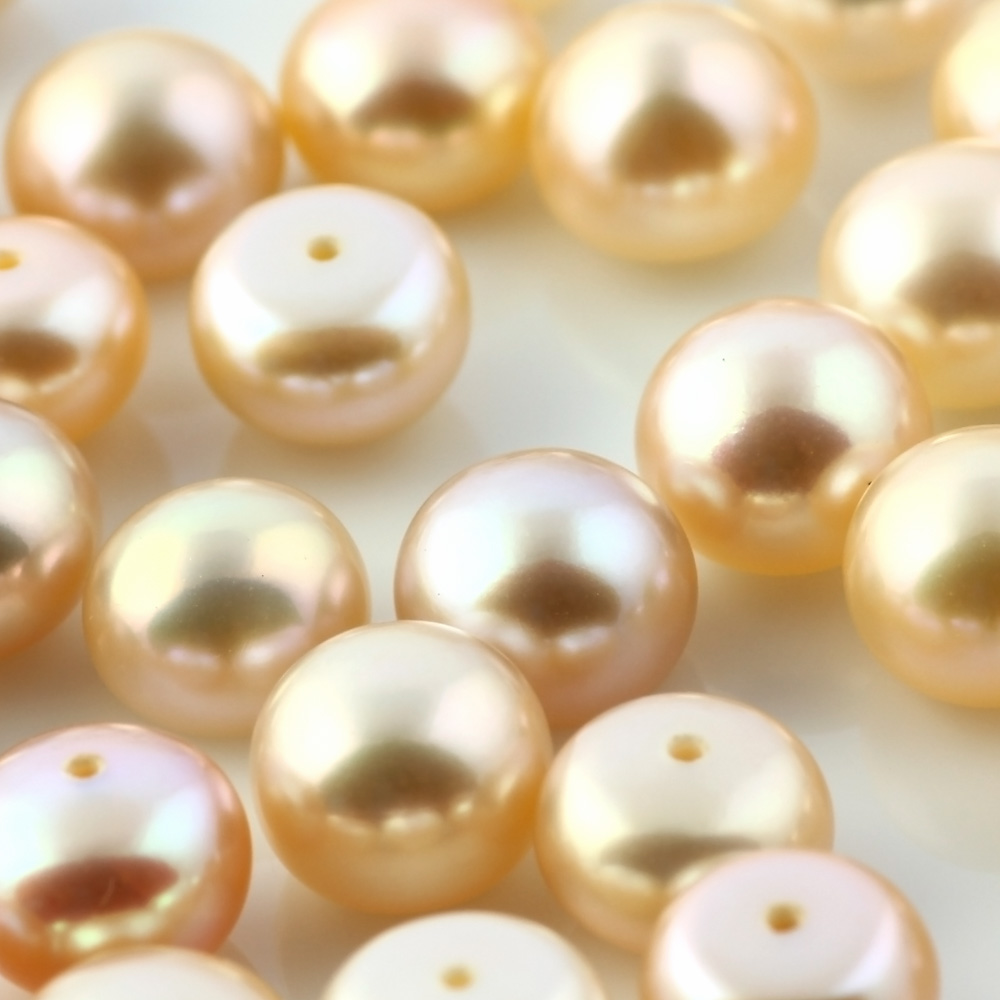
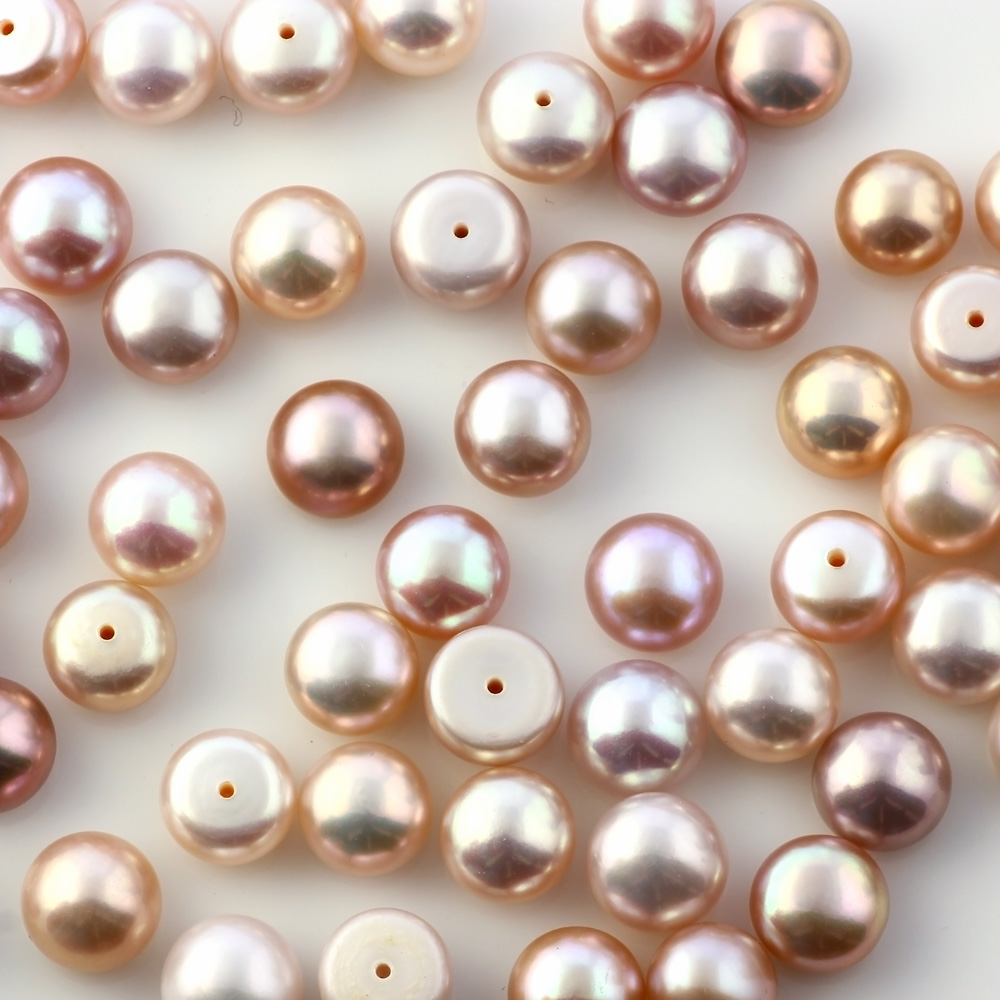
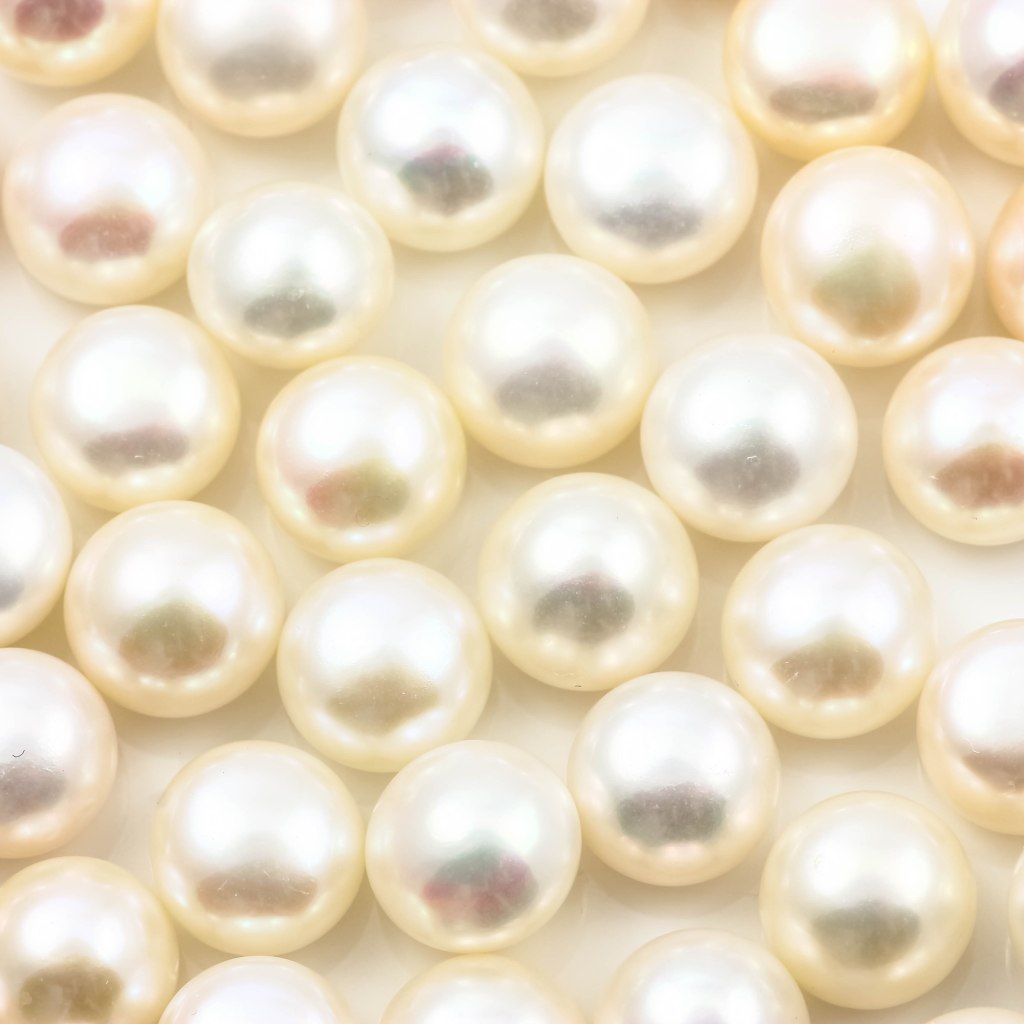
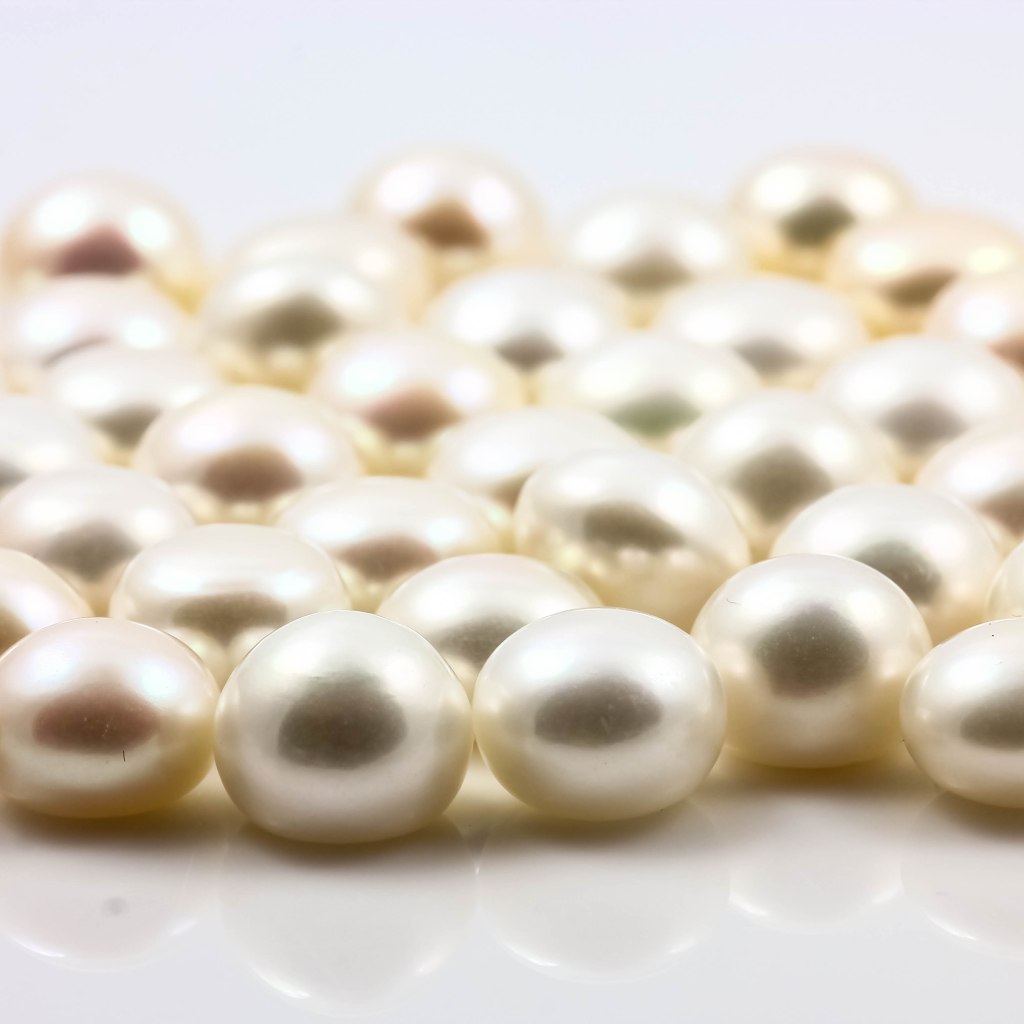
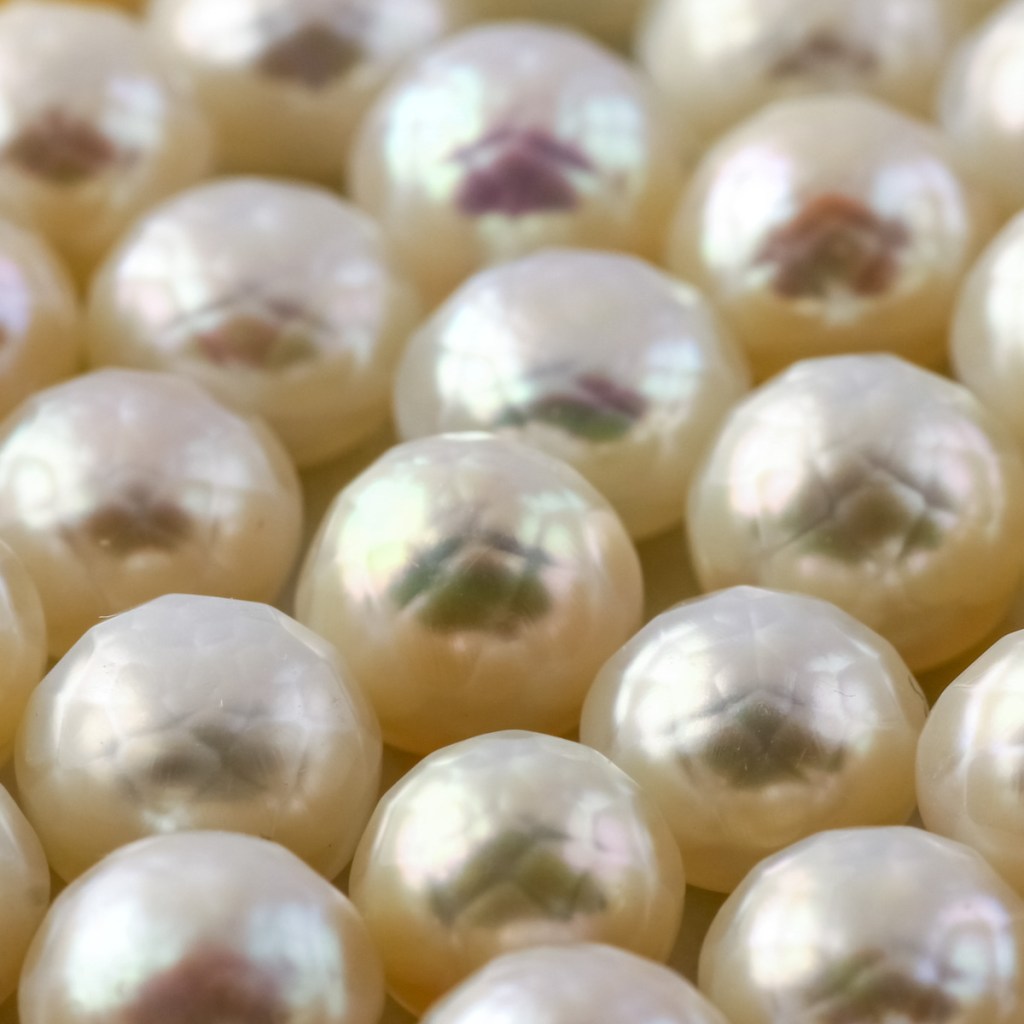
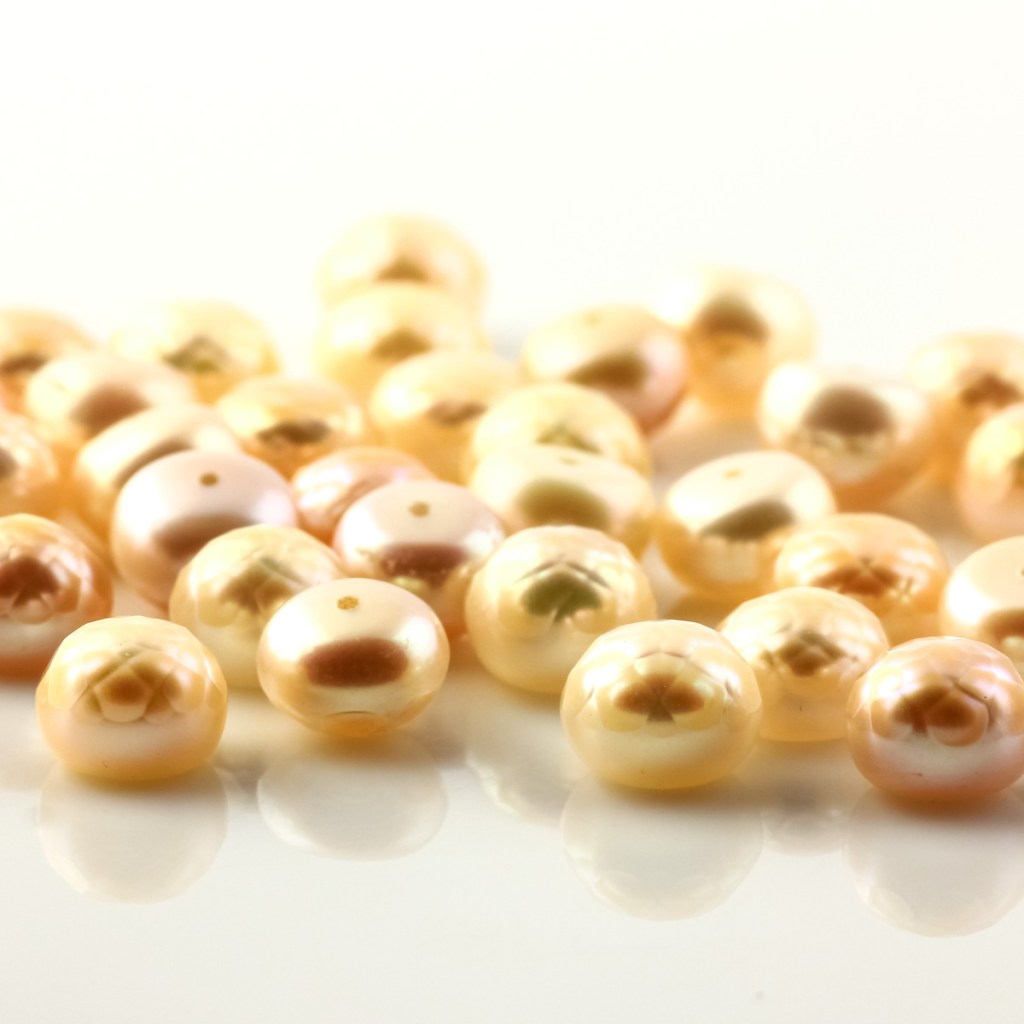
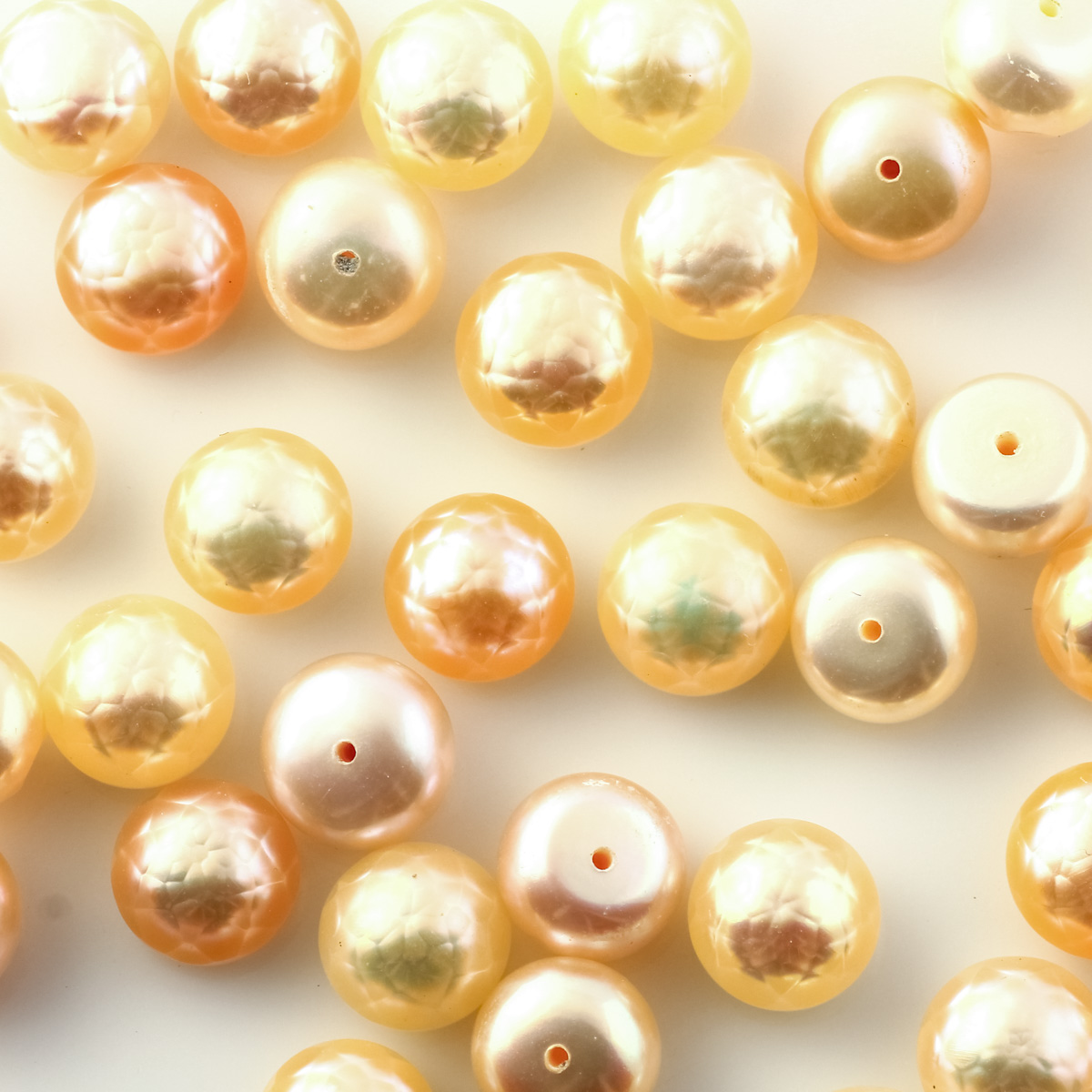
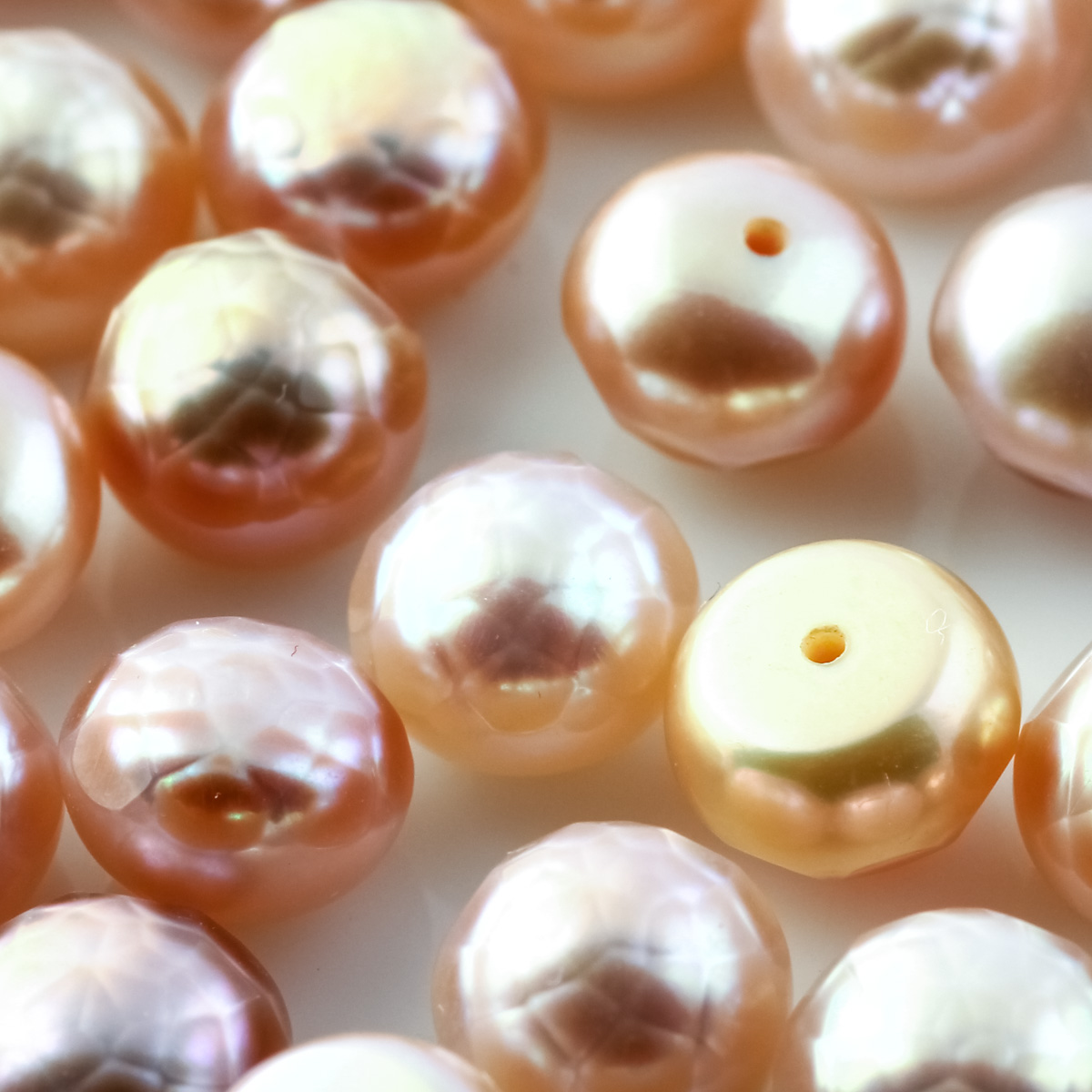
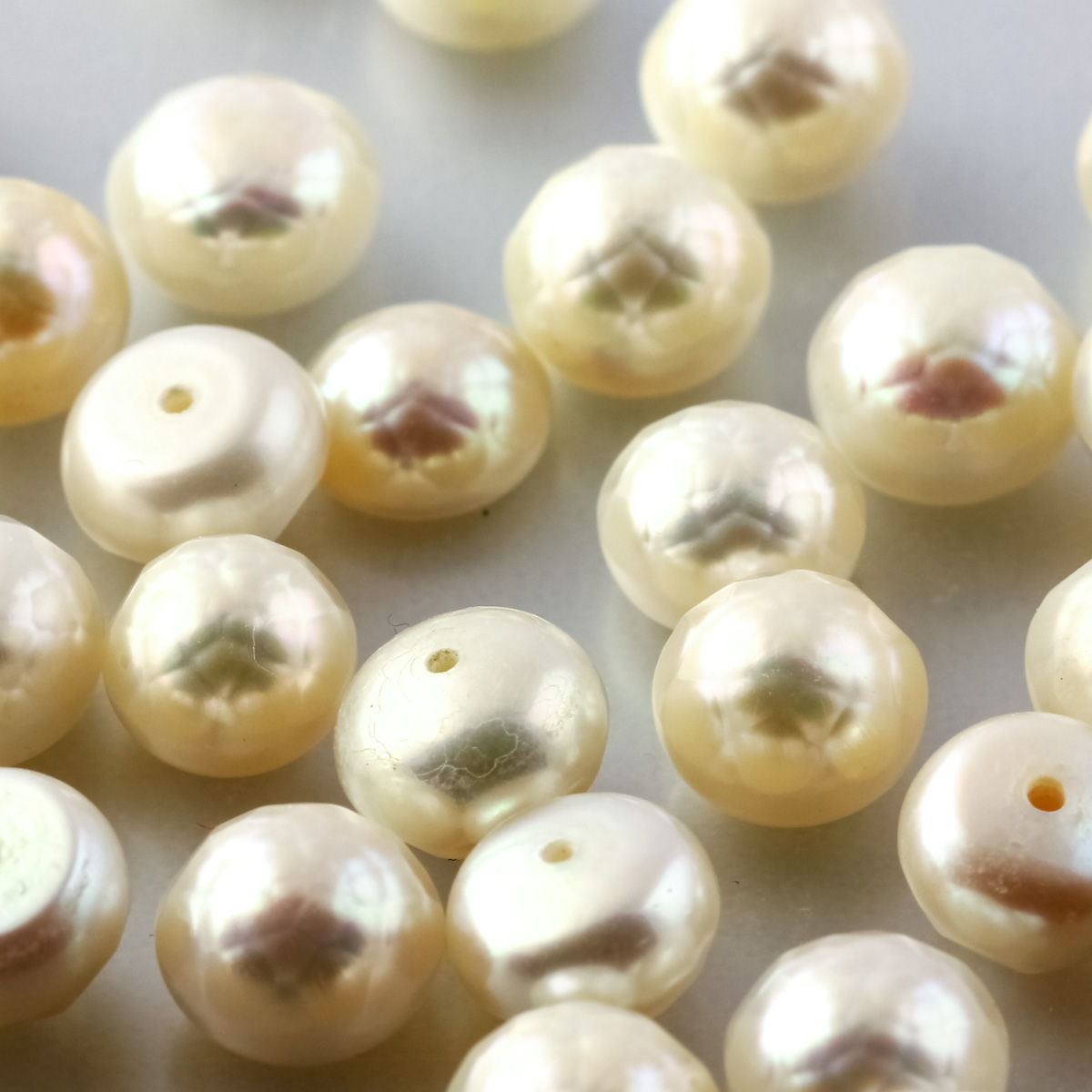
Dyeing is a completely different matter. Pearls naturally come in a variety of soft shades with a bodycolour (the overall colour), overtone (translucent colour/s that lies over the bodycolour) and an orient (the iridiscent shades that shimmer over a pearl’s surface). The different colours range from pales yellows, pinks, apricots, lavenders, pale greens, to blues and purples. The key with these colours is that they are usually soft; even the darker shades are not bright; the shades are soft and muted. I sell coloured pearls; what is known as pink, which is more like a pale, peachy colour and purple, which is a very soft lavender. White pearls are normally ivory coloured often with an orient and may be more pink or more yellow in tone. I call them sorbet colours because they are subtle and varied and soft. Dyed pearls are usually very obvious because the colours are bright and unnatural. I don’t sell these, and it’s not because I turn my nose up at them, they’re just not in my wheelhouse, as it were. I sell mainly button pearls, because they fit in nicely with the rose cuts and cabochons that I stock in precious stones and I just don’t do dyed. I do have some rose cut pearls, which look amazing and which I had faceted to order, because I thought they might be fun! Click here to browse pearls.
Rose Cut Pink Cultured Freshwater Pearls 7.5-8mmRose Cut Purple Cultured Freshwater Pearls 7.5-8mmRose Cut White Cultured Freshwater Pearls 7.5-8mm
John Ruskin said, ‘The making of tourmaline is more like a medieval doctor’s prescription than the making of a respectable mineral’. This refers to the extraordinary colour range of tourmaline, completely unparalleled, which amusingly does not necessarily relate to the chemical composition. Yes, that’s correct; there is no simple relationship between composition and colour! And tourmaline stones are named more for their colour than their composition. It’s complicated, but lets break it down a bit.
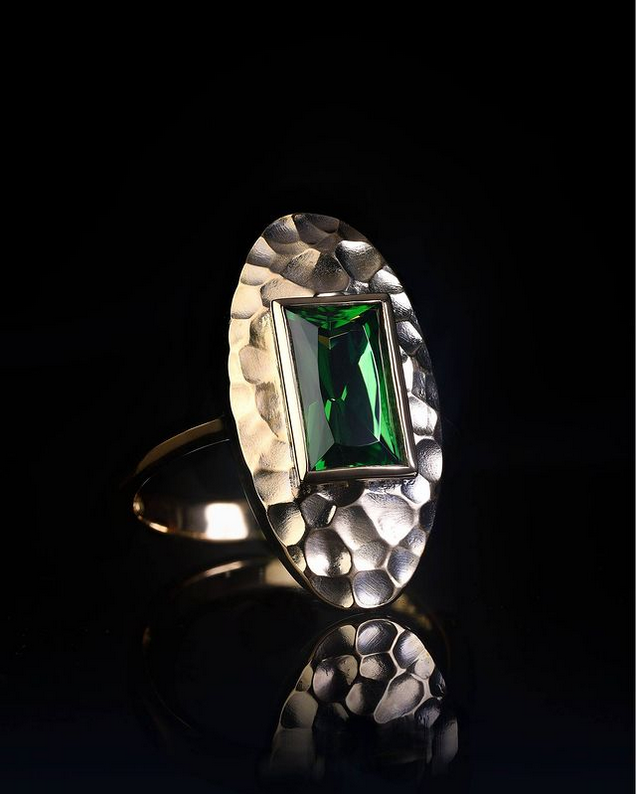
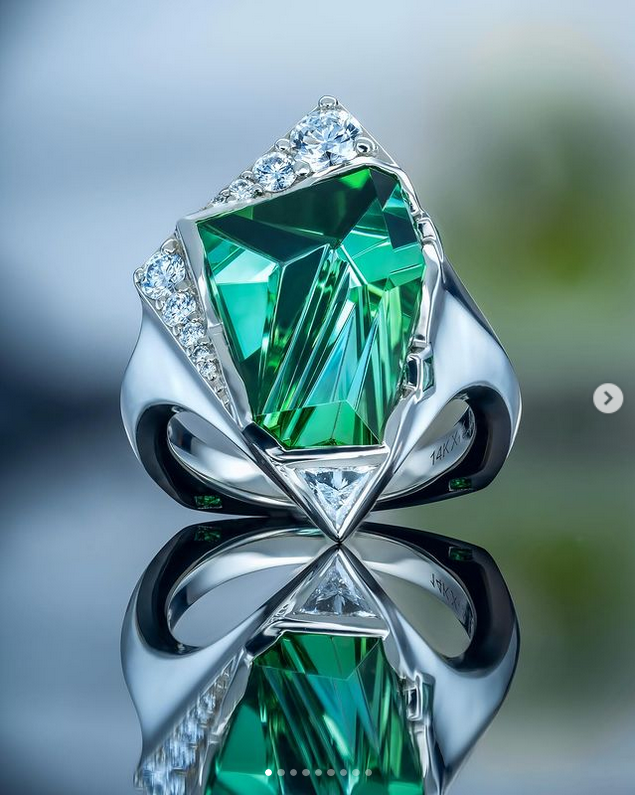
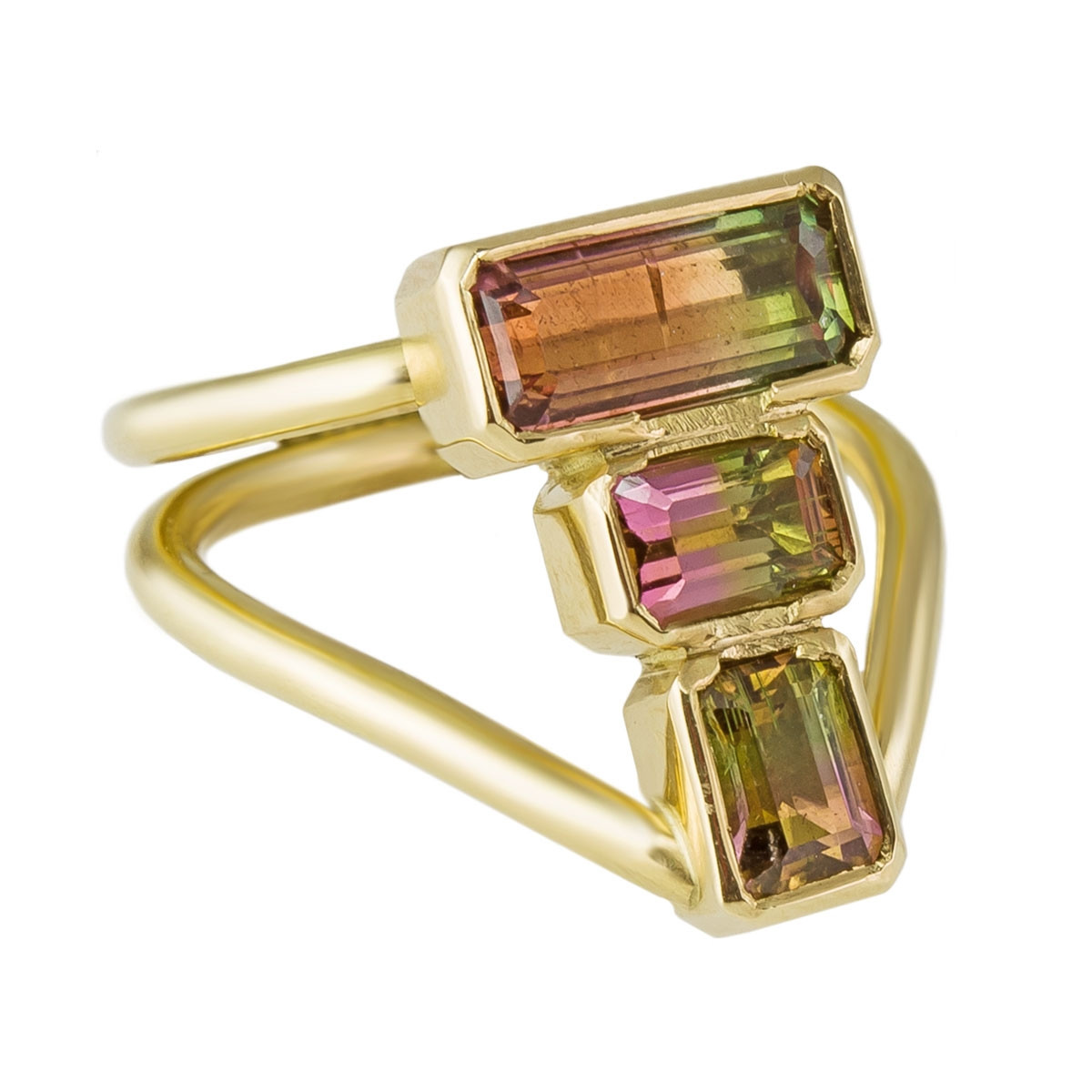
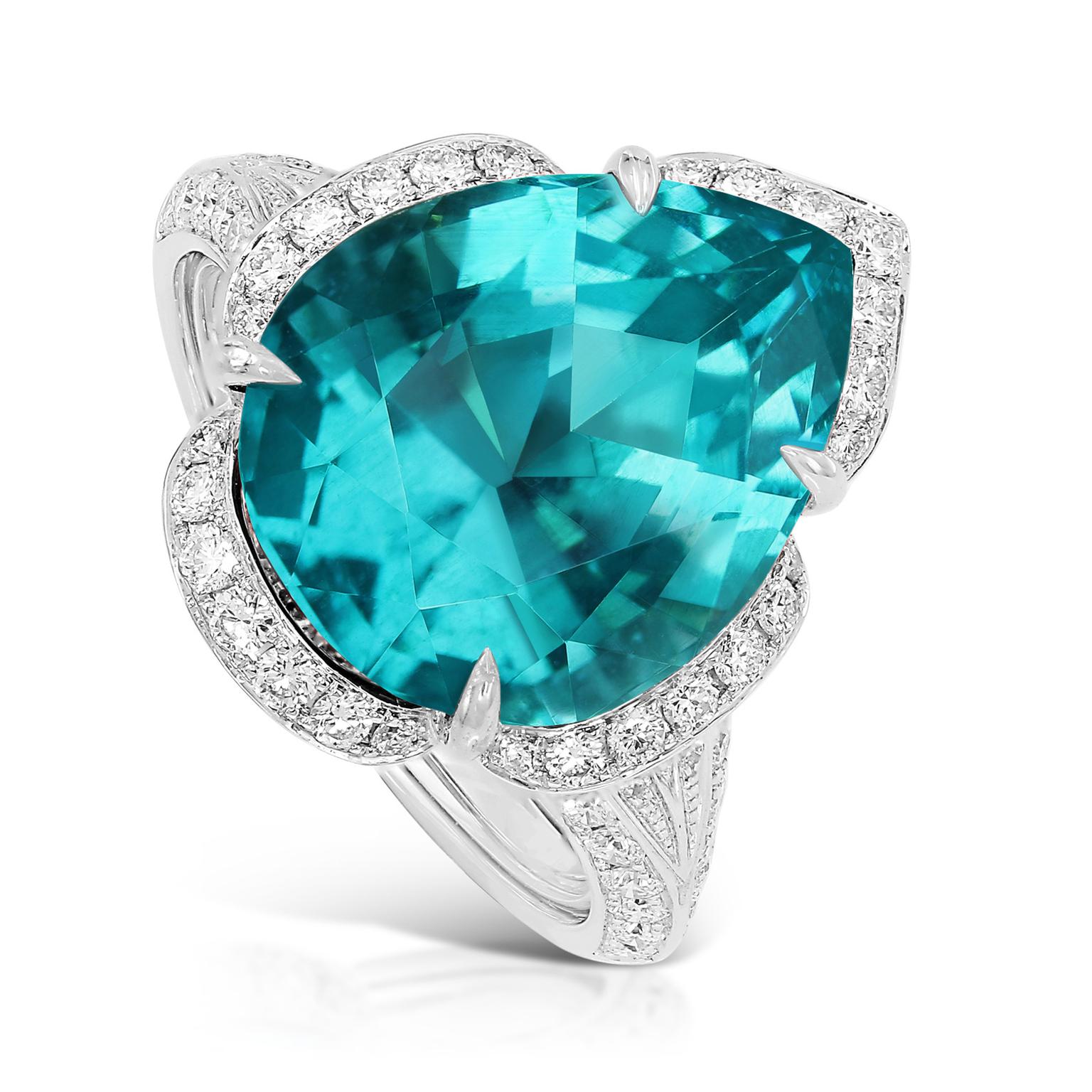
MJS Jewellery Design Chrome Tourmaline RingRobin Callahan Afghan Tourmaline and Diamond Ring
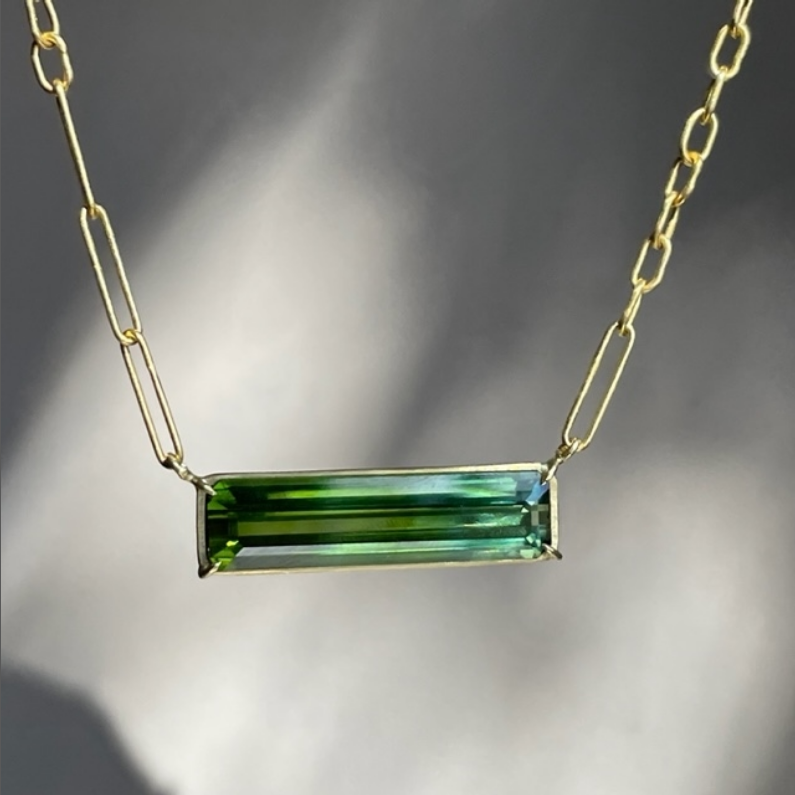
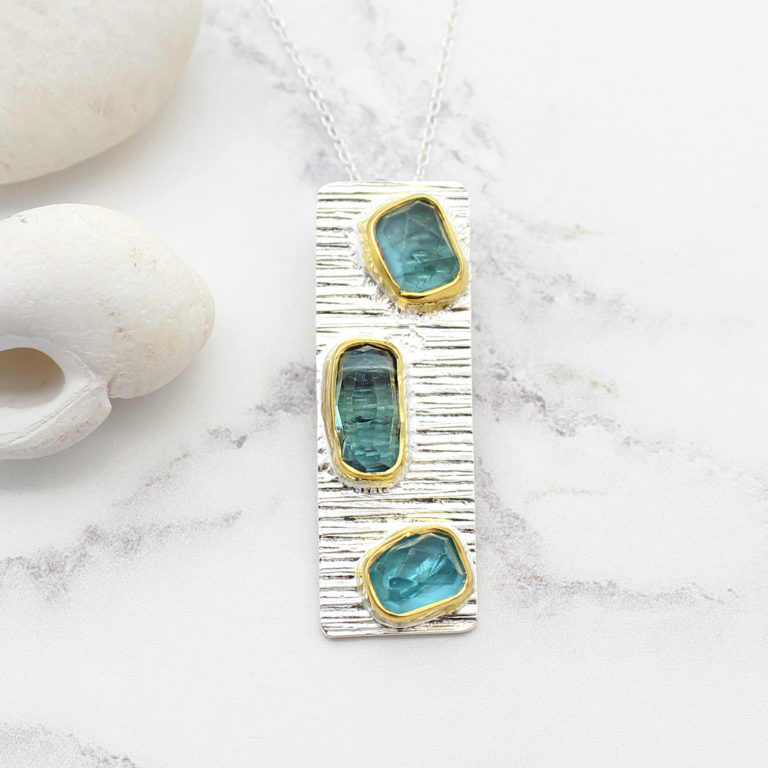
August Los Angeles Emerald Cut Green Tourmaline Bar Pendant
The name comes from the Sinhalese word ‘toromalli’ meaning ‘mixed gems’, a term that the Dutch merchants in Sri Lanka applied to the rough, water-worn pebbles found in the gem gravels. It has been routinely confused with other gems; emerald, ruby for example, and it wasn’t until a few centuries after the first stone had been discovered, and confused with emerald, that it was recognised as a separate species. It is small differences in chemical composition that give tourmaline its differing colours. If you look at tourmaline as being a collection of related mineral species that have the same crystal structure but slightly differing chemical and physical properties, that helps to explain. They are all silicates – silicates being compositions of silicon and oxygen, and making up some 95% of the earth’s minerals, so very common. They all share certain elements – fluorine, boron, aluminium, but contain differing levels of other elements: sodium, lithium, calcium, magnesium, manganese, titanium, copper, and iron.
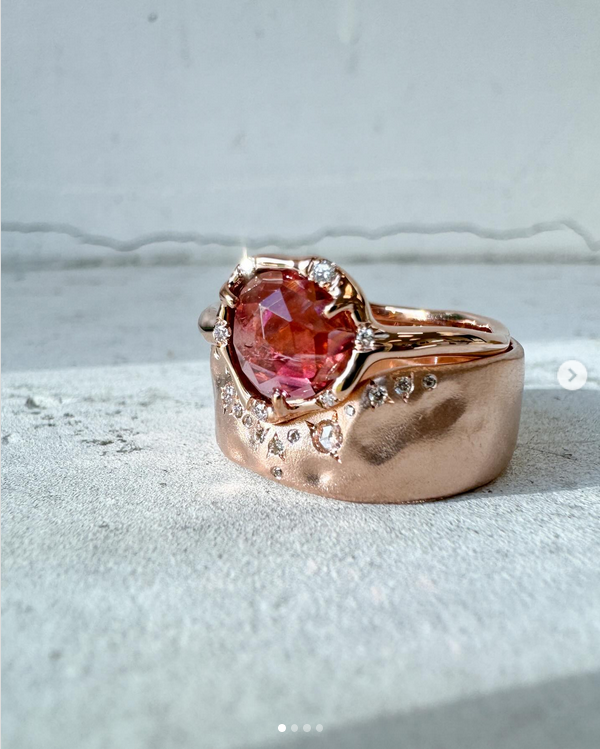
Simong Jewellery Rubellite and DiamondsSirciam Jewelry Tourmaline Stacking BandRoseark Watermelon Tourmaline Ring
A tourmaline’s chemical and physical properties are used to define its species: elbaite, liddicoatite, dravite, uvite, and schorl. However, each species will demonstrate a variety of colours. So you can’t say elbaite is pink, liddicoatite green and so on, although schorl is always black. This is what I mean when I say that tourmaline is referred to by colour rather than species. So intense hot pink tourmaline is called rubellite, blue to teal is called indicolite, green tourmaline is verdelite and paraiba is an intense neon turquoise, named for the state in which the gem producing mine was found.
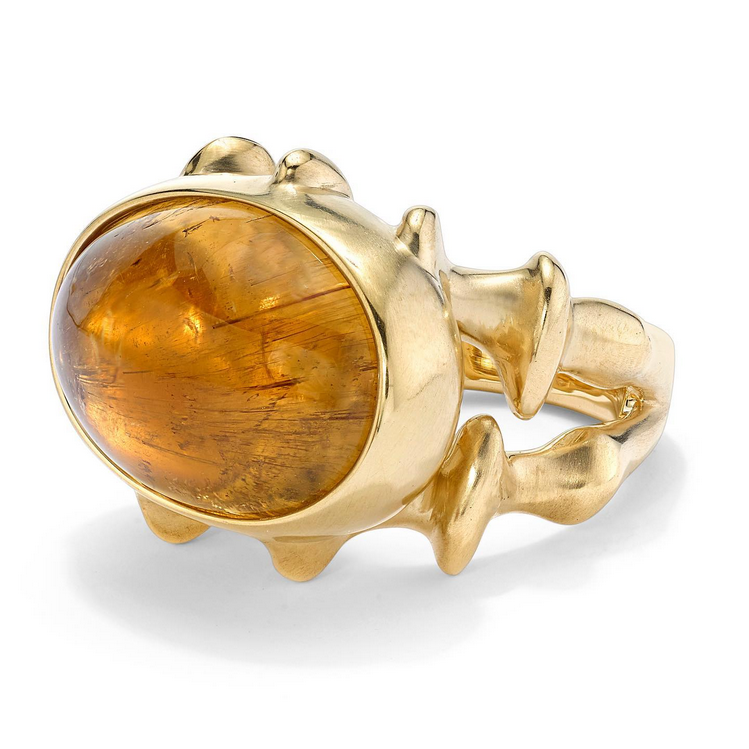
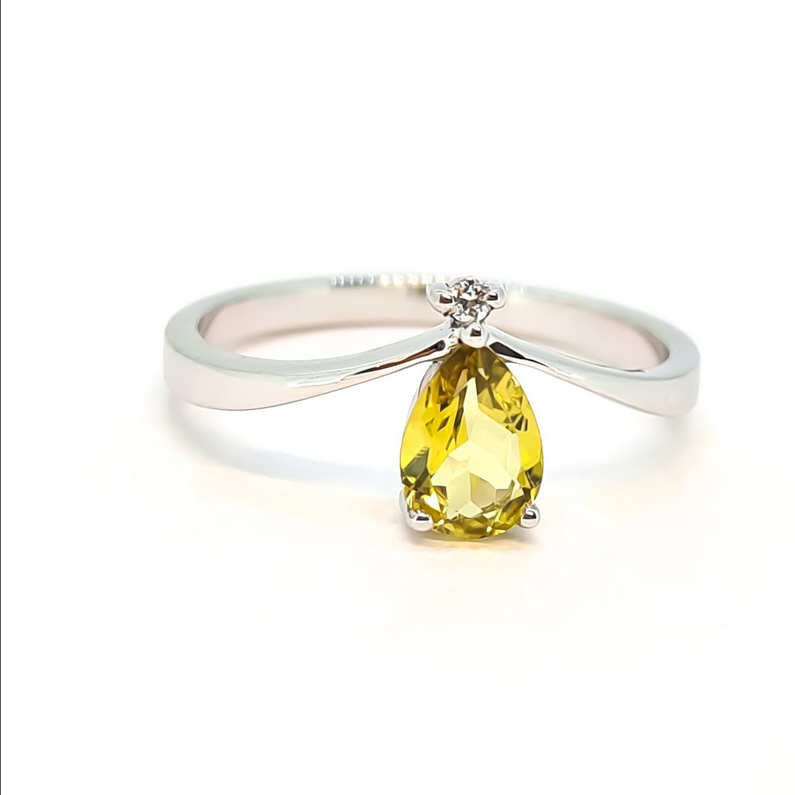
Vram Jewelry Yellow Tourmaline RingTomfoolery London One of a Kind Tourmaline RingSouthern Cross Jewels Yellow Tourmaline ring
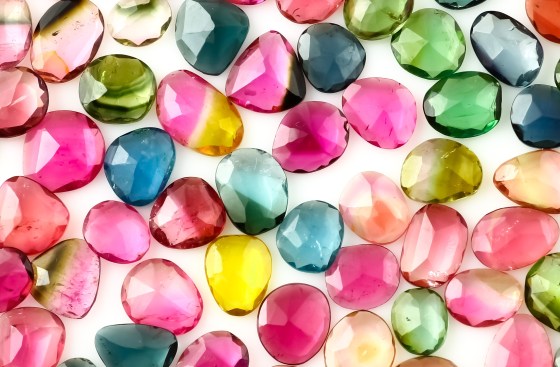
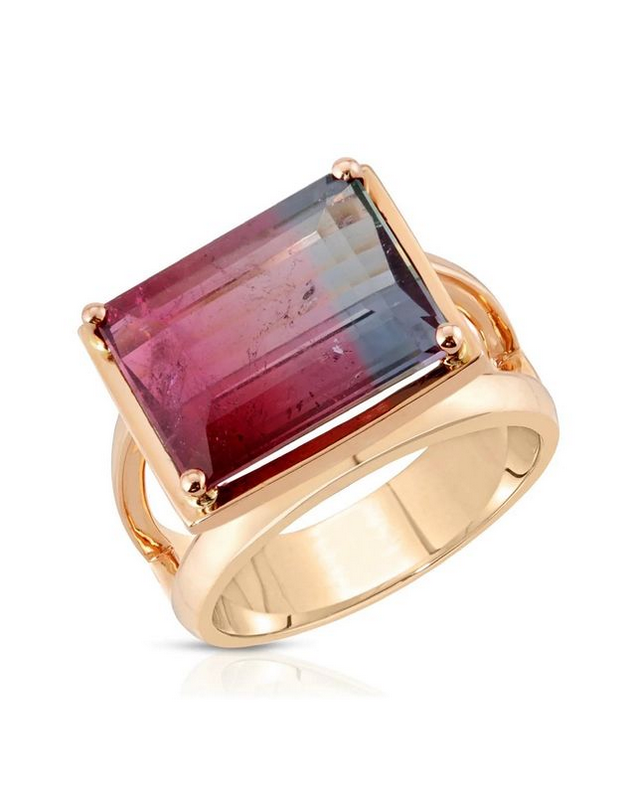
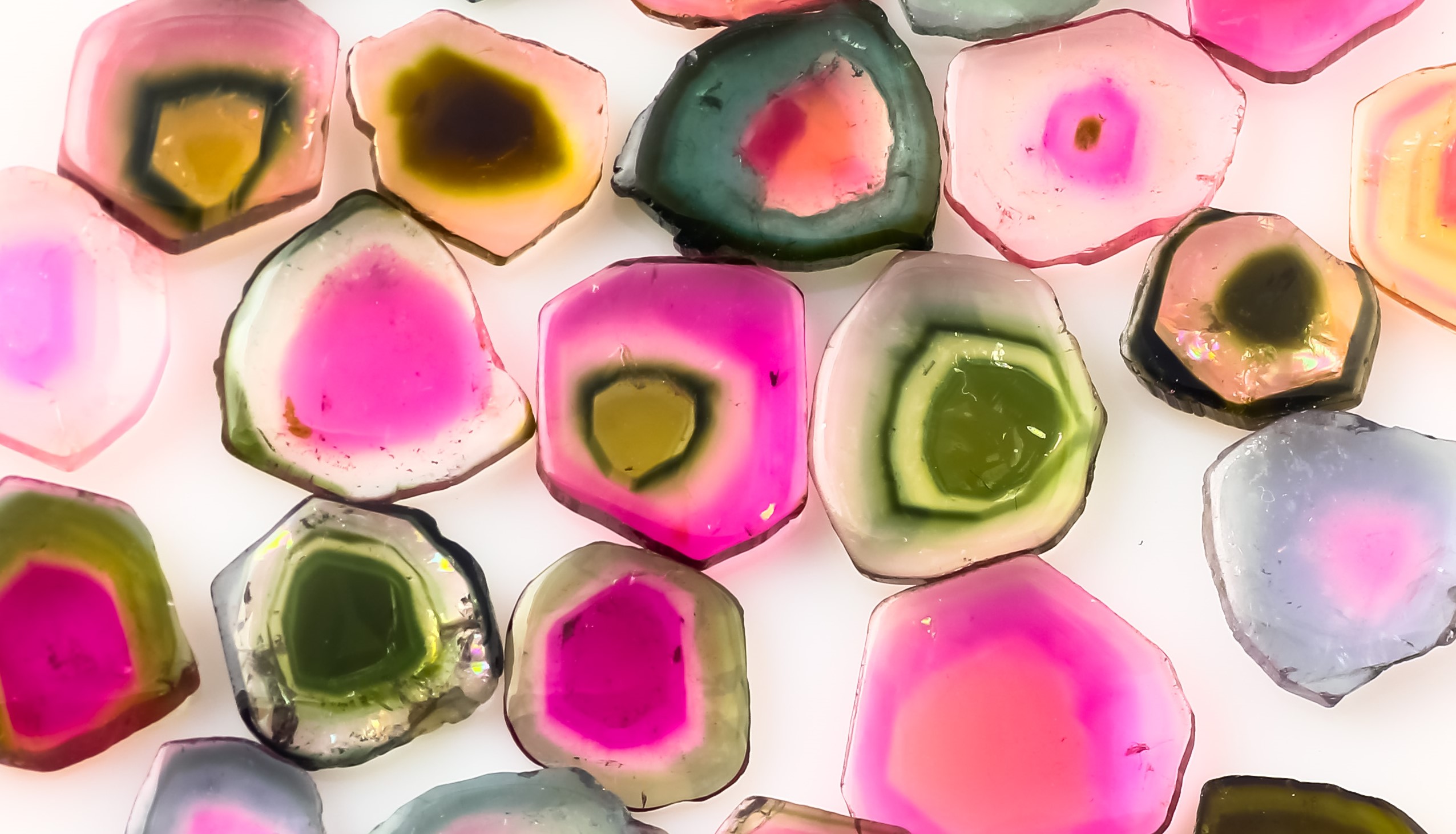
The most fascinating, though, for me is the parti-colour and bi-colour stones. This tends to happen with the liddicoatite species, and it occurs when the trace elements change in either concentration or composition during the crystal’s growth. This can give rise to really striking patterns, and these stones can be cut as slices if the colour zoning occurs parallel to the length of the stone, familiarly known as ‘watermelon’ tourmaline. This term was coined for those stones with the bright pink interior and green rim, but can and is used for any slice with particolour characteristics. Alternatively the zoning can take place across the length of the stone which gives the half and half effect on a long crystal. Another very valuable type of tourmaline is known as chrome tourmaline, and this is a very vibrant green colour, and this is of either the dravite or uvite species, or a combination of both. Whilst these normally produce yellow to brown coloured crystals, when vanadium or chromium is present, they will come up bright green.
Joopy Gems Watermelon Tourmaline Mix
Because tourmaline crystals tend to grow long and narrow, with those very distinctive striations down the sides, you often find them in very non-standard sizes and they can be harder to find in more familiar, calibrated forms. You can only really cut them along the length as the stones tend to be dead down the length, or in very thin slices. Tourmaline is extremely strongly pleochroic, and one colour is typically much darker than the other. When you consider also that tourmaline absorbs more light down the length of the stone rather than across the width, a crystal that appears, say, light green across the width of the stone may well appear almost black down the length.
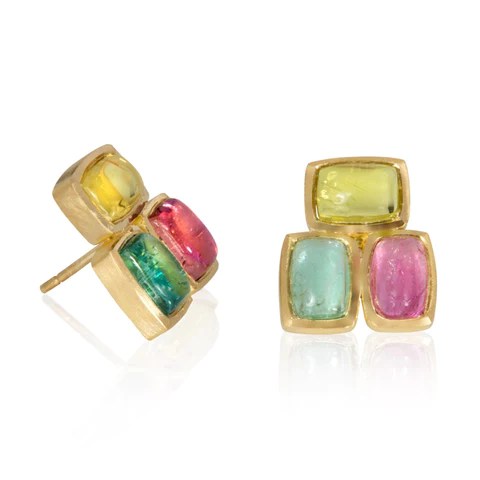
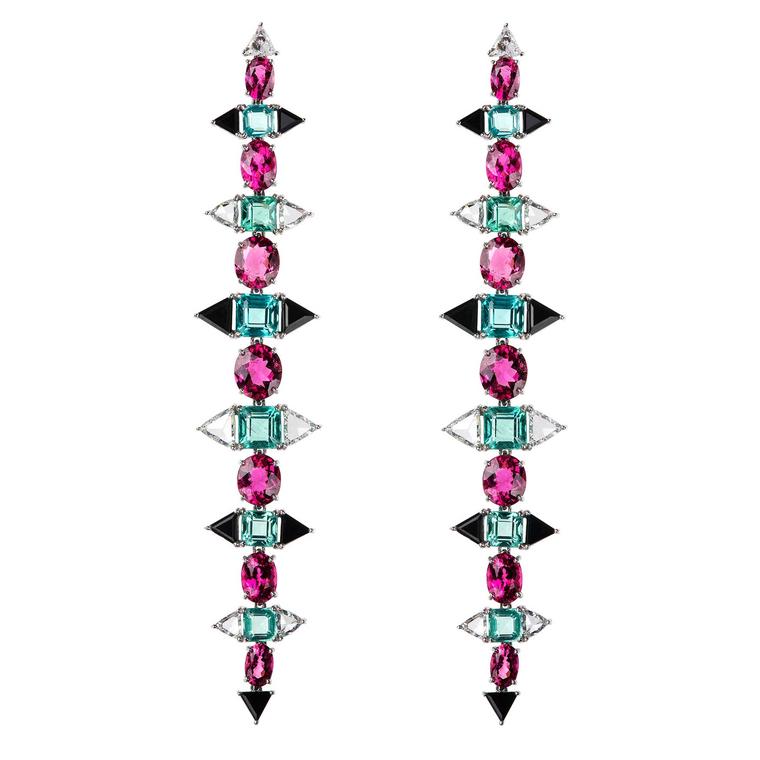
Julia Lloyd George Modern Art Tourmaline EarringPala International Paraiba Tourmaline PearJulia Lloyd George Paraiba Tourmaline Ring
You can also get chatoyant tourmaline, although the fibres are relatively coarse, and tourminalted quartz. Schorl is not used much these days but was popular in Victorian times as mourning jewellery, as it was a great deal tougher than jet. As always, to shop my tourmaline, click here
It’s my birthday and usually around this time I run a little sale to celebrate and just generally spread the joy! This time it’s 25% off your entire order, with code celebrate25 and you can use it up until midnight on Friday 29th September EST. I was hoping to re-open my destash sale at the same time, but I don’t quite have it ready, so that will happen mid to end October. Click here to shop!
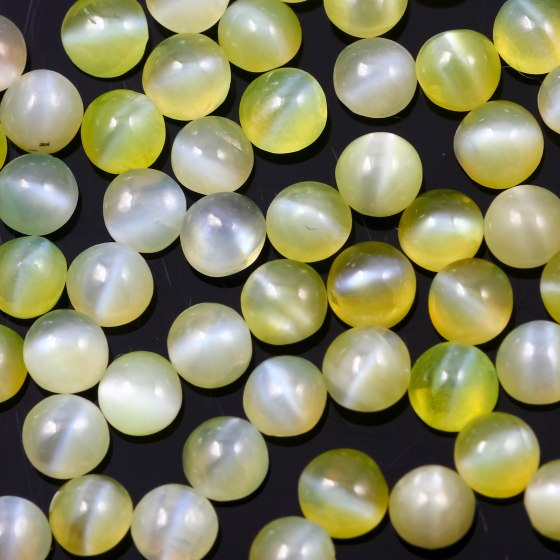
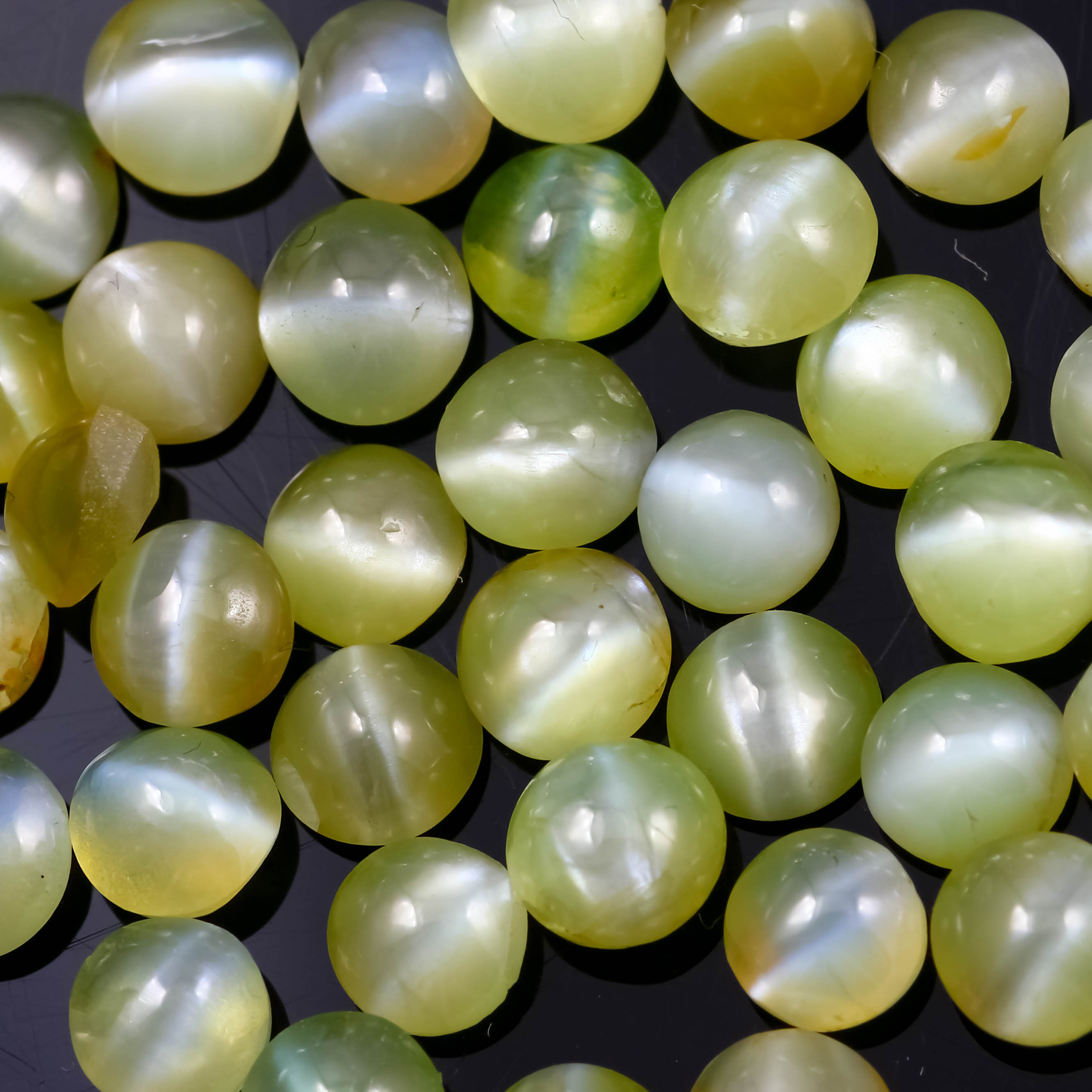
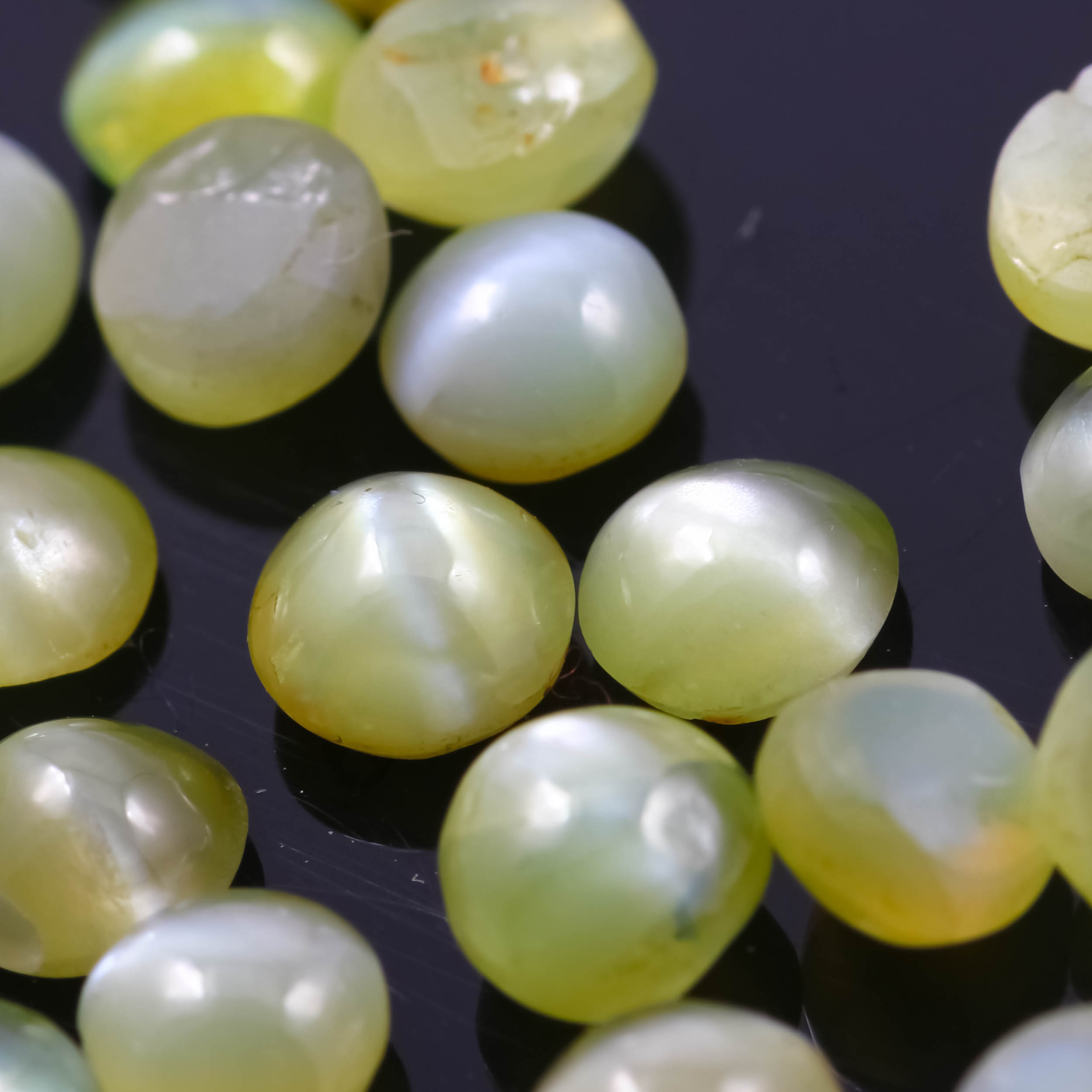
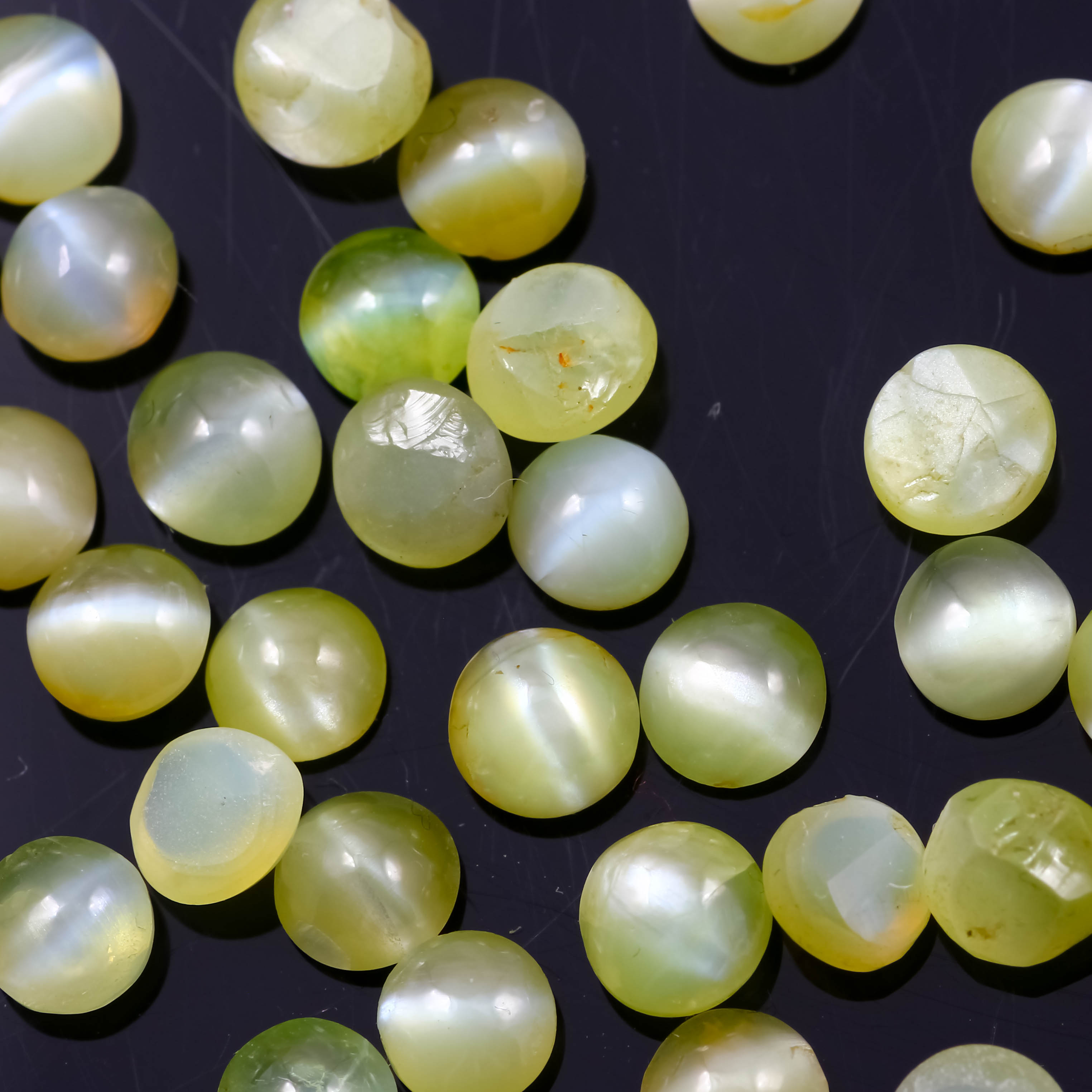
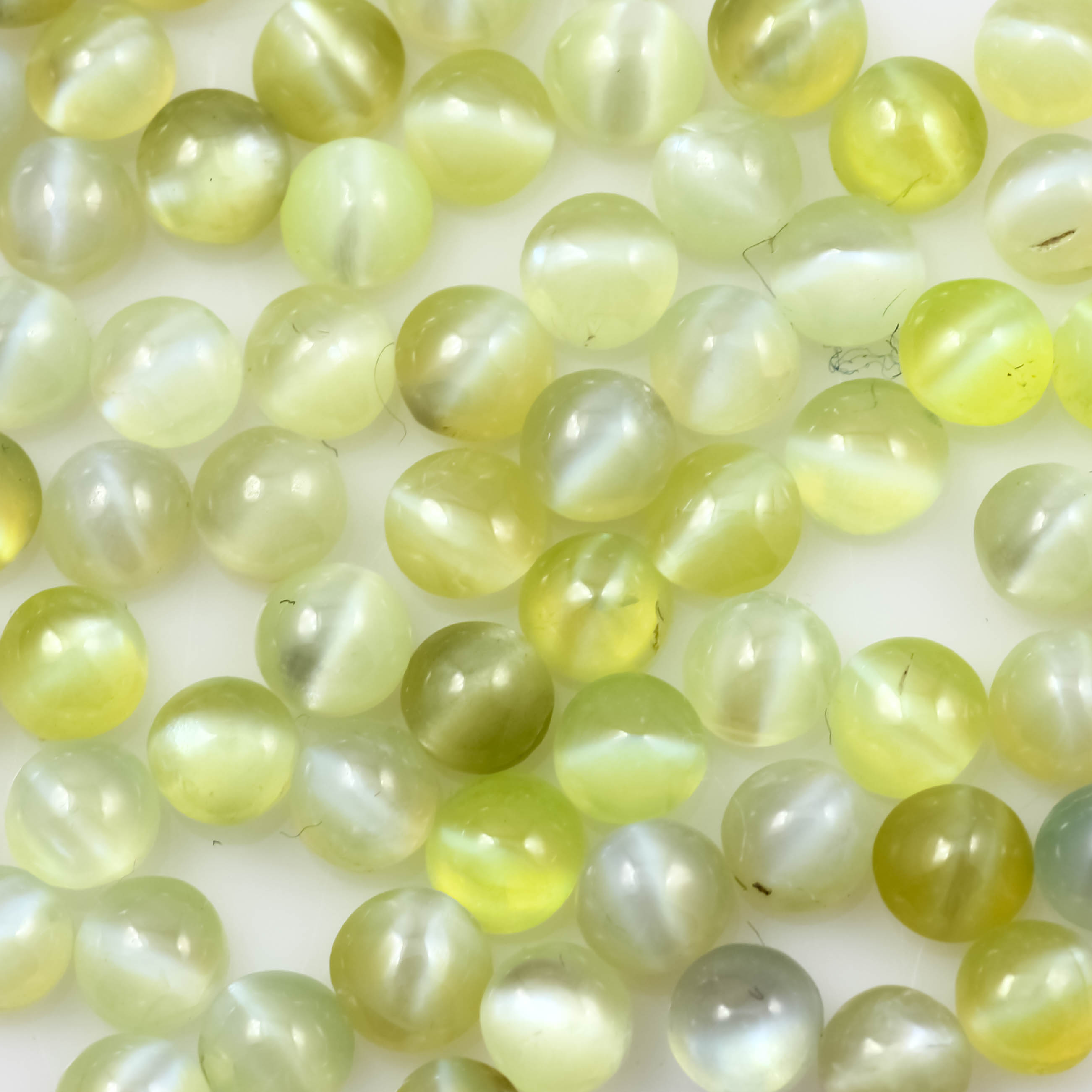
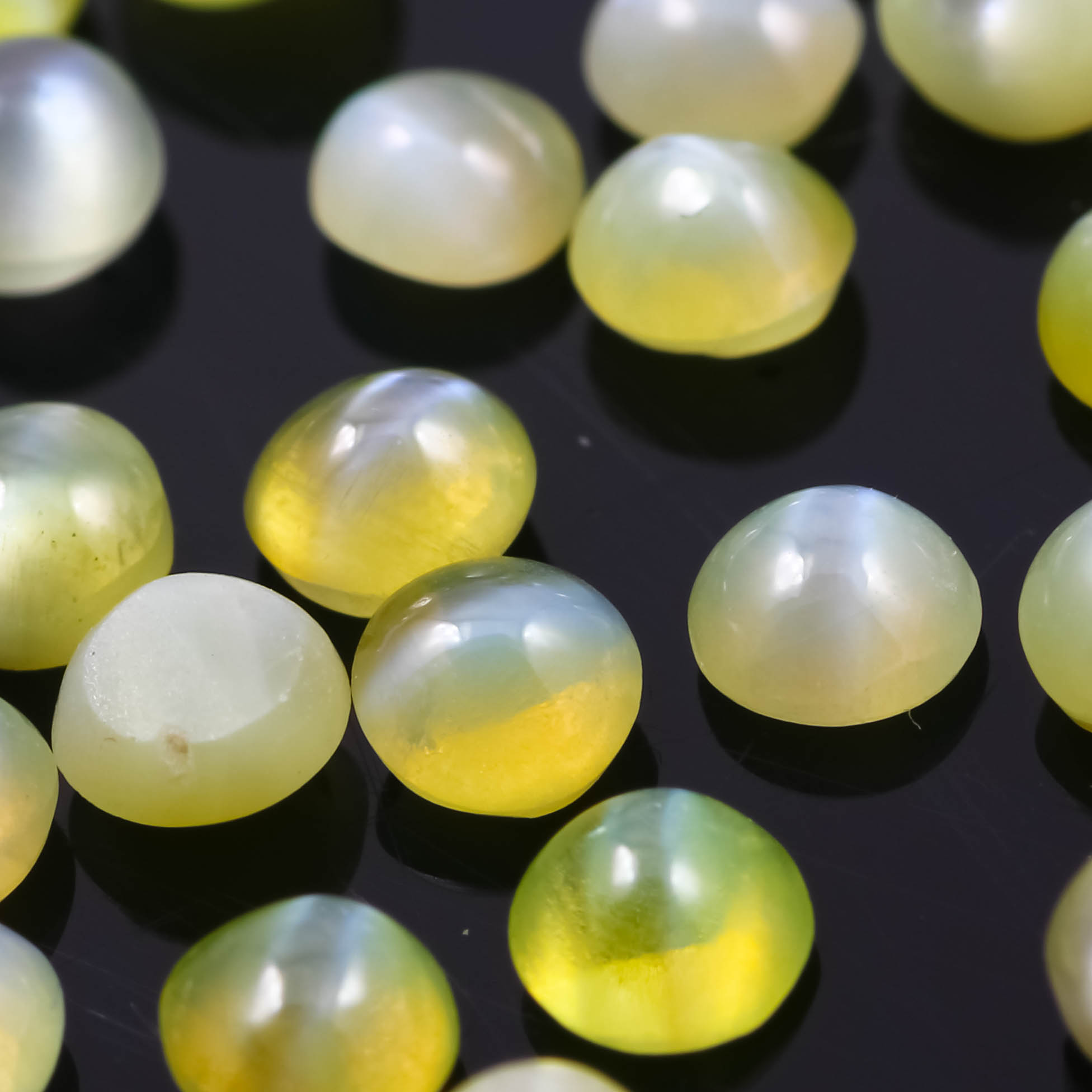
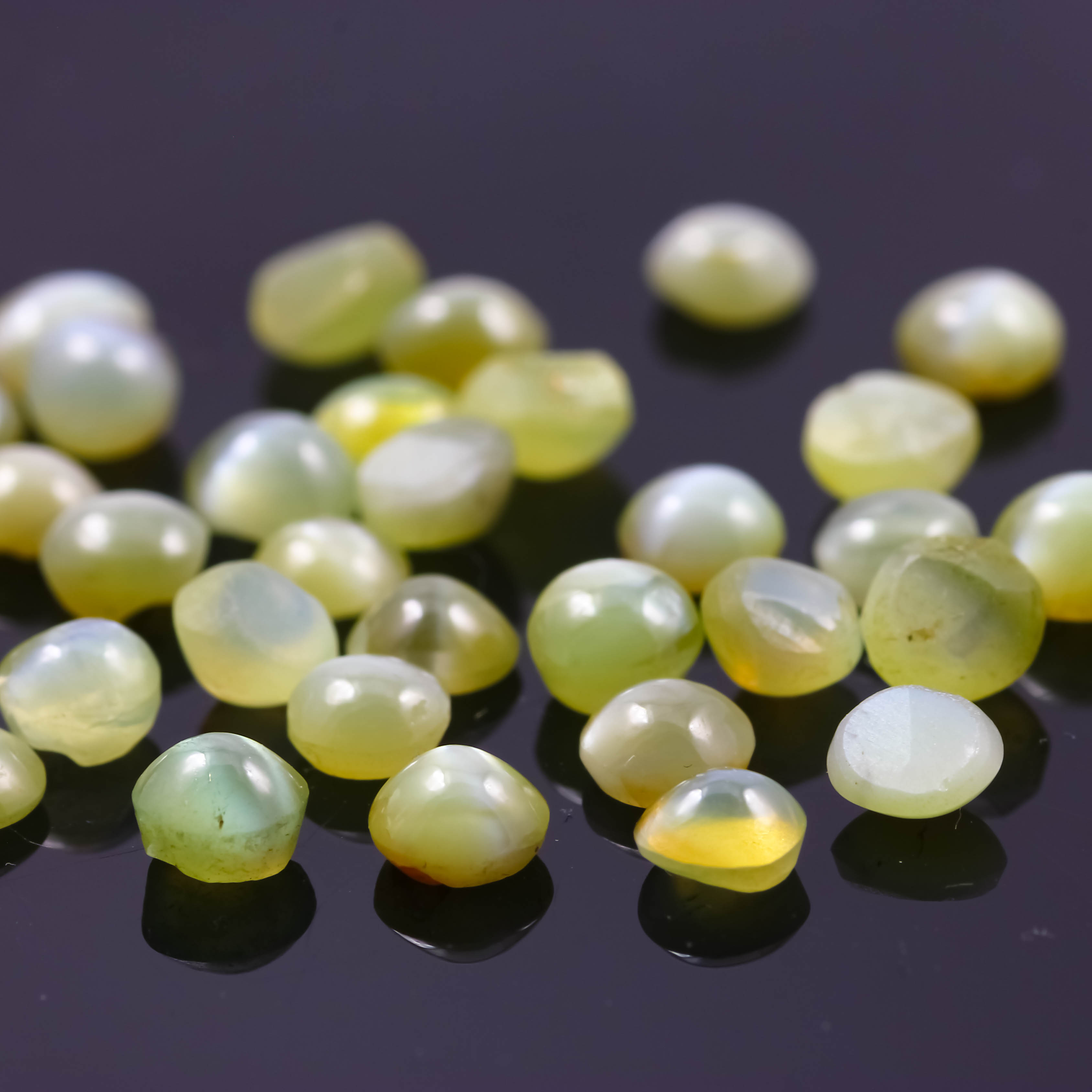
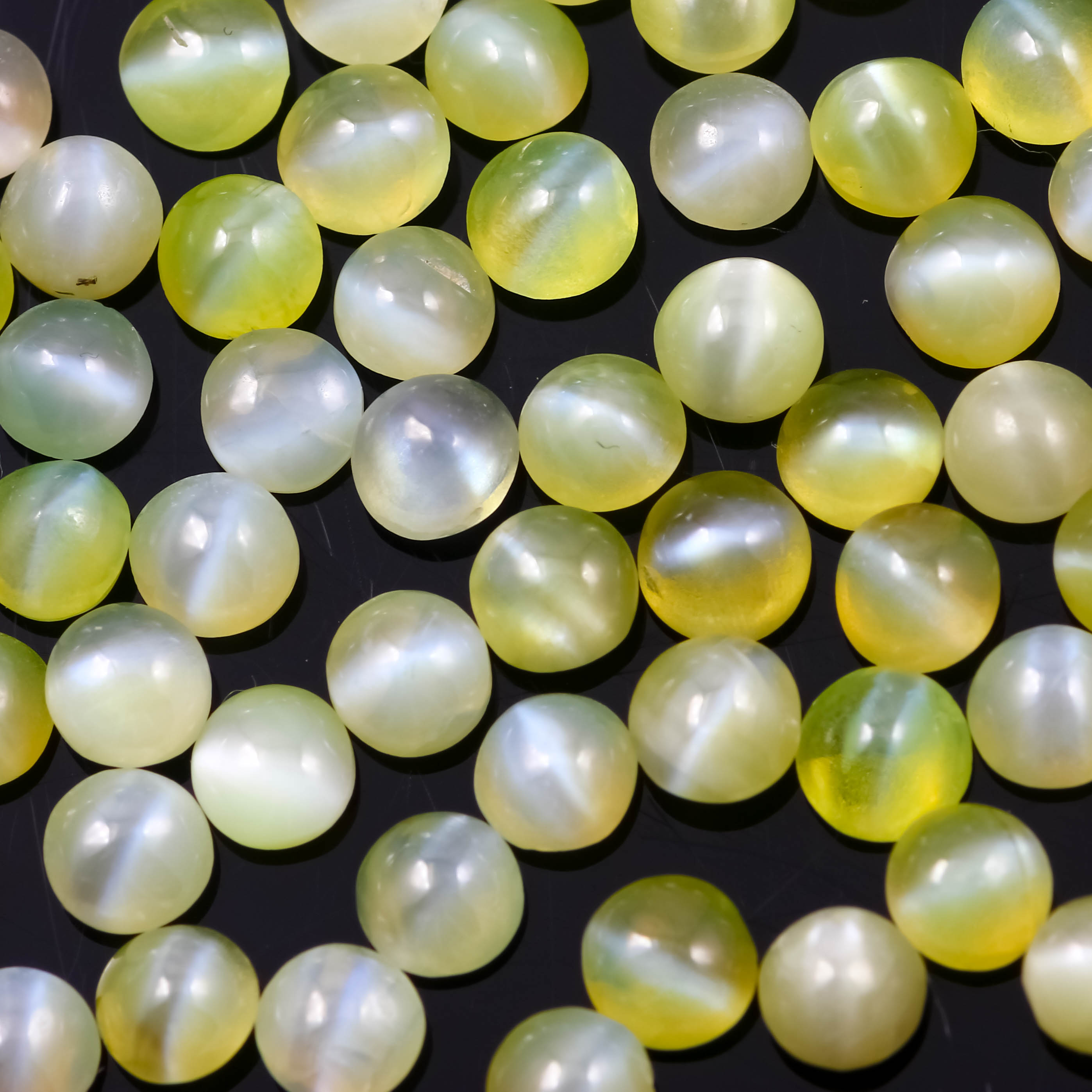
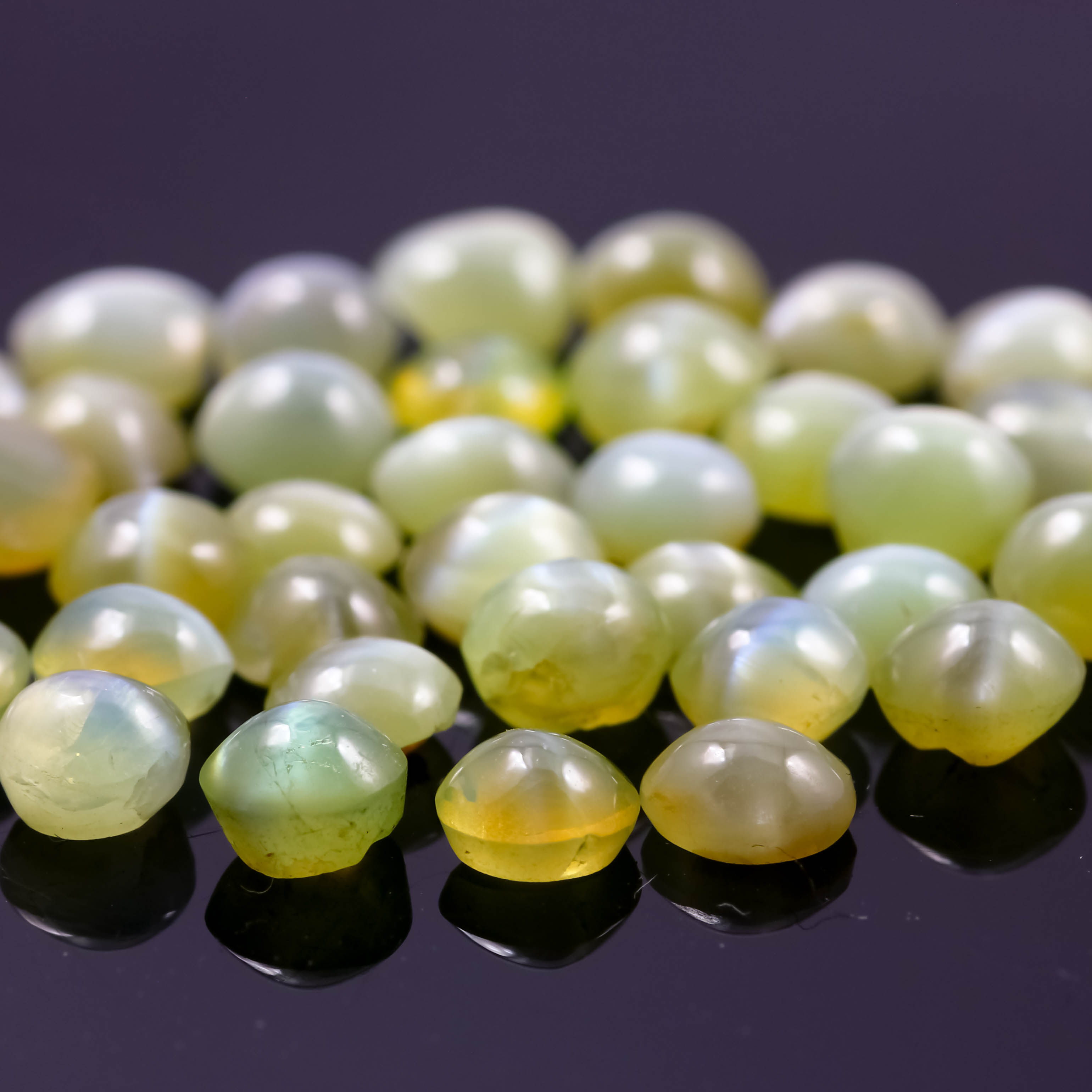
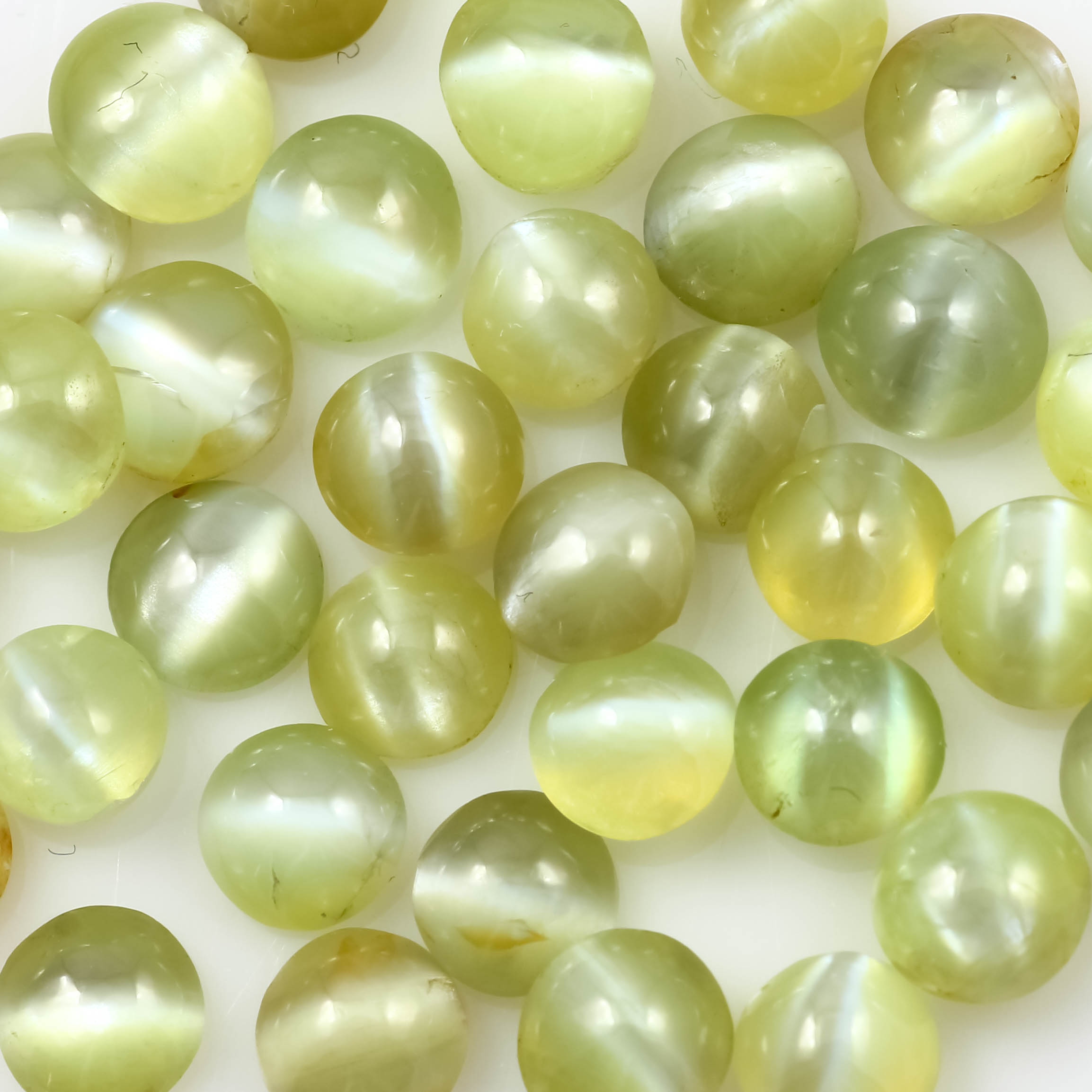
I’ve got some chrysoberyl cat’s eye in, for the first time ever, some nice cabochons in a 3mm and 4mm round. I think that this is not the best known gemstone, and that’s partly because it’s pretty rare. The entire group, made up of transparent chrysoberyl, alexandrite and the cat’s eye variety is mined in very few locations making it very rare and very desirable. It’s a good stone choice, as it is both tough and hard, and just to remind you those are not the same thing – something may be hard but not tough – glass is fairly hard, but if you drop it, it breaks. Whereas something like putty is very soft but it’s tough – if you drop it, it just squishes a bit. Stones that are hard and tough, such as diamond, jade, chrysoberyl, make excellent ring stones as they can stand up to the harsher treatment rings can endure. As a gem group, it is a relatively recent discovery, between the 1780s to the 1830s, with Alexandrite named for the then Tsar, given it was discovered in Russia, and the two colours it displays are red and green, the then colours of the Imperial flag.
Chrysoberyl is the only chatoyant stone that is permitted to be called simply ‘cat’s eye’. The old name for it is Cymophane, which in Greek means ‘wavelike form’ which I think must refer to the way that the cat’s eye undulates across the stone. This chatoyancy is caused by parallel needles or tubes in the stone; light reflects off them, causing the ‘line’, and since the needles run all the way across the stone, this line will move as you turn the stone in the light.
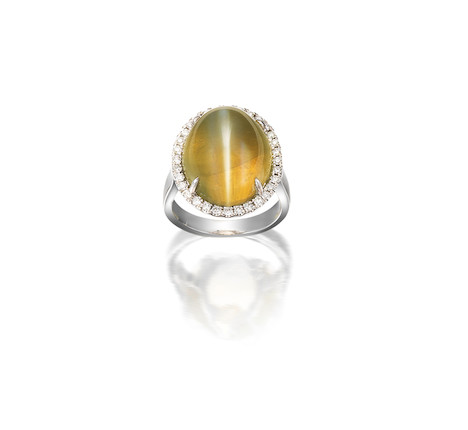
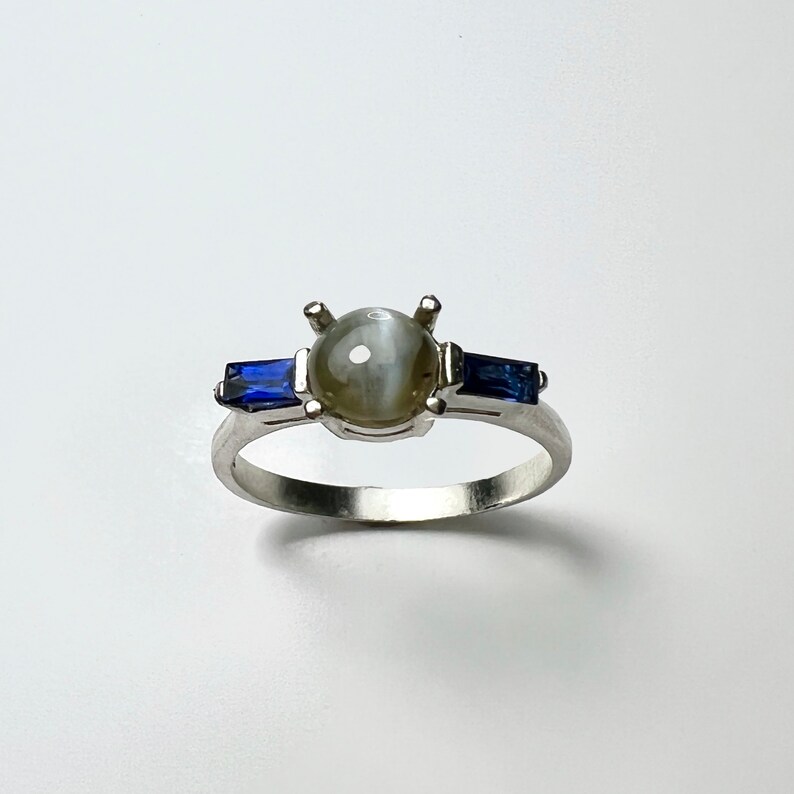
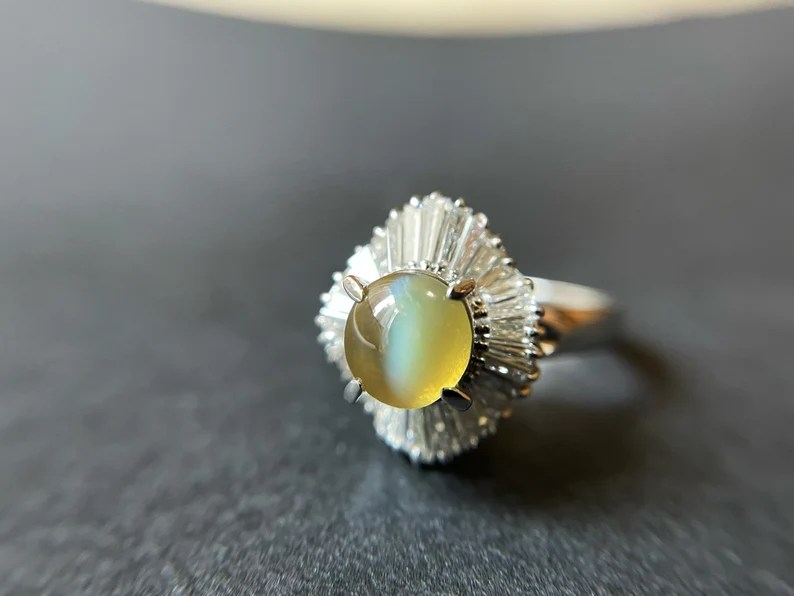
Below, from left to right, you can see the simple beauty of this stone; The Bonham’s ring was sold at auction for around $38,000 USD, which gives you an idea of how much it can command. This is an exceptionally beautiful example; large, at 23 carats with a very sharp eye against an almost transparent golden body. I love the combination of the chrysoberyl with the sapphire in Evgad’s engagement ring, and what an unusual but effective choice; the blue of the sapphire brings out an array of cooler tones in the chrysoberyl. The stone also works well in chunky, streamlined settings such as the Gemsography men’s ring, right; the honeyed tones of the stone contrasting well with the blocky silver of the ring.
People often mention the ‘milk and honey’ effect when talking about chrysoberyl, and I confess, when I first learned about this, I didn’t really understand it. It isn’t something that necessarily photographs very well, but what it means is that, with good quality material you get a phenomenon whereby it appears as if the stone is different colours on either side of the cat’s eye. When I unwrapped these stones I literally cried out, as I could see it, plain as day! What you are looking for in best quality is a golden yellow semi-transparent yellow colour on one side of the eye, and a greenish or brownish yellow on the other. In real life it’s pretty striking. In terms of quality, as well as this ideal colour, you are also looking for a nice, sharp, silvery cat’s eye which stands out in relief to the bodycolour of the stone. This stone is found in fine quality in Sri Lanka but also in Myanmar, Brazil, Zimbabwe and Madagascar. Because of its durability it is popular in rings, cufflinks and probably because of its subtle colouring is a popular stone in men’s jewellery.
In looking at chrysoberyl jewellery, I’m finding alot of antique and Victorian jewellery; I think it must have been a popular choice due to its sober yet rich colouring. It is beautifully subtle, in an array of creamy golden to brown tones. Makes me think of dulce de leche, buttery and indulgent. Chrysoberyl is traditionally supposed to provide protection from the evil eye, and to help with decision making, that’s something I could certainly do with.
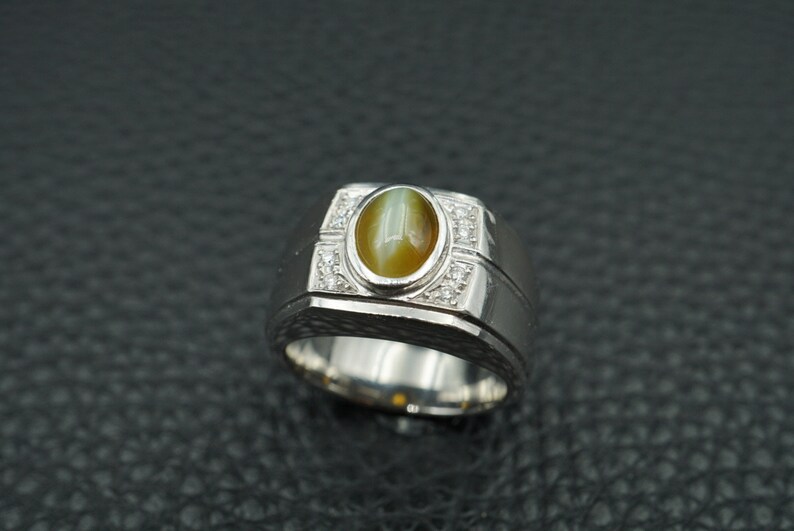
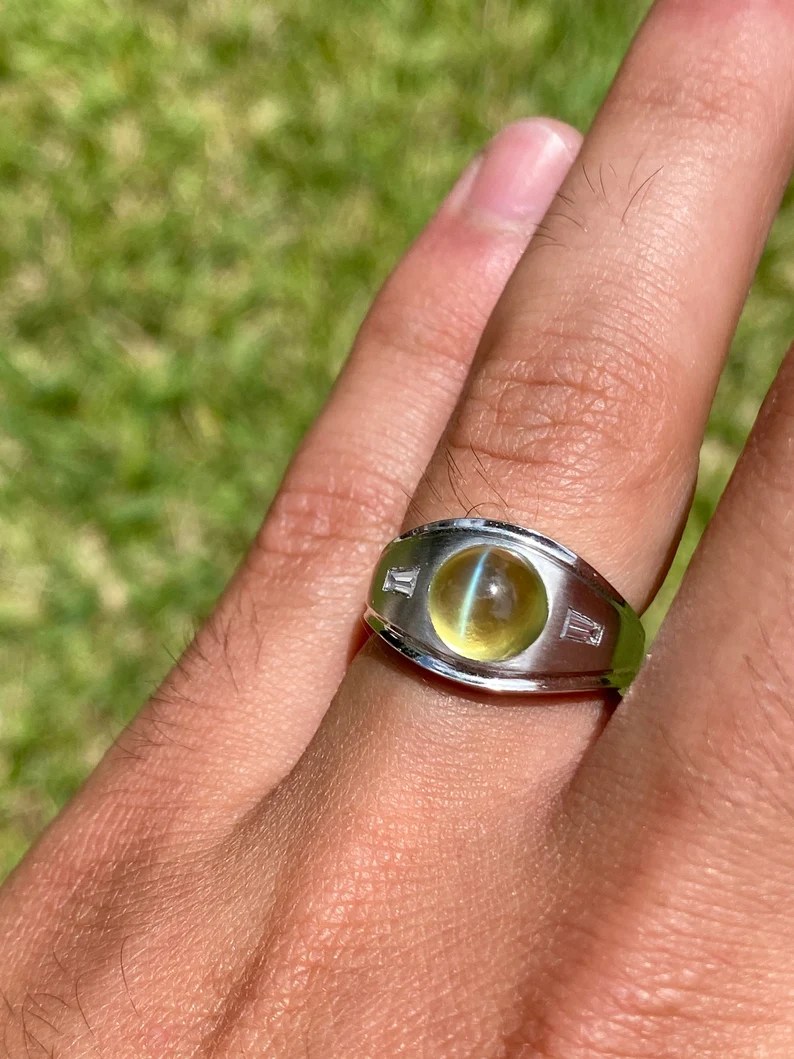
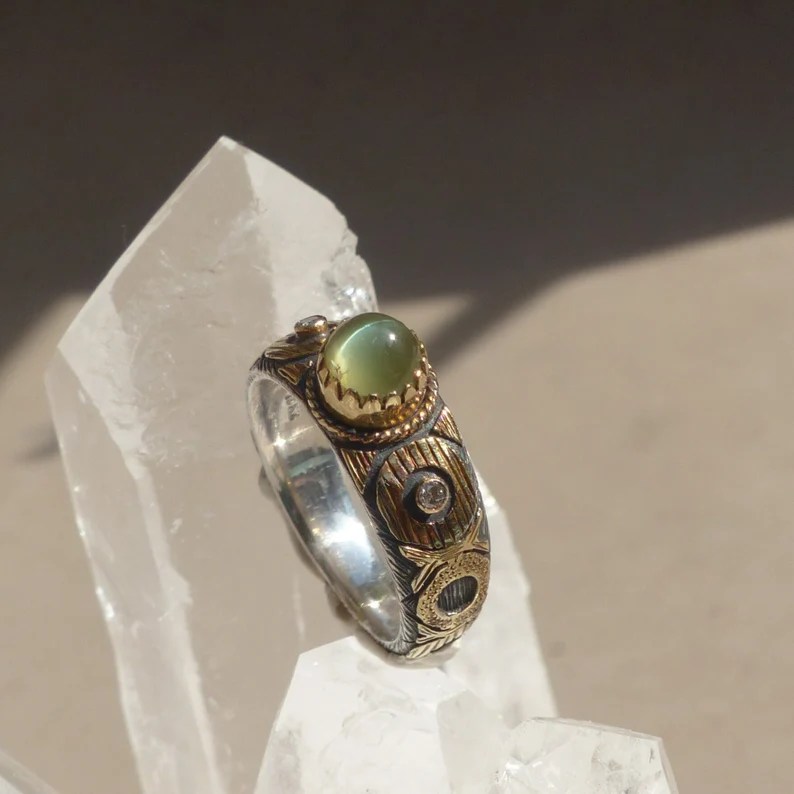
There’s another example of male jewellery with the Assay Jewellers ring, left, and I do like the effect of the two baguette cut diamonds running perpendicular to the cat’s eye. Another beautiful, stripped back design. But then I think that the Kardamome design, with its complex engraved design, oxidisation and added diamonds also looks awesome. I love the look of the stone against the black-gold of the metal; it looks almost ancient, medieval. And then finally, the Gem of Art ring, with the sunray baguette cut diamonds places the chrysoberyl within the rays of a bright star, the diamonds appearing to illuminate the stone, make it glow from within.
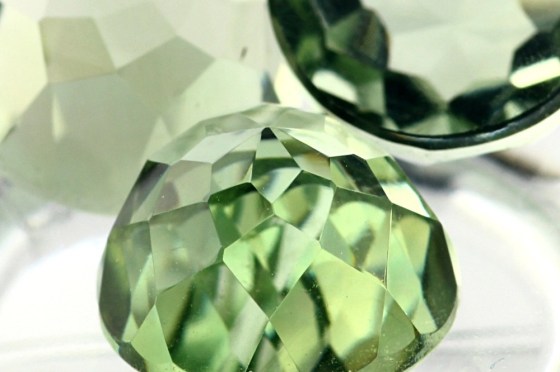
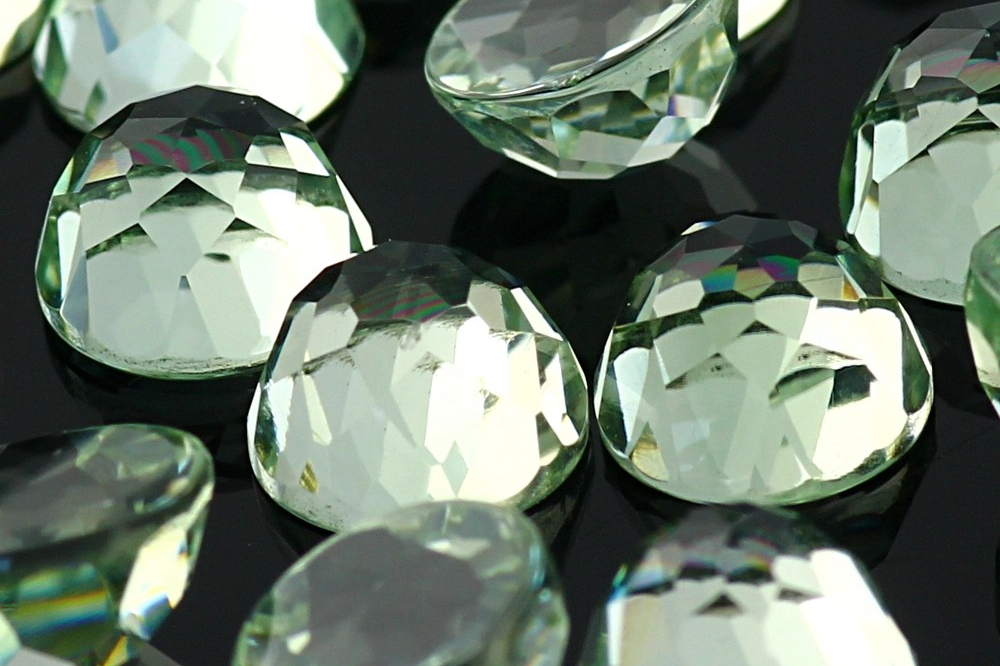
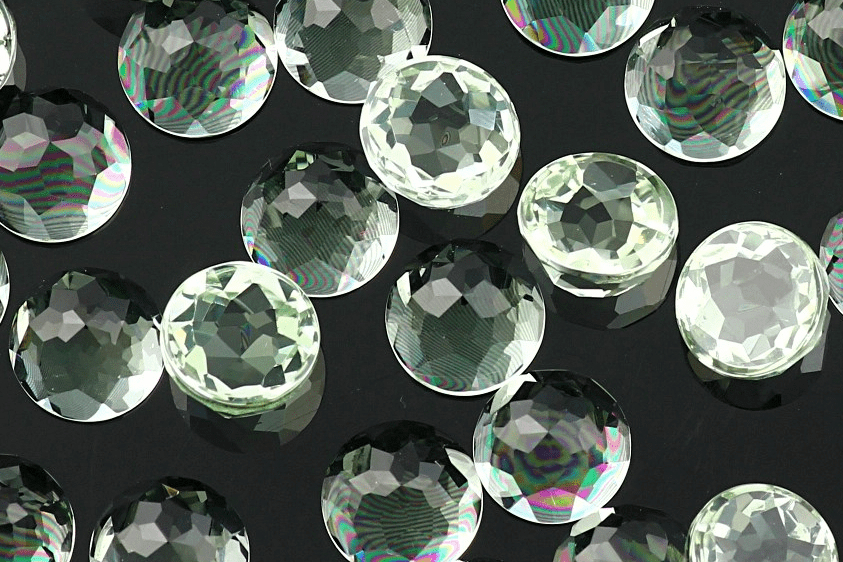
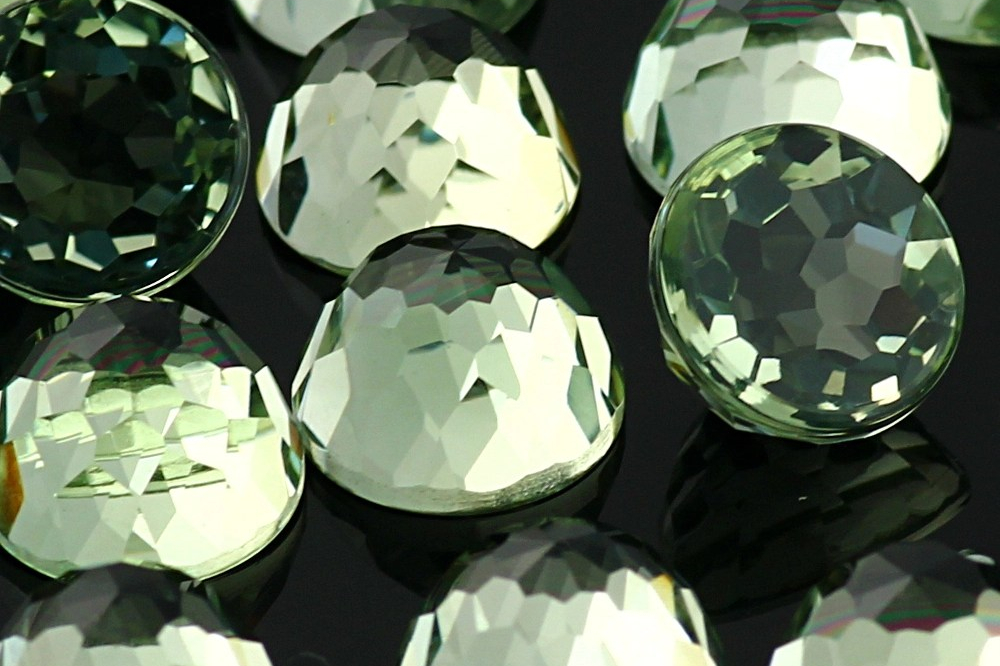
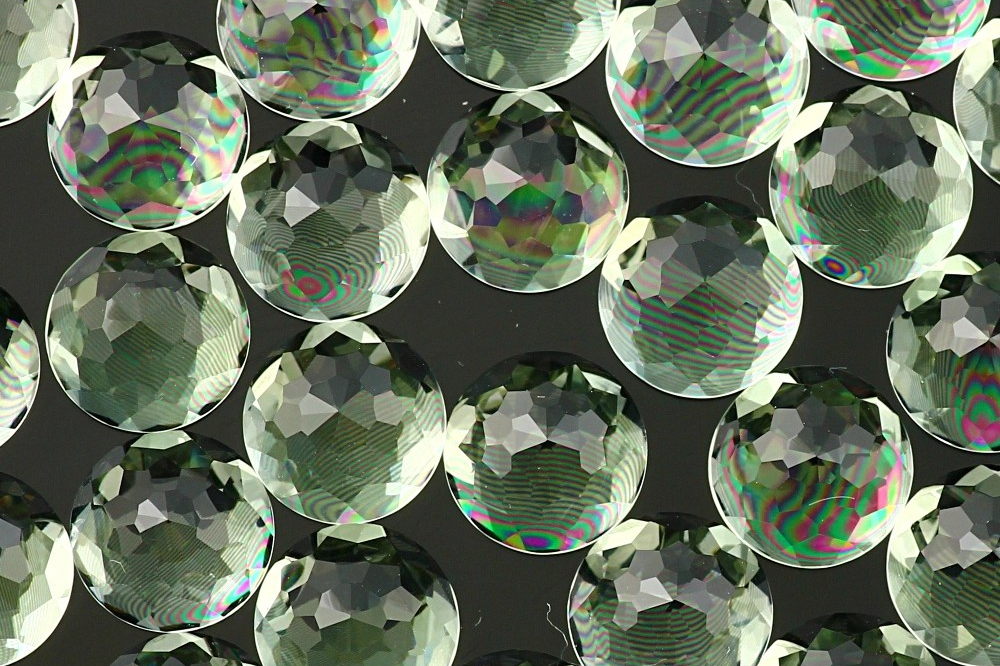
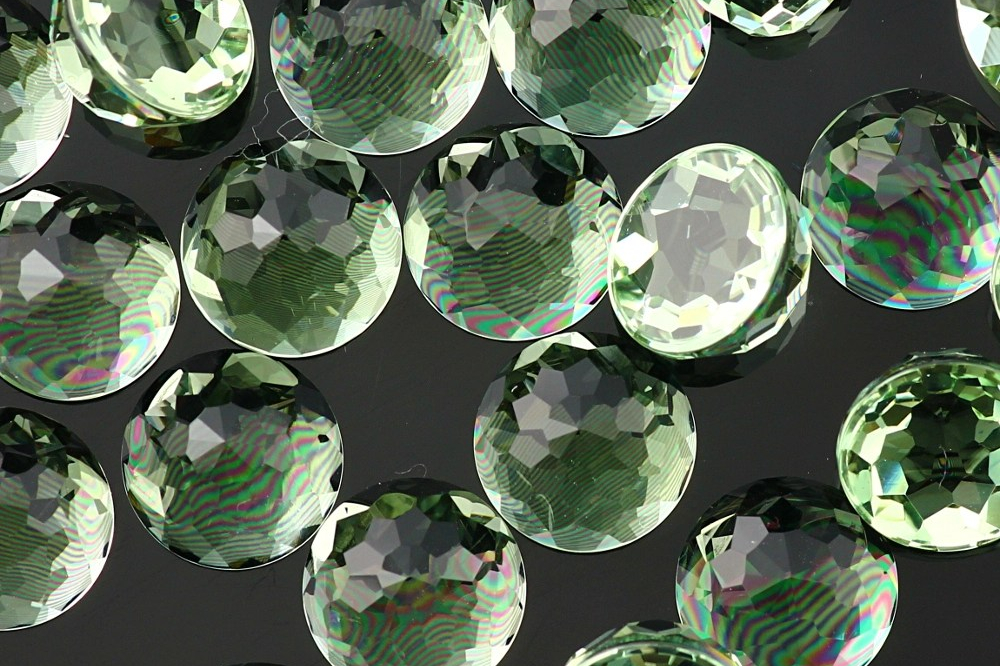
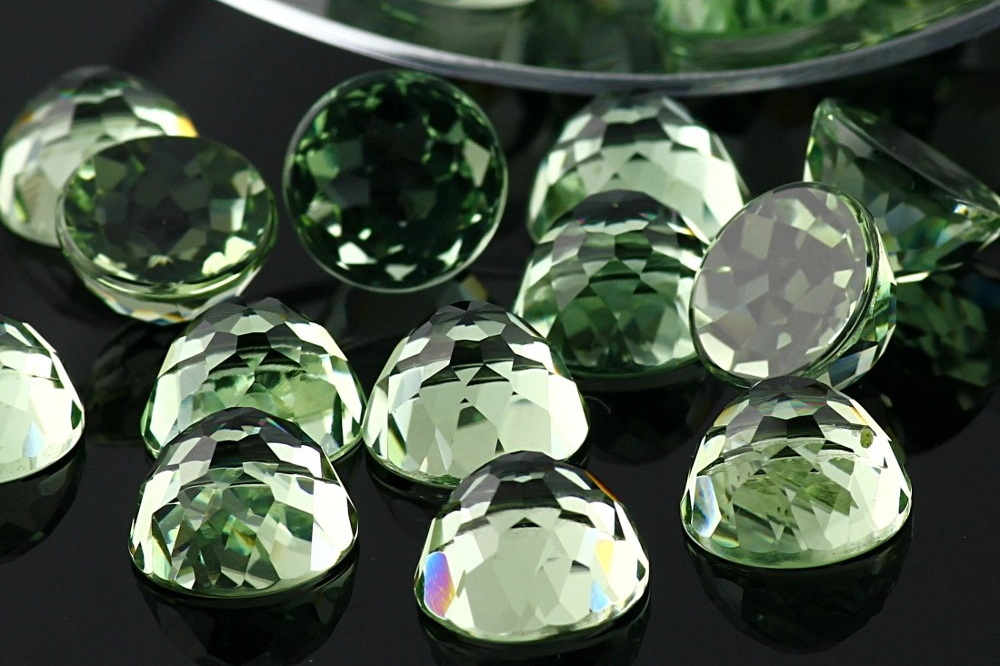
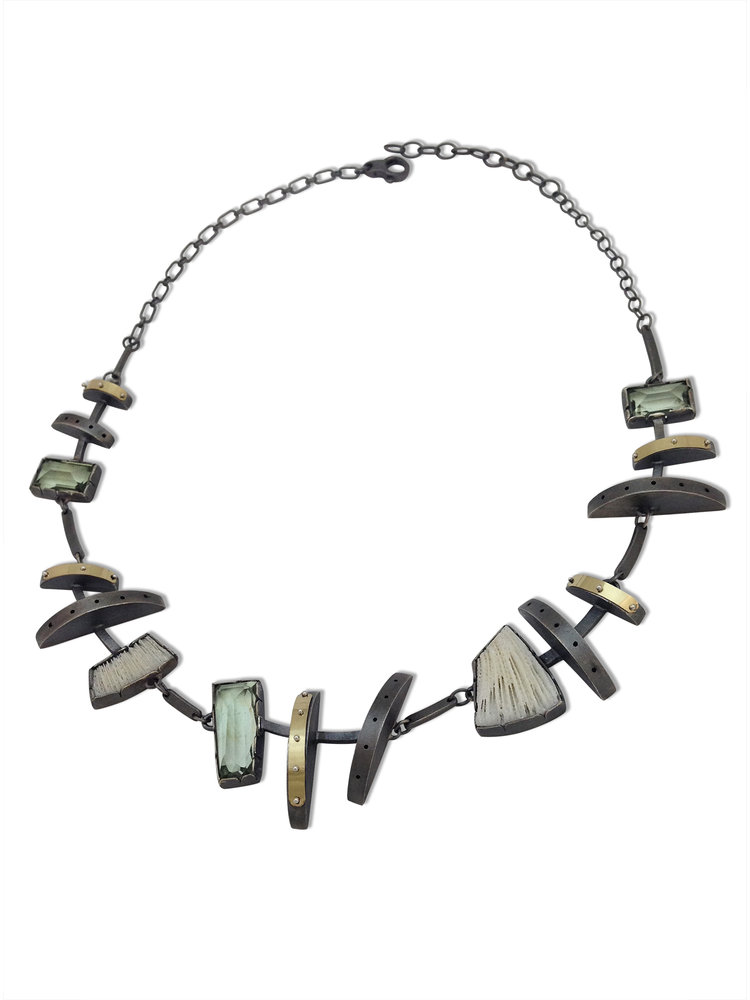
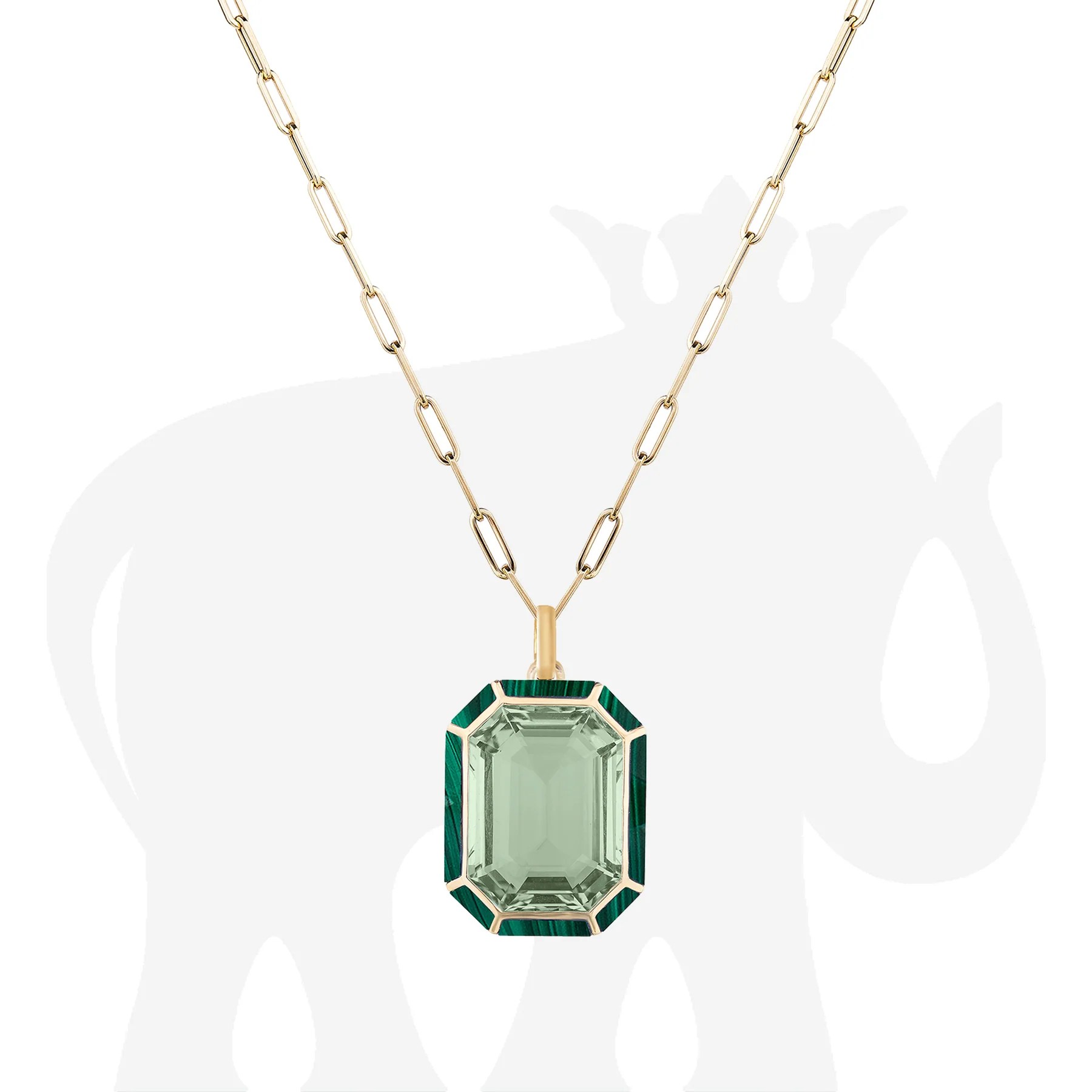
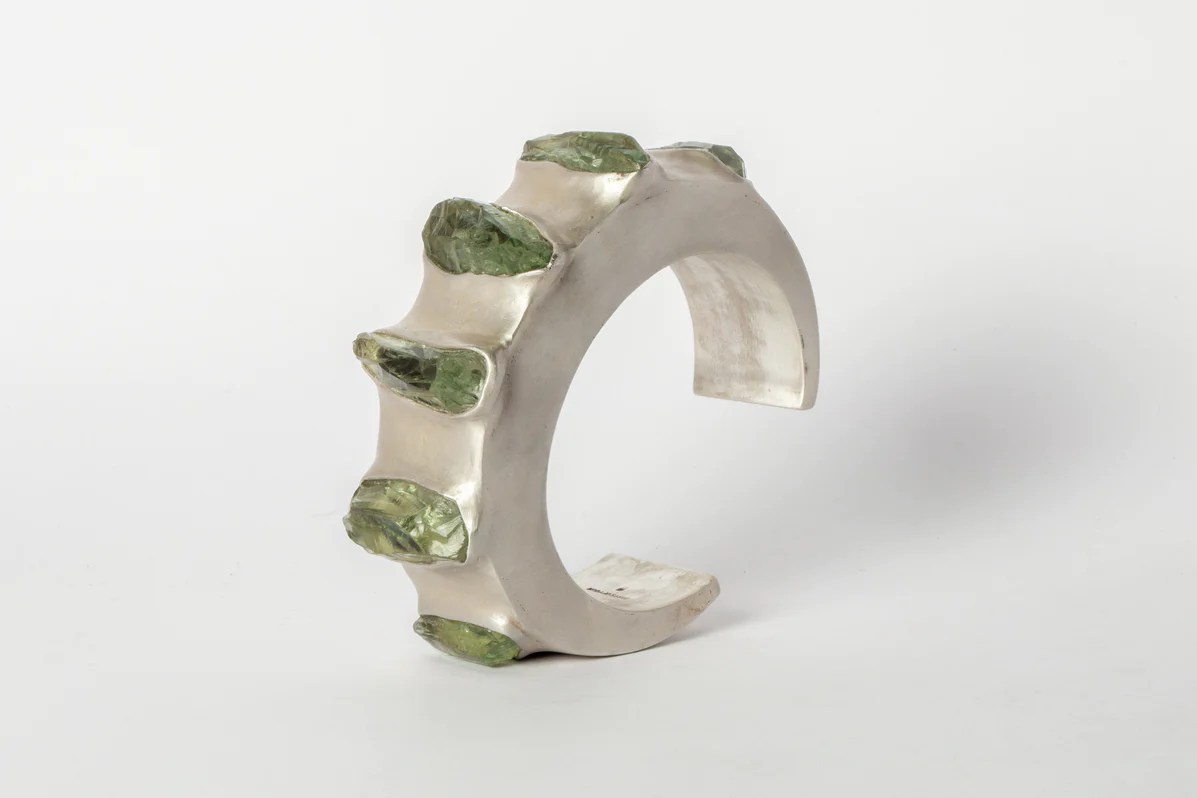
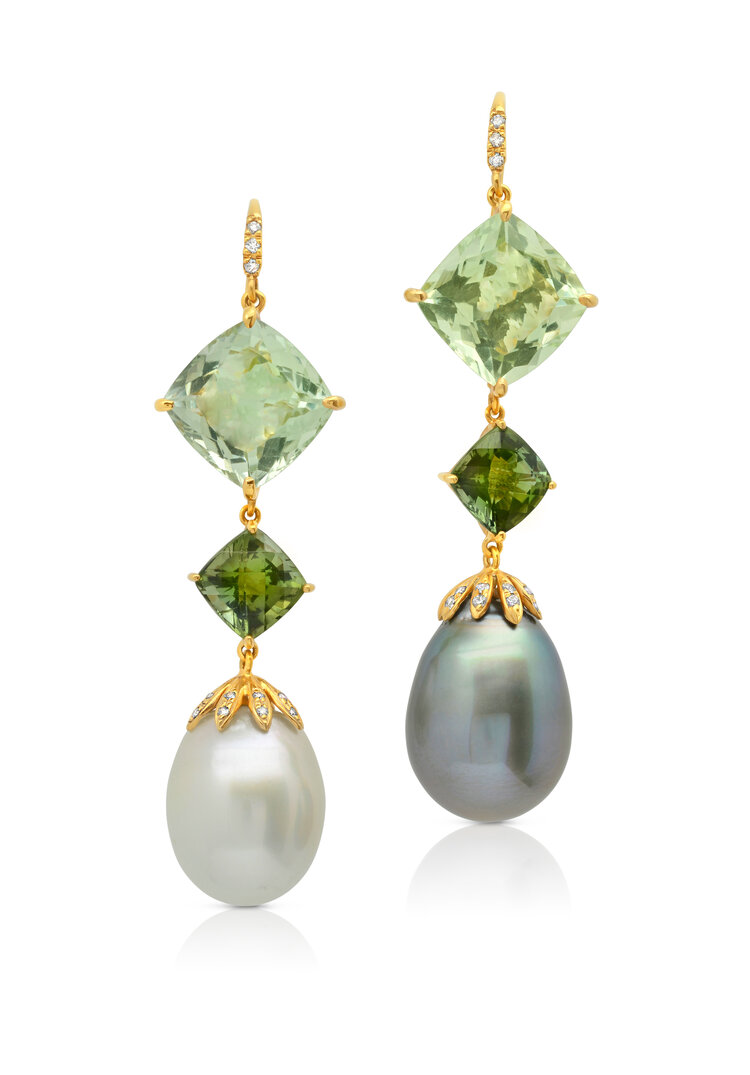
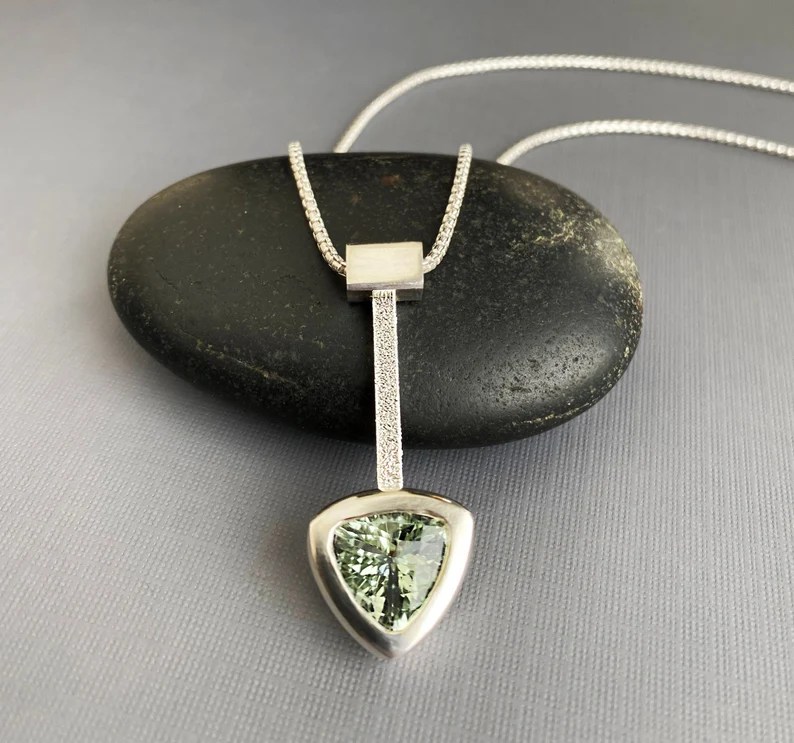
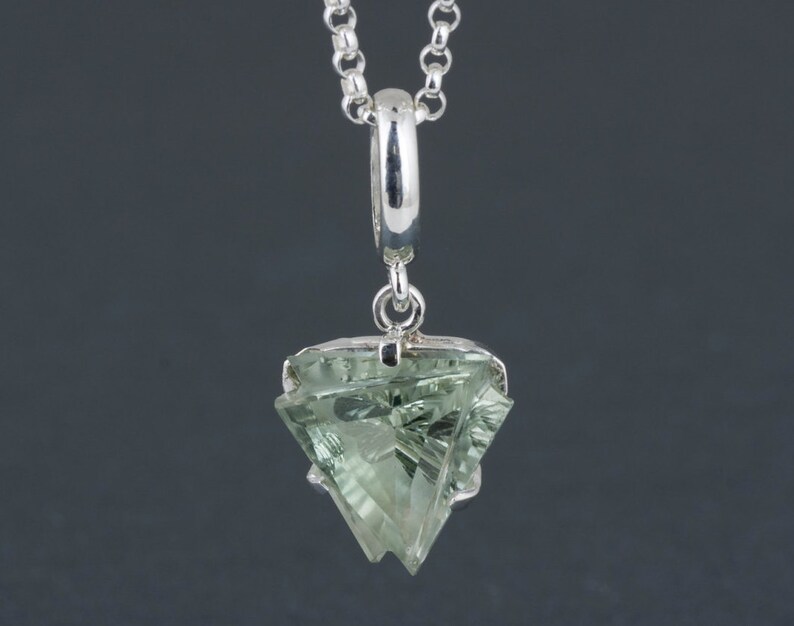
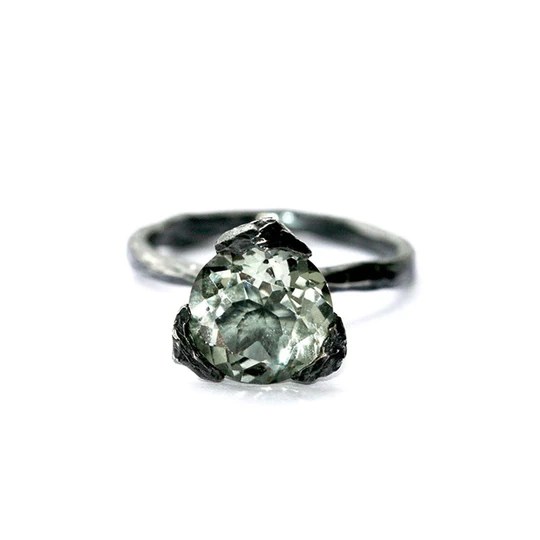
I have noticed a phenomenon over the years, whereby people tend to buy the same stone the same time. It’s not a trend thing and it can only be by chance, but it is noticeable. Like one week, everyone’s at the London Blue and the following week it’s citrine. This week it is the turn of pale, pretty, unassuming prasiolite. When I started out, this used to be called green amethyst, until the Federal Trade Commission called time on this practice, pointing out quite correctly that amethyst came in one colour: purple and so therefore it was a misleading and inaccurate name. So, hence, prasiolite became the name for this stone. Don’t tell anyone but I do sometimes put ‘green amethyst’ in brackets because I’m sure there are people out there who still have no idea what prasiolite is, and certainly you will see this name used a fair bit in the trade. You also sometimes see it referred to as green quartz. It is a particular thing; amethyst which has been heated, and not just any amethyst either. Only amethyst from certain locations will turn green on heating; from some mines in Brazil and a few other places. You can see this with the settings below, from the gorgeous architectural styles of Janine Decresenzo and Parts of Four to the malchite surround of the Goshwara pendant and the pairing of the Joon Han earrings with the yellowish green tourmaline.
It is, as I say, a rather unassuming stone, so it does deserve a bit of love. It has the splendid clarity you’d expect from quartz, and its colour varies from a light yellowish to bluish green. It can be very pale indeed and as it gets smaller, it gets consequently lighter. I don’t think of it as a centrepiece stone but I’ve seen it used in that way quite a lot recently and what’s great about it is that it is a bit of a chameleon stone – it tends to take on the colour of what it surrounding it, or the metal it is set in. Set it in silver, and it will bring out the cool, almost bluish tones; set it in yellow metal and it will appear more gold. Surround it with darker green to emphasize the colour, or purples and blues to make it look more blue. I like it set in oxidised silver; I think the black does a lot to bring out its colour, as in the Yoki Collections pendant and Hagerskan’s The Cone Ring.
This is the buzzword, well, buzz-phrase really of the season. It refers to the idea that dressing a certain way can make you feel good. Obviously this is going to mean different things to different people, but it has been defined this season as meaning bright, mood-boosting colours. I love the idea of this; and in fact, I am a big fan of colour in my surroundings – I love a yellow sitting room; a red dining room; a blue bedroom. I’m just not sure I can go to bright pinks, oranges and acid greens in my clothing. My pale, English skin won’t take it! The fashion mags are saying, don’t put too many different colours together, which seems like sensible advice; keep it to one or two colours.
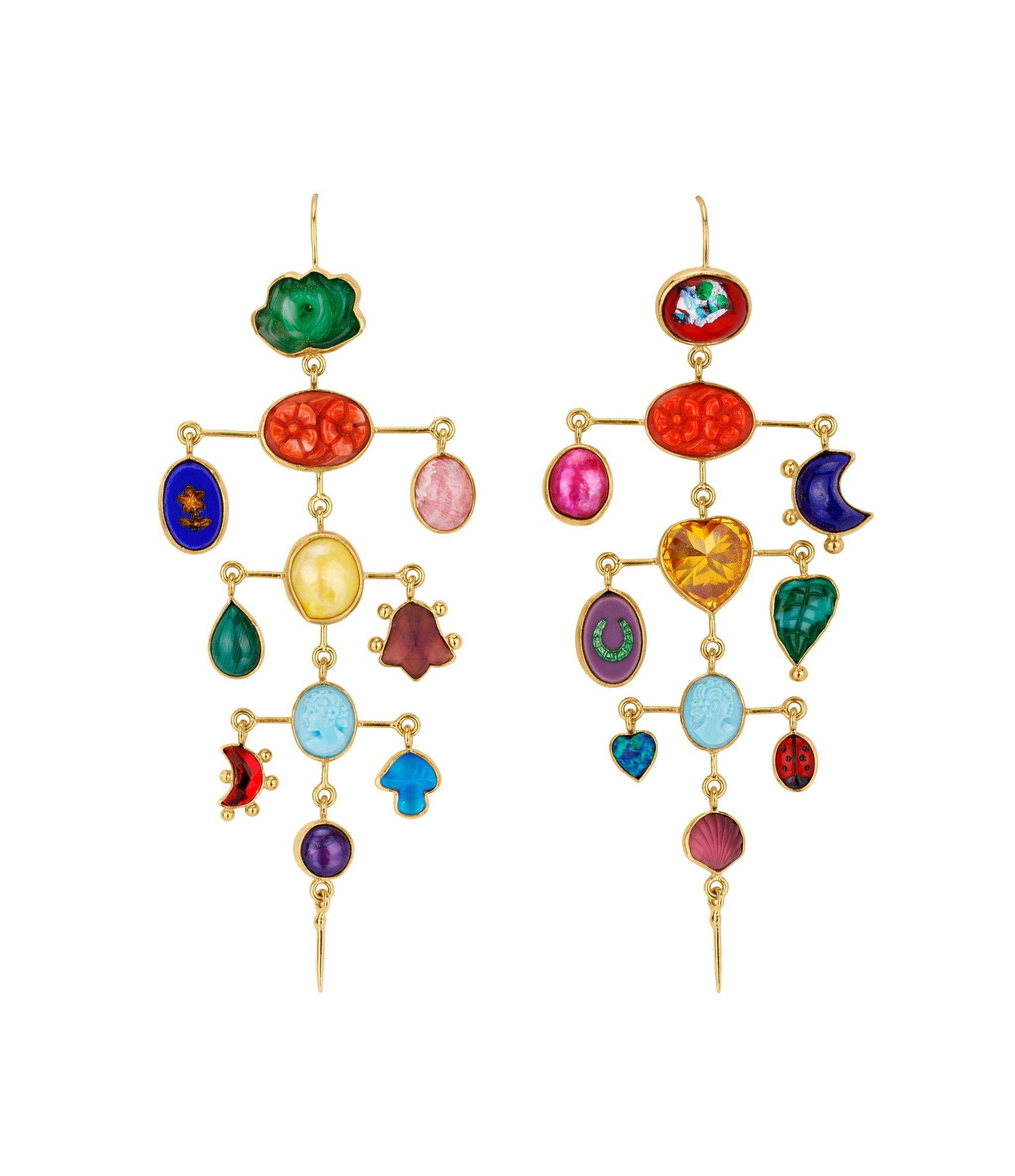
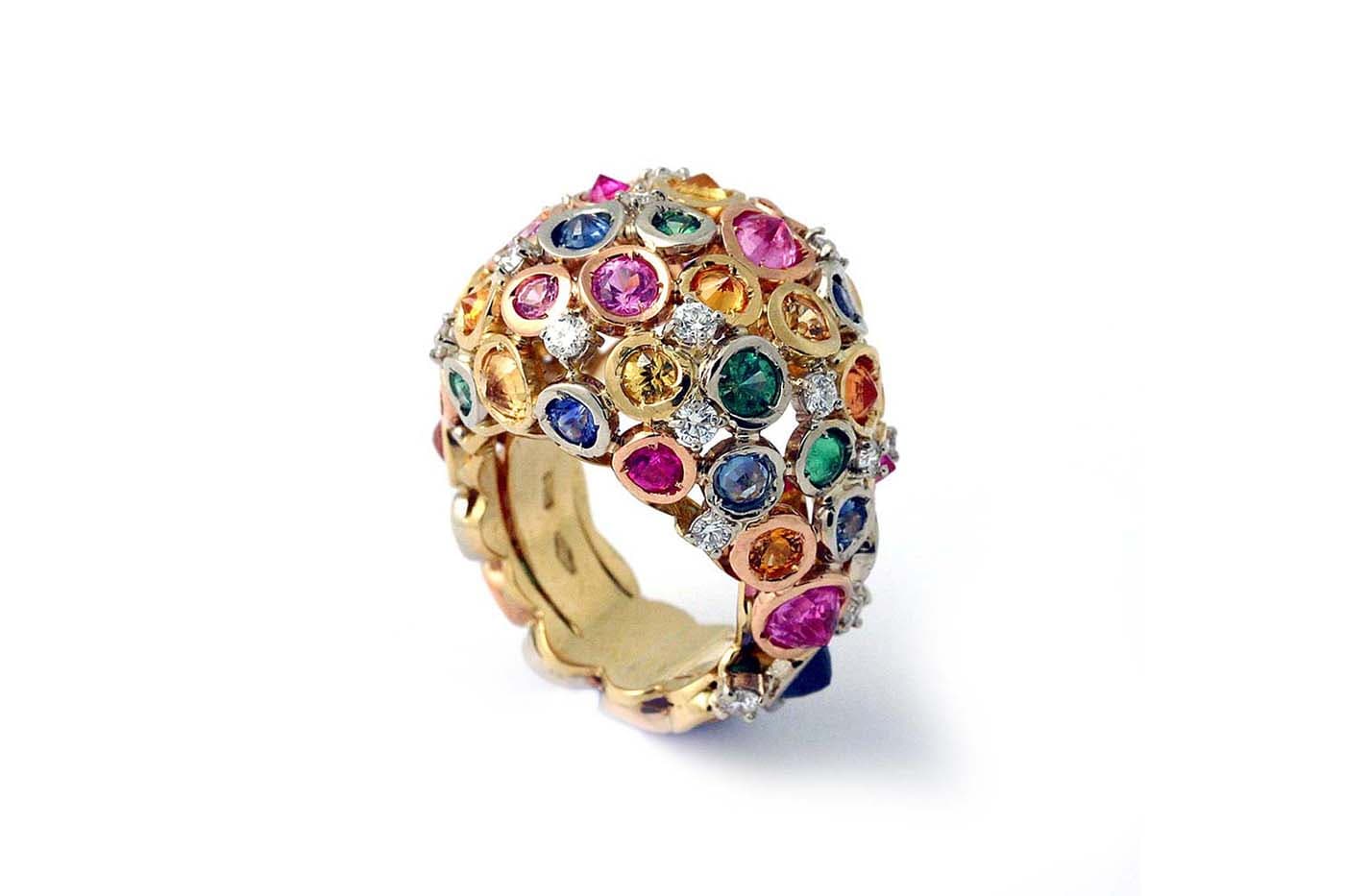
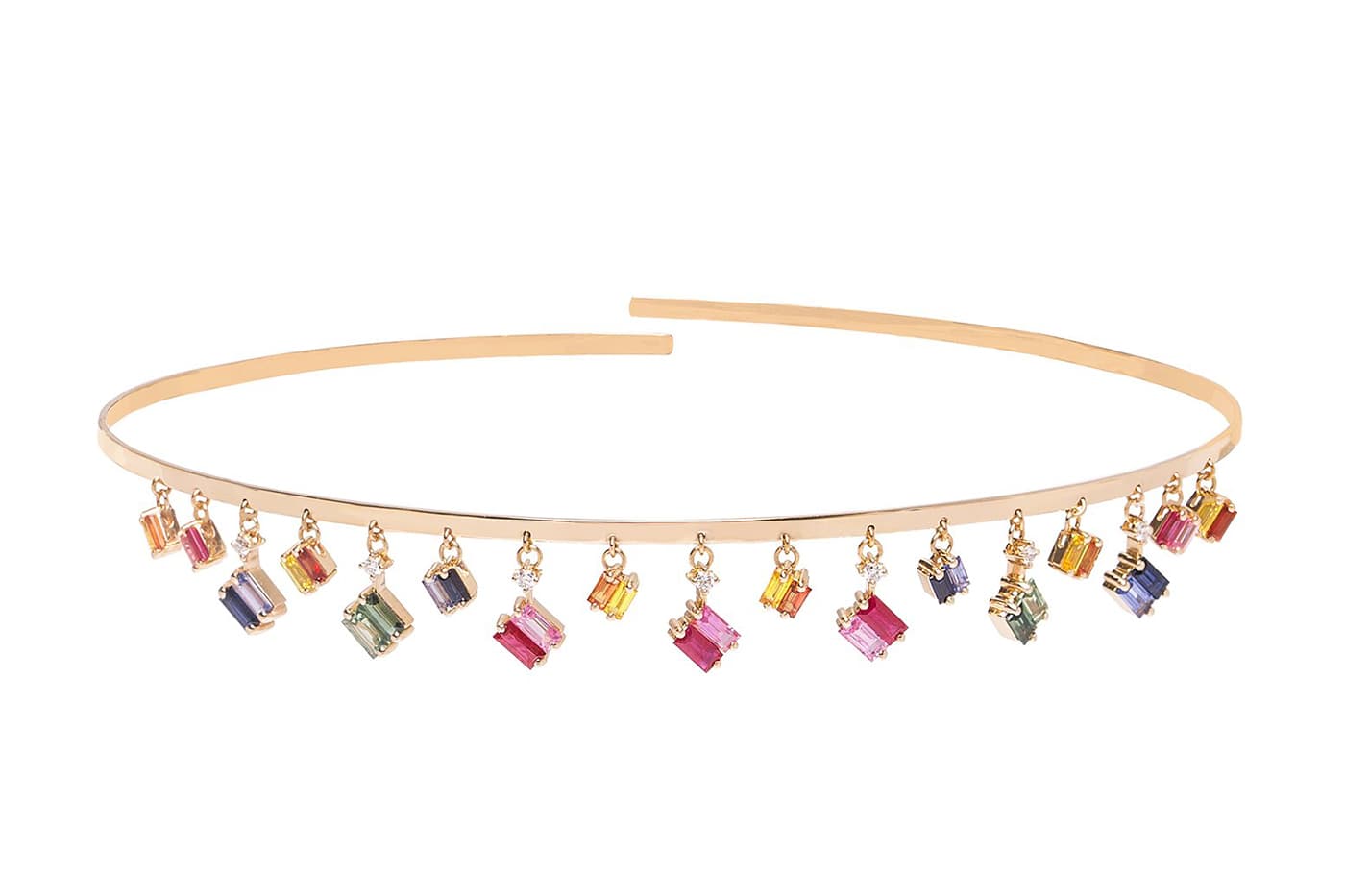
To me, it seems a much easier trend to wear in jewellery form, as most coloured stones are bright and saturated and that’s how we like them! Think of a juicy pink tourmaline, or a glowing yellow citrine; a vibrant green peridot or a velvety purple amethyst. Garnets like drops of blood and lapis the colour of a summer sky. And these can look amazing when put together, six or seven colours in the same piece.
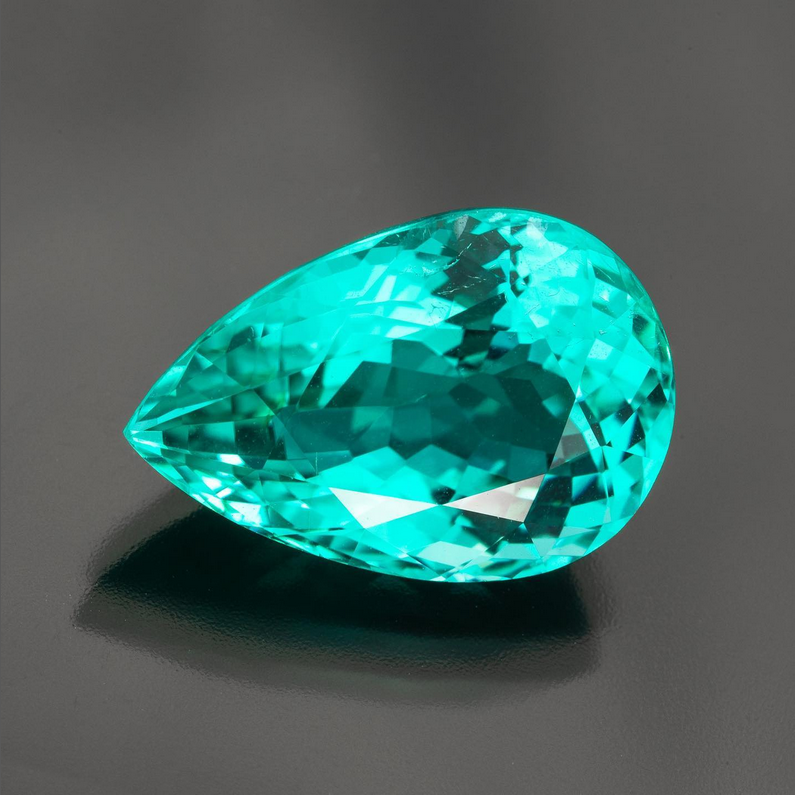
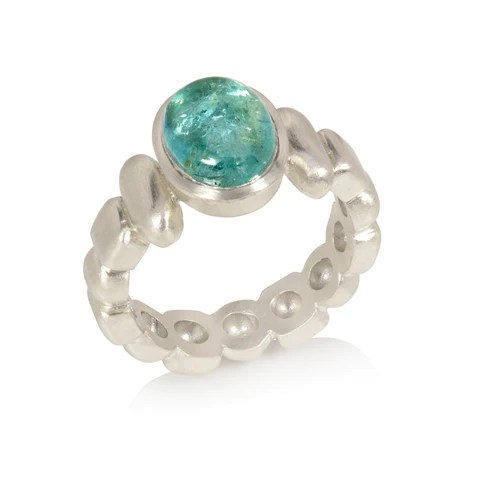
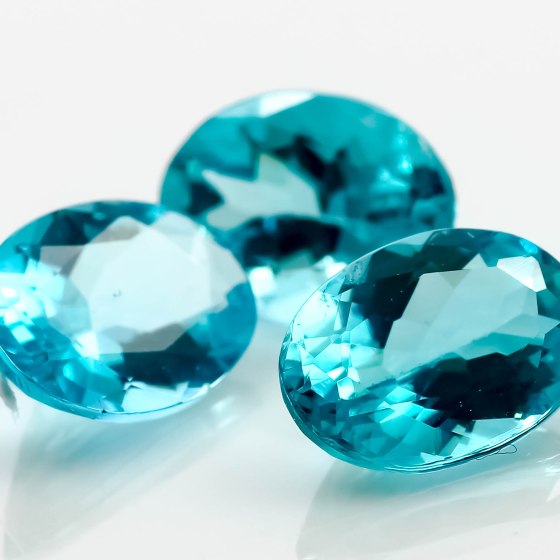
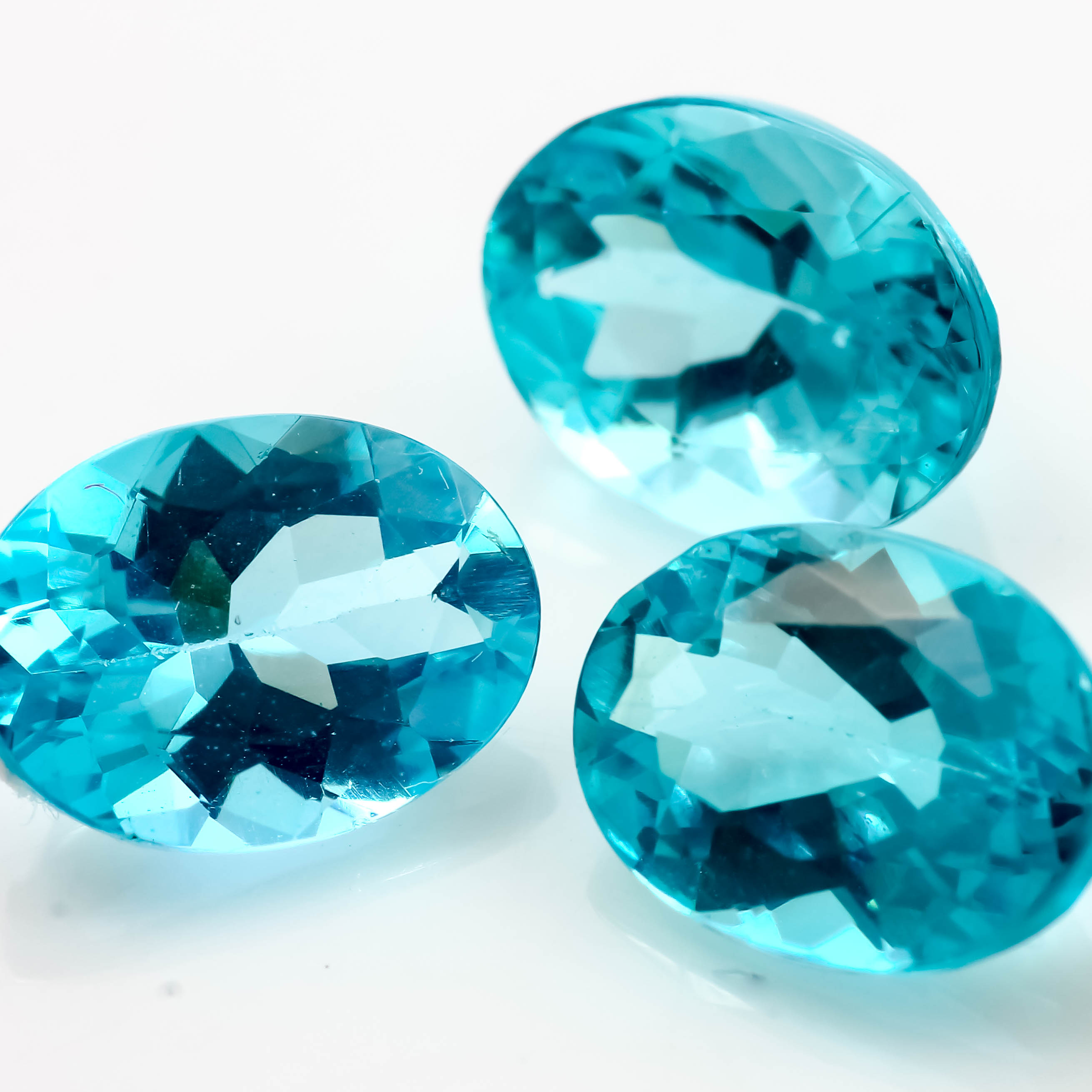
I’m talking about apatite of course, although you might be mistaken for thinking that you were looking at some sublime pieces of paraiba tourmaline. Apatite actually takes its name from the Greek ‘apate’ which means ‘to deceive’, which really is the perfect name for it. It is a shade of gemstone that is just very unusual, very hard to find and which really only has paraiba as a similar colour. Bright, neon aqua, it is a beautiful stone in its own right, although it is a lot cheaper than paraiba. It’s also a lot softer; at 5 on the Mohs scale, its going to scratch fairly easily and even break, so it should really be reserved for either special occasion jewellery or be put in settings where it’s not going to get rough treatment. If you’re going to put it in a ring, it’s probably not for everyday use or for, ahem, doing the washing up in. It’s hard to cut, hard to polish and so it would be easy to dismiss this stone, but one look at it and you’ll be lost, I promise. Treat it nicely and you’ll be rewarded with a breathtaking gem. There’s plenty of lower grade material on the market, and this is lovely in its own right; it makes for a very nice dark blue to teal opaque stone. But the transparent material is the most eye-catching and as it grows in small crystals, larger stones are pretty rare.
Interestingly apatite is part of a group of minerals that is abundant in nature. It’s found in the human body as tooth enamel and bone, and in rocks from the moon. It’s also the world’s most common source of phosphorus, and so some forms of apatite are used to make fertilizers and chemicals. When I read that I had to check it, as it seems so extraordinary. I’ve been selling apatite for a long time now and it is a very steady seller. Even though it is unusual, I think the colour is so beguiling that people don’t worry so much that they haven’t heard of it.
The oval mixed cut apatite stones in the header image are now available on discount at around £35 per stone; an absolute bargain! To check out all of our apatite, click here









 Joopy Gems | The Blog