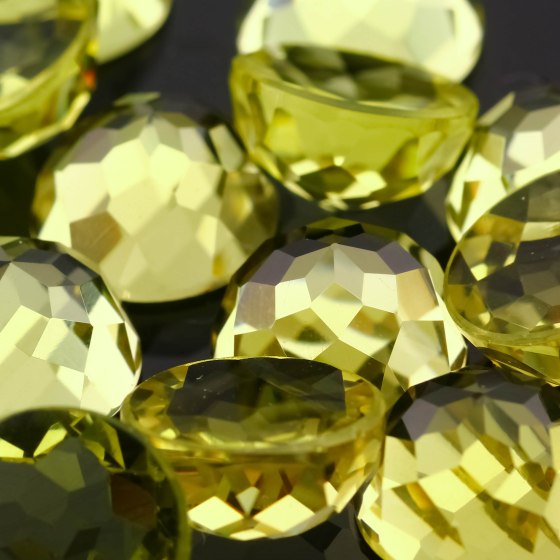
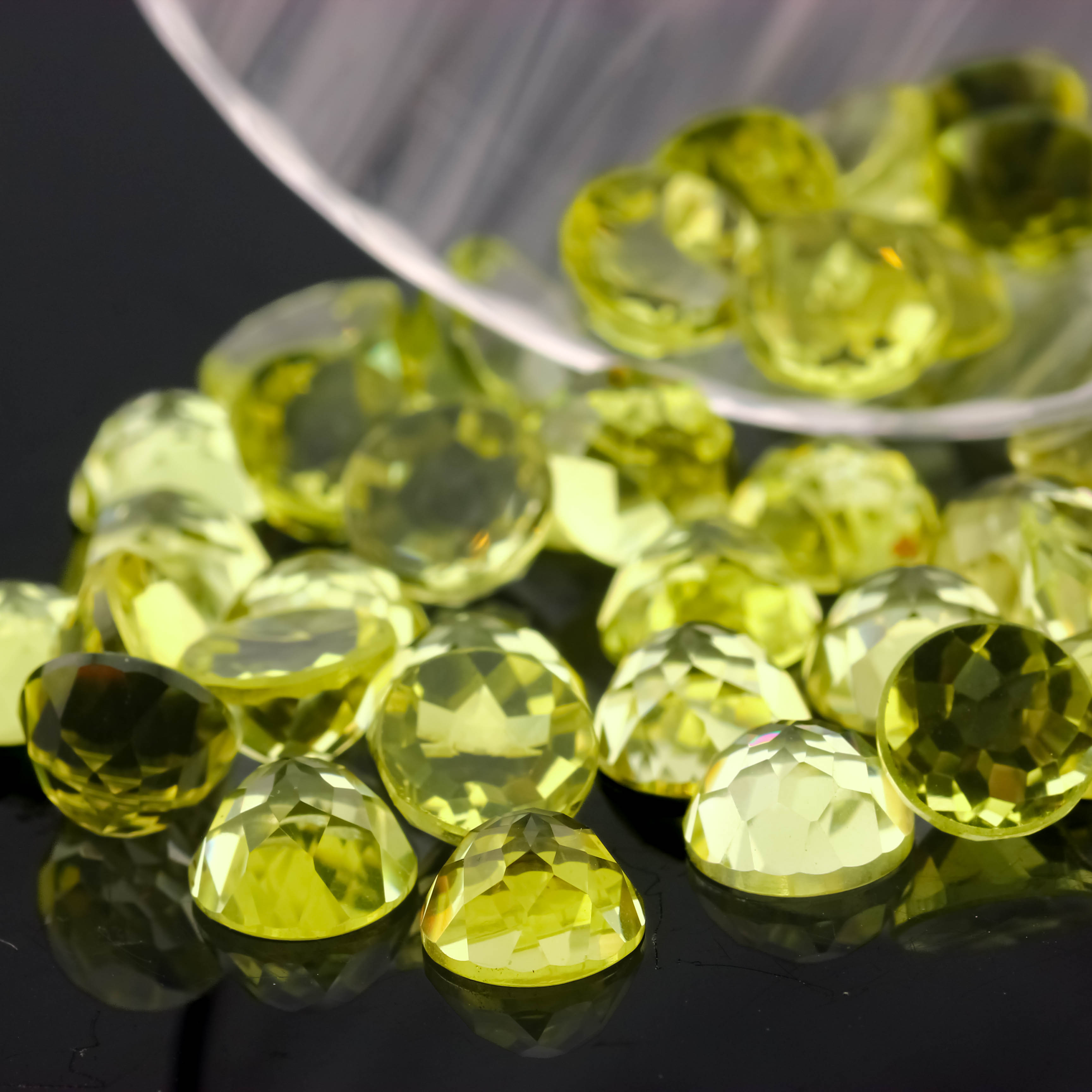
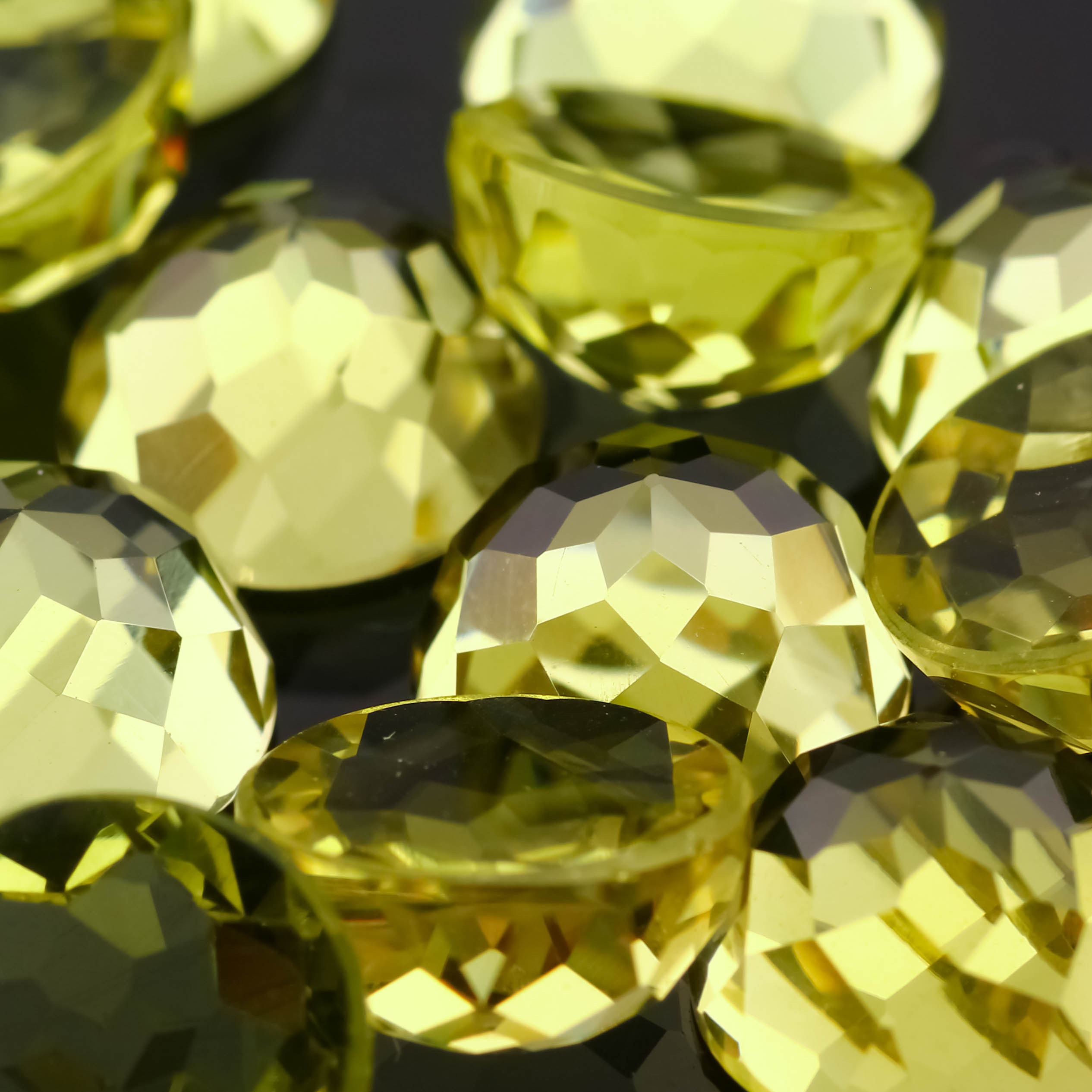
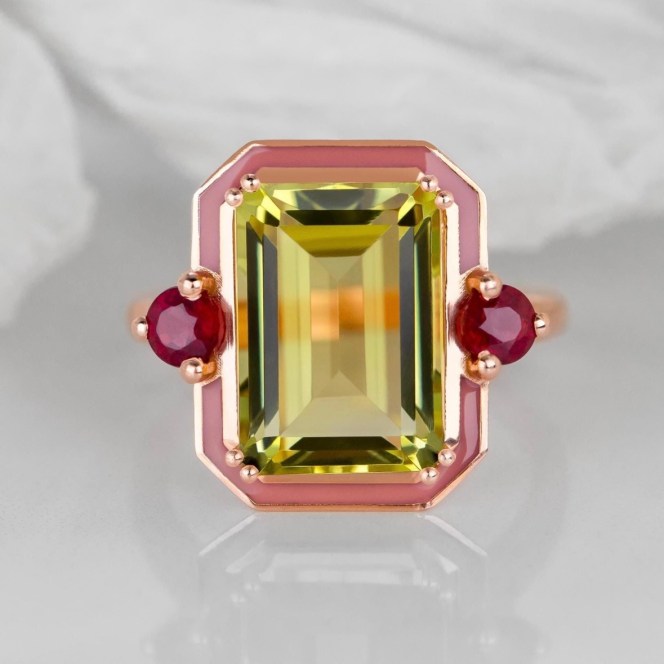
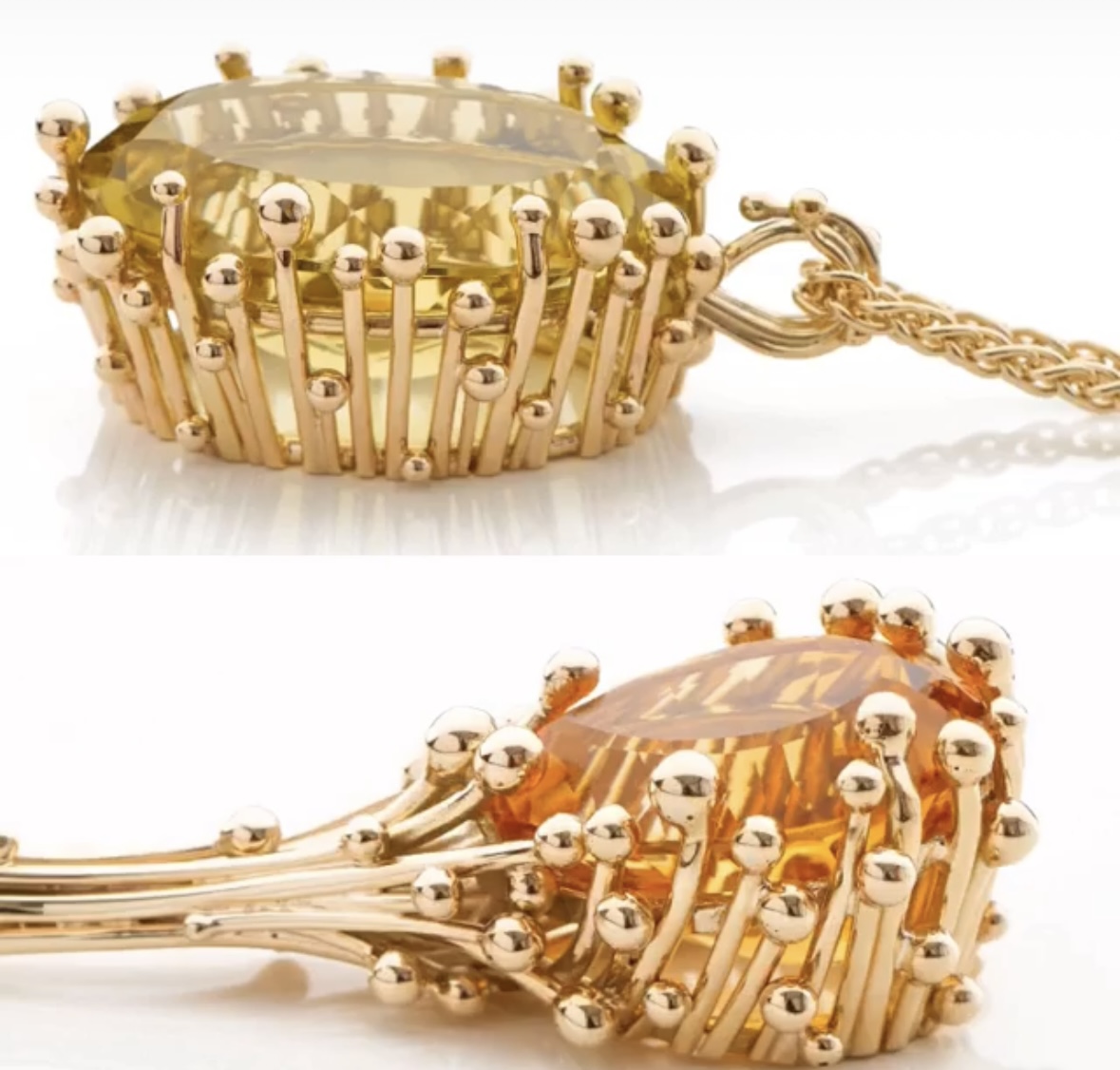
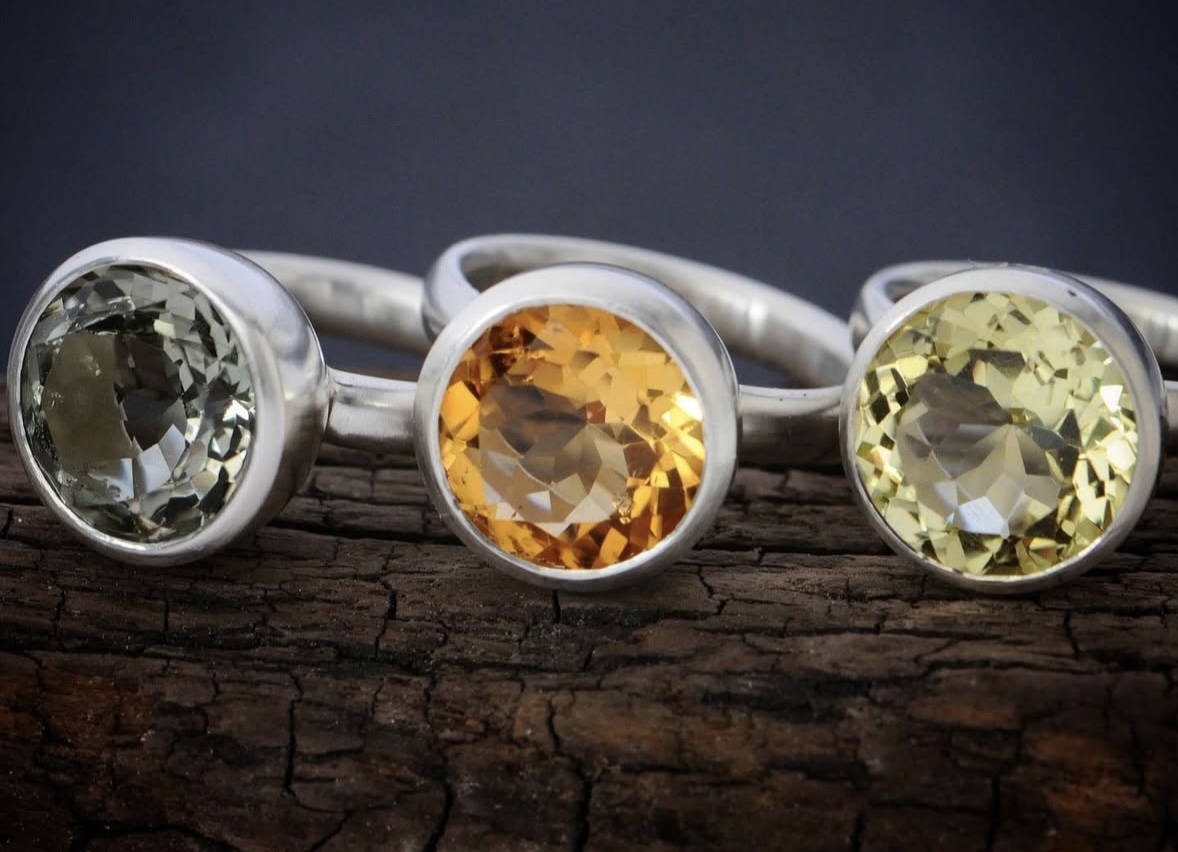
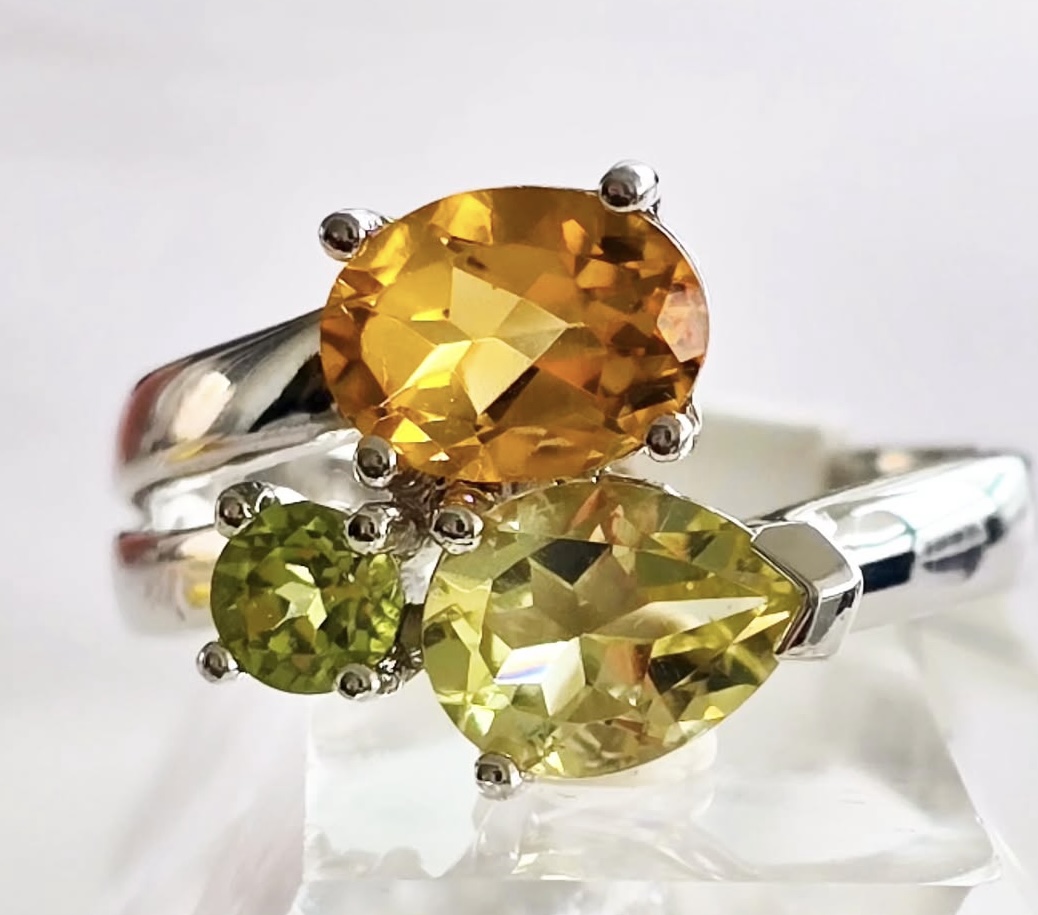
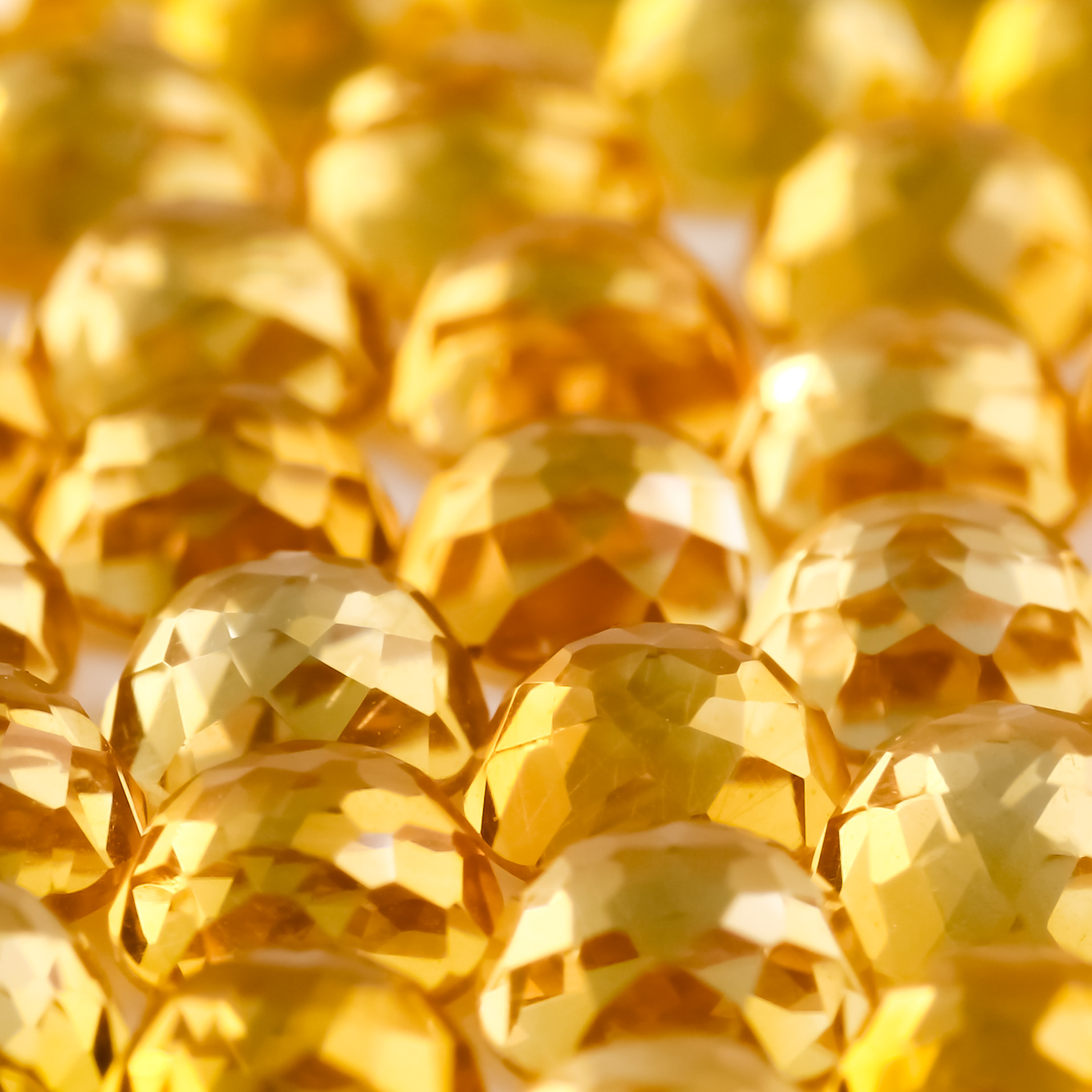
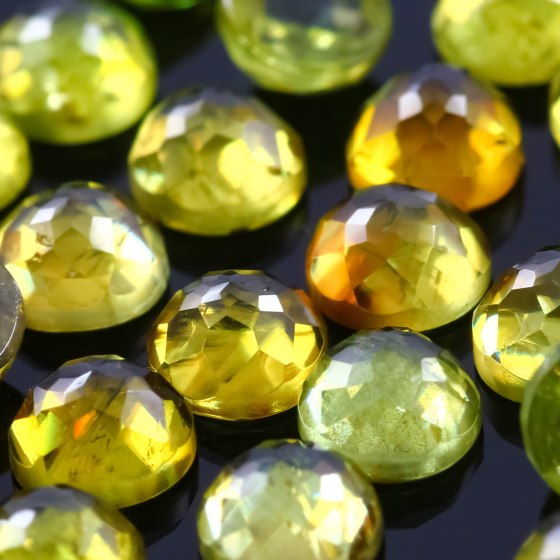
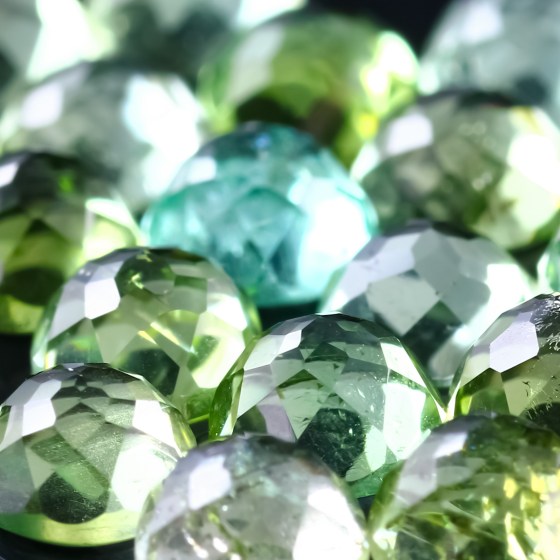
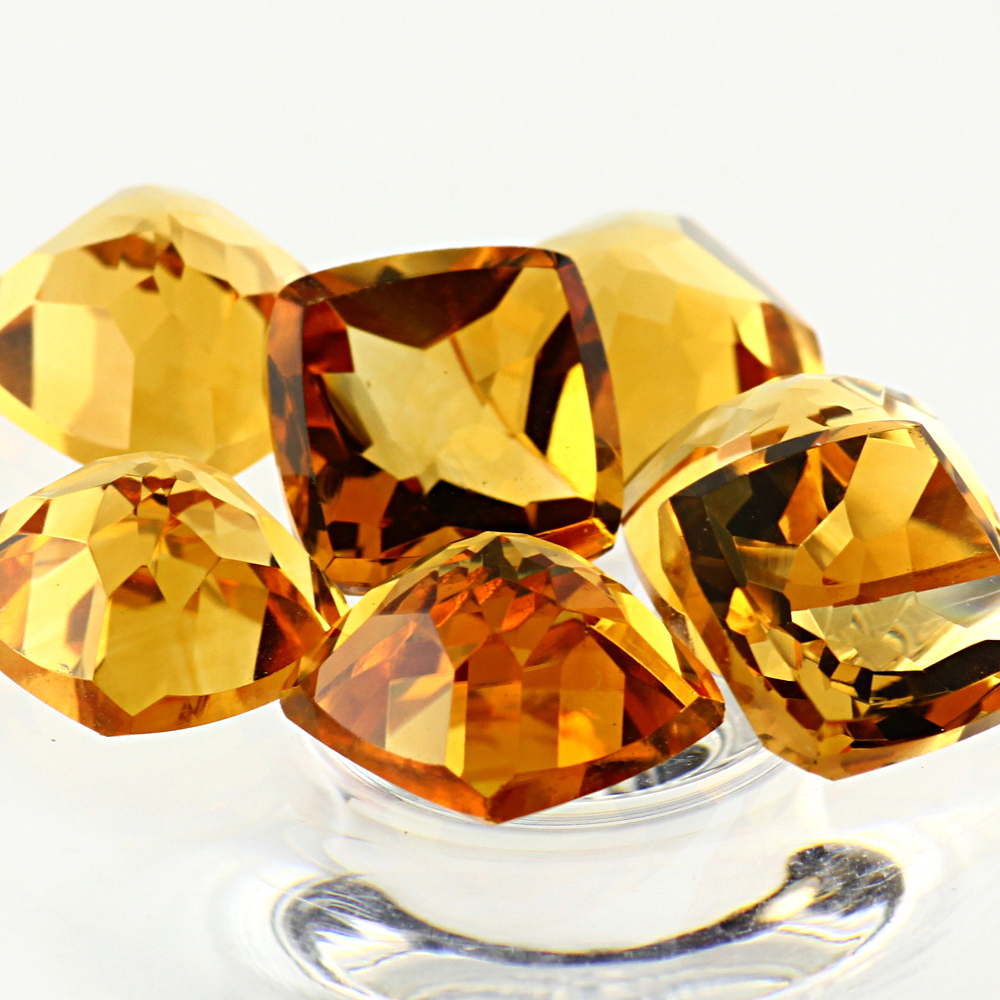
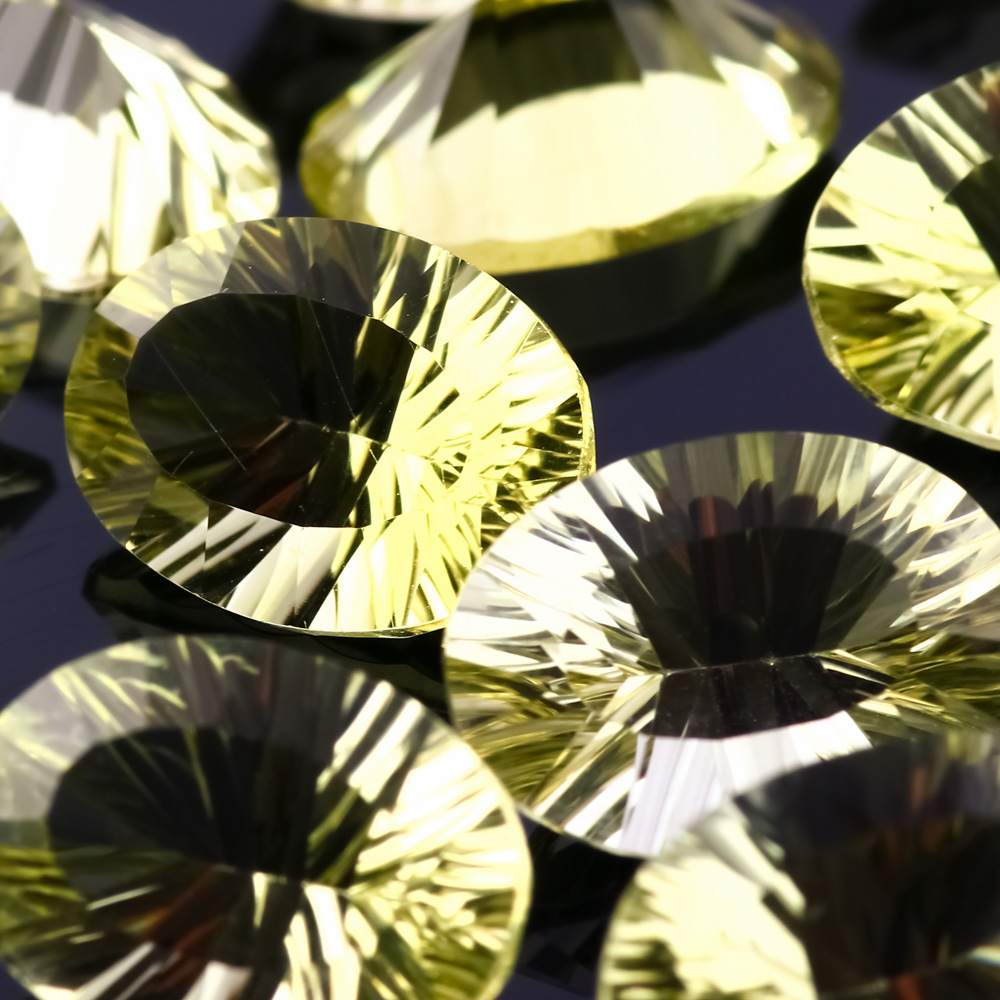
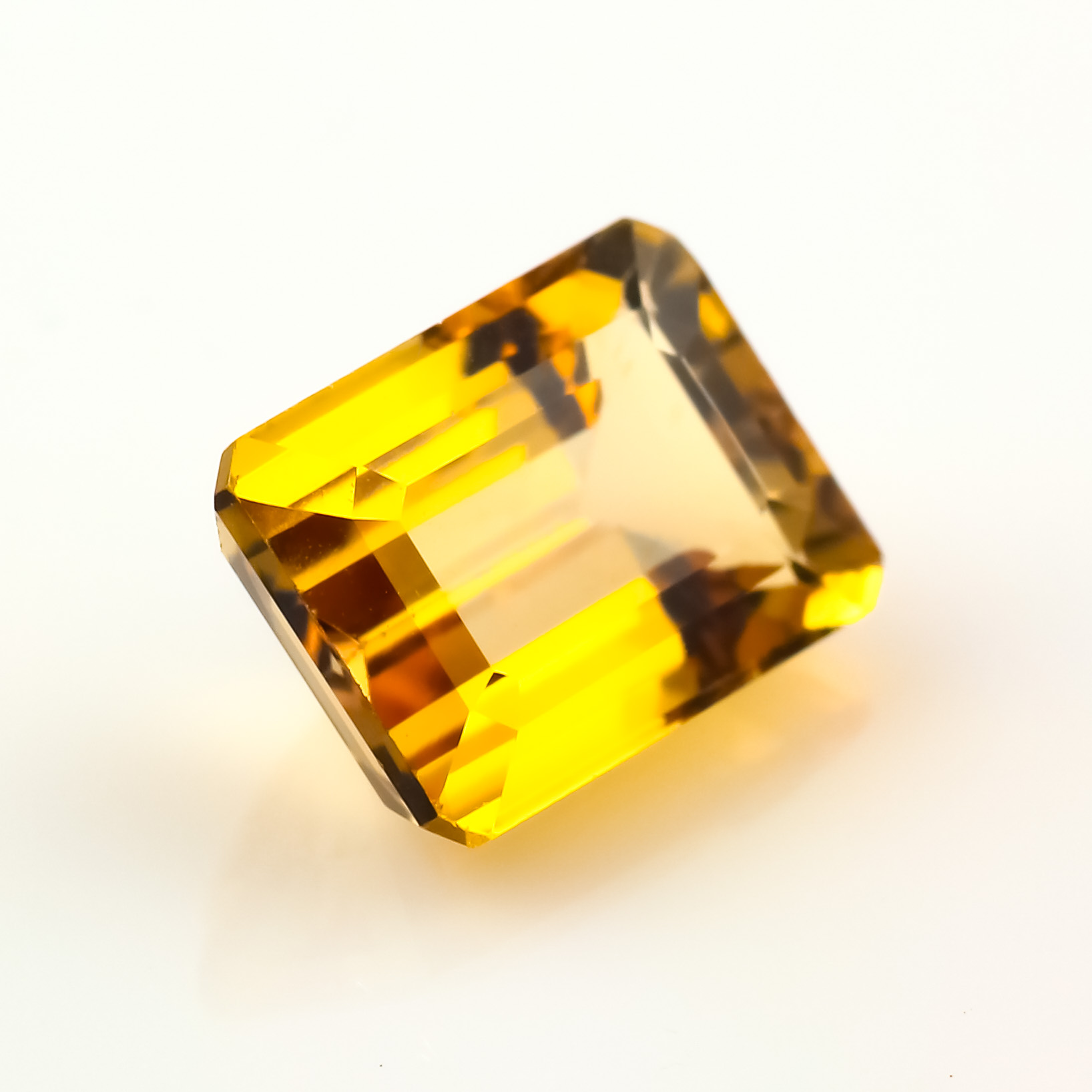
Quartz is one of the most ubiquitous gemstones; whether amethyst, citrine, rose, smoky or lemon, it’s plentiful and reasonably priced and you’re not going to have to part with a limb to buy it. It comes in so many different colours, including the fascinating and beautiful rutilated varieties. I want to talk a bit about lemon quartz, as it’s one of the family of treated quartzes and is a bit of an unsung hero. It’s a stone that cuts and polishes nicely and you can have it in pretty large sizes due to the relatively low carat price. Whiskey quartz, lemon quartz; nice lustrous stones in good sizes. Lemon quartz is irradiated with cobalt 60 gamma rays at very low dose (the stones aren’t glowing!) and then heated. The other thing that people aren’t generally aware of is that comes in different intensities of colour – and I don’t just mean that bigger stones are more saturated; you can get it from pale to much more intense yellow-green. My supplier tells me that people use it as a substitute for peridot, but I don’t think it’s that dark. It is on the same fresh, citric yellow-green spectrum, however. I used to sell mine – which is darker than standard lemon quartz – as green-gold quartz, to differentiate it, but it was too much of a differentiation, as people didn’t know what I was talking about and after I got asked a few times if I stocked lemon quartz, just changed the title! But it does have good saturation and is more of a yellow-green than pale yellow; I think you need it with a bit of saturation otherwise it looks a bit wan. The colour is more like a chrysoberyl and I think it really comes into its own when it’s mixed with other gemstones. I love the combination with citrine, which you would think would be a clash; the warm gold and the cool lemon, but it works. I also absolutely love it with the ruby, and I never would have thought about pairing these two, but they look amazing. In fact, I think I do like this stone best when it’s warmed up with gold, or golden stones, as they just seem to make it glow.
I haven’t done a newsletter for a while, but now, this November I have some new London blue to report, as well as restocks or white topaz in 6mm and 8mm. The London blue is priced very keenly and going fast, so hop on over to my newsletter or my website to see exactly what we have on offer! Also the usual round up of news and events going on in the gem world!
Colour is such a subjective matter; what’s your favourite? I like purple but my friend can’t bear it; my daughter loves brown, but I’m with Winston Churchill there: “I cannot pretend to be impartial about the colours. I rejoice with the brilliant ones, and am genuinely sorry for the poor browns“. When it comes to gemstones, the question of colour should not be subjective; unfortunately, it very often is. All gemstones will have a top colour; the most-prized shade within each stone’s shade range that commands top dollar. For example, in tanzanite it’s a pure blue similar to sapphire. In emerald it’s a bluish-green to green with strong to vivid saturation and medium to medium-dark tone. This may not be your preferred shade – for example I am more fond of the more violet tanzanites – but it is simply the one that will command the highest price. With a stone like tanzanite, which is highly pleochroic, cutters must often decide whether to cut a larger stone that is not oriented for top colour, or a smaller one that is.
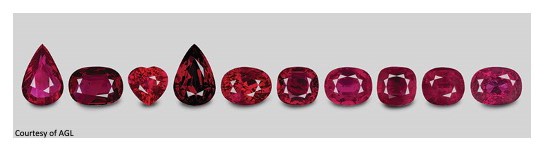
The problem is, this is by no means straightforward. Over the years, trade and commercial names have arisen to describe top colour. Most of these will have their roots in something quite meaningful and specific, but because the names themselves are not specific, it gives sellers a great deal of leeway to include a huge variety of shades until the name becomes practically meaningless. Ruby is a really good example; the term ‘pigeons’ blood’ has for years been the gold standard in terms of colour. It’s meant to refer to stones with a glowing red fluorescence, but just look at the shade range as illustrated in this AGL photograph. A 2015 study examined 500 rubies on just one trading network with 90% described as ‘pigeons’ blood’. But with per carat prices ranging from $450 to $50,000, the description is meaningless. In fact the term that the GIA use is ‘fanciful’.
Sapphire is another good example: Kashmir sapphire is the gold standard, which is traditionally a violet to violet-blue stone with high saturation and a velvety lustre; Ceylon sapphires are traditionally lighter with higher lustre. Australian stones tend to be more green with a darker tone. The obvious problem here is that not all stones from these locations will exhibit these properties and stones that do, aren’t necessarily from these locations. It’s also very difficult to know, once a stone has been dug out of the ground, where it has come from, so you could be paying top dollar for Kashmir sapphire with no actual proof that’s what it is. Sellers will offer mixed bags of dark sapphires to their wholesale clients that might be from a mix of locations – Nigeria, Vietnam, China, Thailand, Australia and label them as ‘Australian’ and this is more acceptable as these are much lower value and the deposits are very similar.
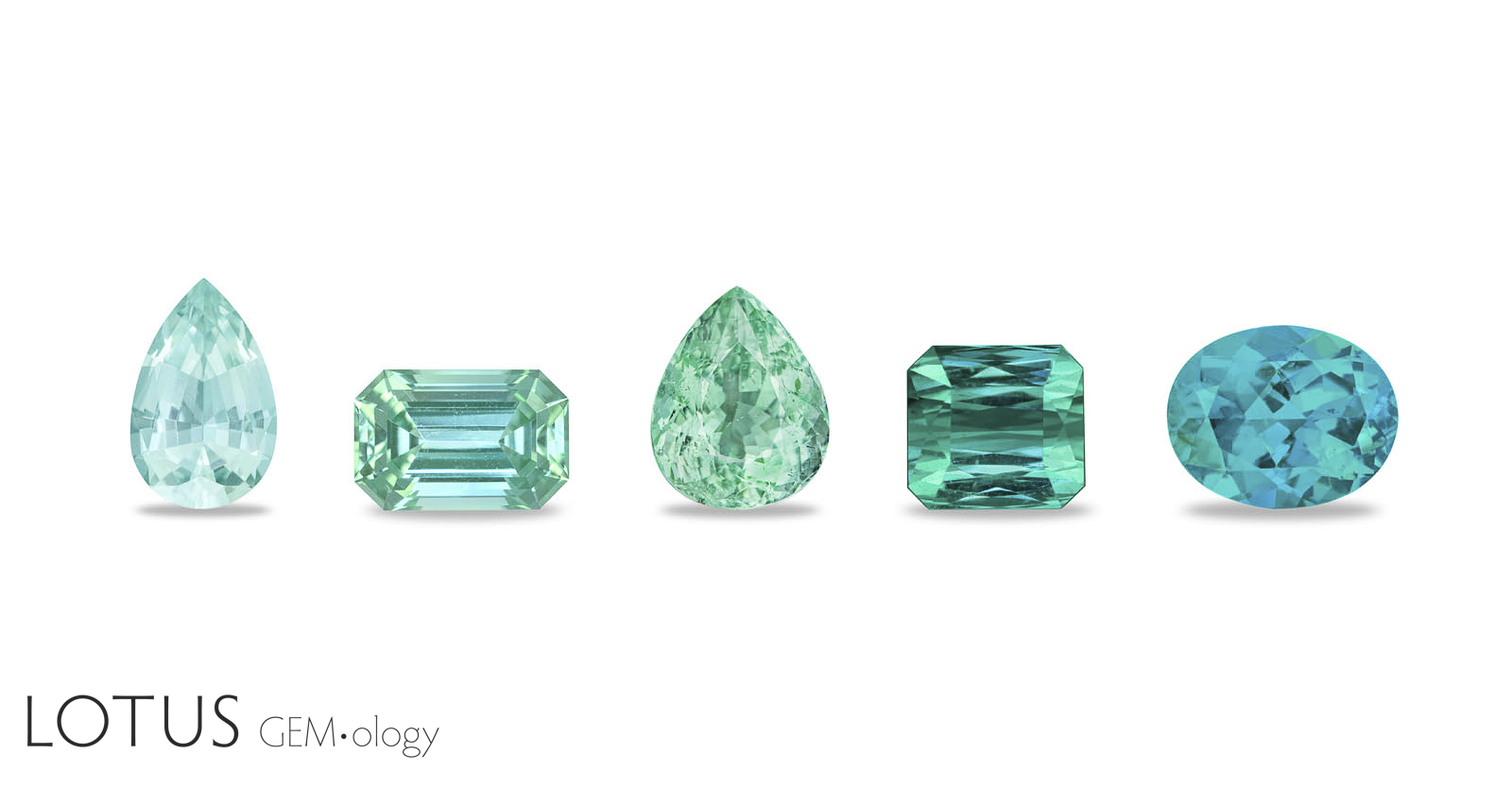
Paraiba tourmaline is another example. Coloured by copper, these stones are extraordinary, neon aqua stones (sometimes described as ‘Windex’!). They were discovered relatively recently, in 1982 and found only in Brazil, named for the province where they were found. Whilst subsequent deposits of copper bearing ore was found in Mozambique and Nigeria, most stones did not approach the extraordinary saturation and hue of the Brazilian stones. But have a little look on ebay; go on, put ‘paraiba tourmaline’ into the search box and what comes up is anything with the slightest aqua hue, from watery pale greens and light blues. In the picture below (courtesy of Lotus Gemology), from left to right, all of these would appear to qualify as paraiba, but only two of them owe their colour primarily to copper (stones 3 and 5 working from left to right). They appear almost identical and all equally breathtaking, but the term Pariaba will cause the price to skyrocket.
Other forms of tourmaline are equally poorly defined – slap the word chrome or rubellite on the front of it and you’ve got a nice price hike, but the definition appears to be tourmaline that’s quite bright green and tourmaline that’s very bright pink – and many chrome tourmaline stones are actually coloured by vanadium!
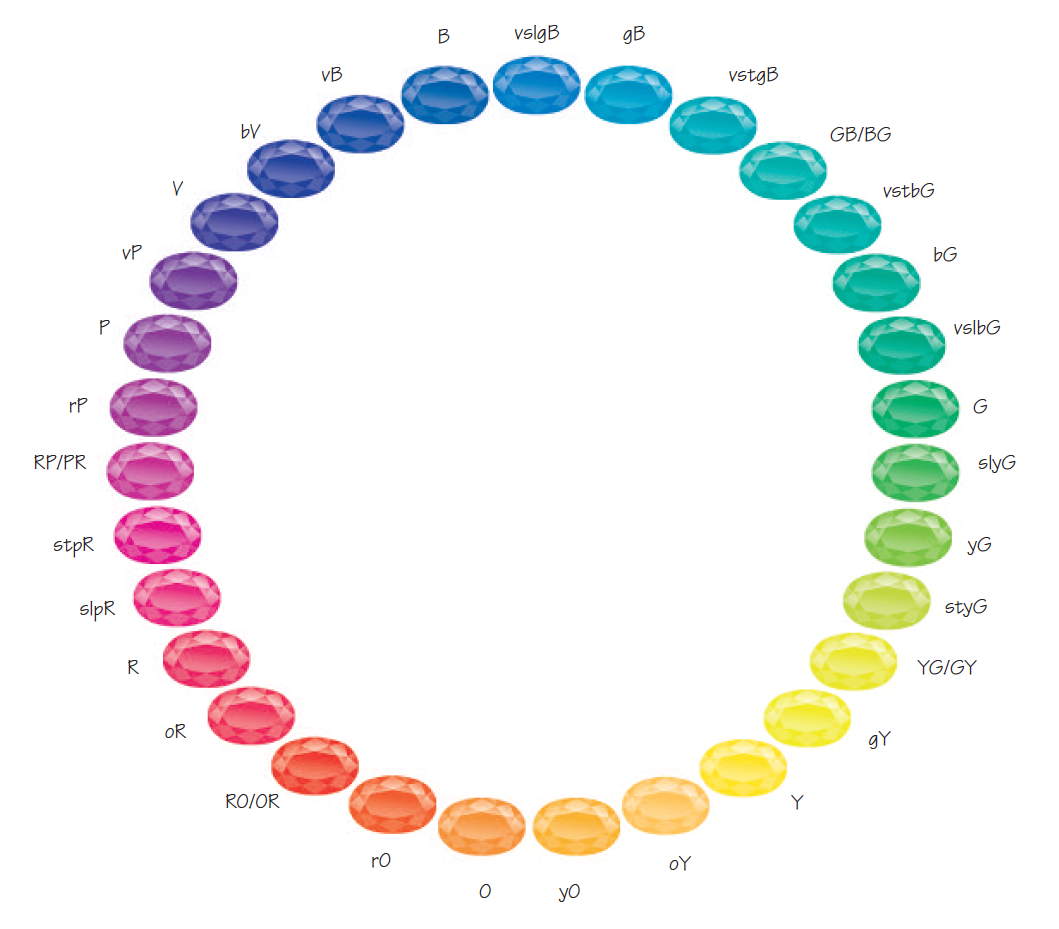
The GIA has long sought to take the flights of fancy out of colour description and has developed a system of colour classification that relies on extremely fine shade distinction and a very objective language: for example, colours run from, say, very strong blue-green to blue green, to very slightly blue-green, to green, and so on. These colour definitions allow a really accurate description and are anchored to a colour chart (see below, courtesy of GIA). What this method lacks in romance it does make up for in accuracy and it does something else as well; it restricts the colour solely to a gemstone’s hue.
What do I mean by that? A gemstone is not merely red, blue, green. That is its hue, and it does matter; it plays a big part in the value. But there are other factors which are also very important in a stone’s value; in fact you could say the colour exists in three dimensions. Hue is one, but equally important are saturation and tone: how intense is the colour and how dark? The GIA deals with these separately for example a Kashmir sapphire can be operationalised as violetish blue to pure blue hue, with moderately strong to vivid saturation and medium-dark tone. Each aspect is described separately. Another problem with trade or commercial names is that they often only refer to hue, and so they tend to elevate hue above all other colour aspects; in reality a stone’s value is based on a combination of hue, saturation and tone. In addition to this, a stone may display colour zoning or pleochroism; it may have inclusions, it may appear a different colour under different types of light, and let’s not forget about cut. This can also affect the appearance of colour, not just in terms of how the stone is oriented but a stone cut to save weight will not return light to the eye in the same way as one cut to ideal dimensions and may appear dark, or have dead areas. It’s a good idea to have a solid handle on colour and value, as traders will always favour those inconsistent and ill-defined colour names over more precise definitions as it allows for a much wider range of stones to be funnelled into the top price brackets. As with everything in this business, a little bit of knowledge goes a long way and caveat emptor!
This is the buzzword, well, buzz-phrase really of the season. It refers to the idea that dressing a certain way can make you feel good. Obviously this is going to mean different things to different people, but it has been defined this season as meaning bright, mood-boosting colours. I love the idea of this; and in fact, I am a big fan of colour in my surroundings – I love a yellow sitting room; a red dining room; a blue bedroom. I’m just not sure I can go to bright pinks, oranges and acid greens in my clothing. My pale, English skin won’t take it! The fashion mags are saying, don’t put too many different colours together, which seems like sensible advice; keep it to one or two colours.
To me, it seems a much easier trend to wear in jewellery form, as most coloured stones are bright and saturated and that’s how we like them! Think of a juicy pink tourmaline, or a glowing yellow citrine; a vibrant green peridot or a velvety purple amethyst. Garnets like drops of blood and lapis the colour of a summer sky. And these can look amazing when put together, six or seven colours in the same piece.
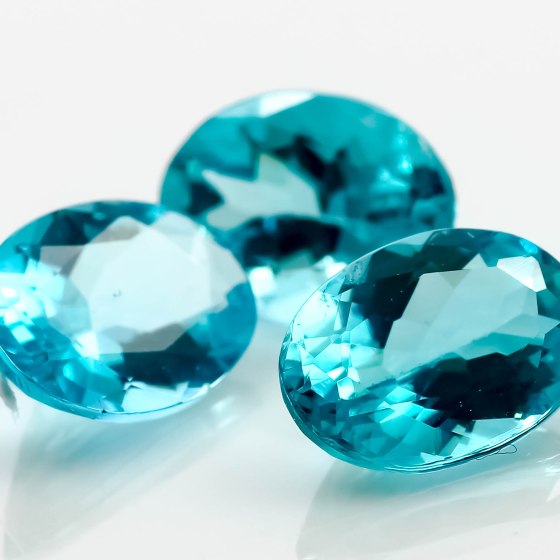
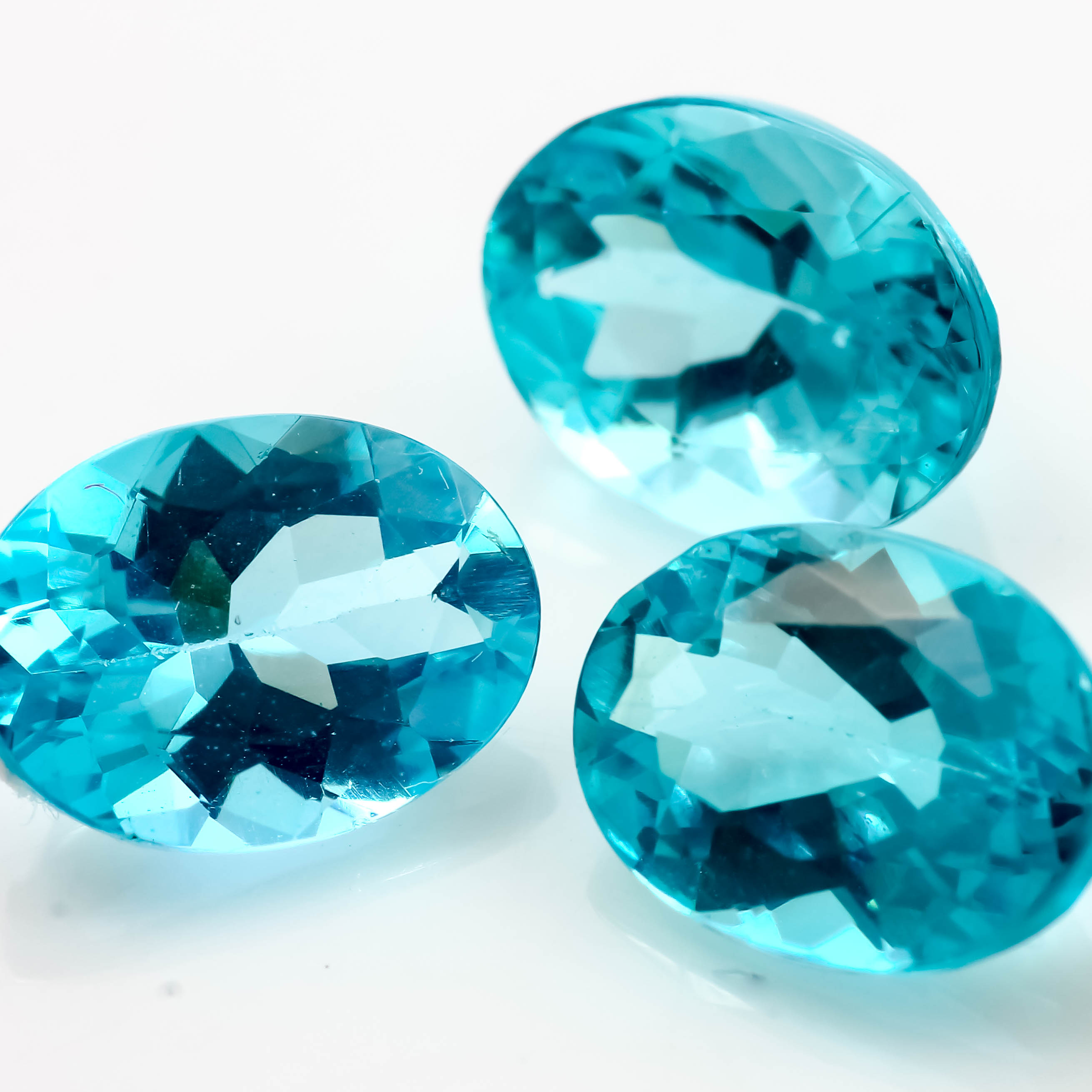
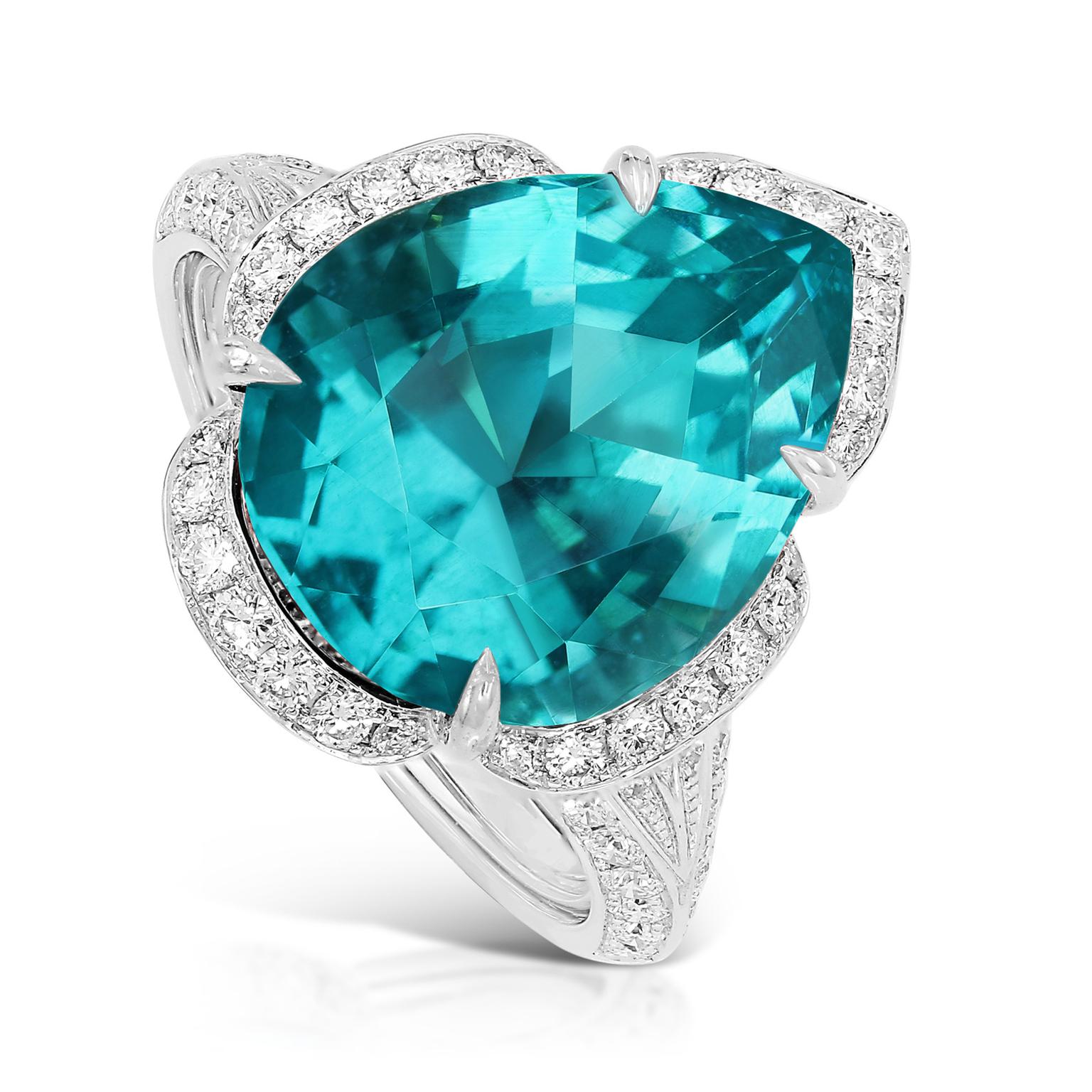
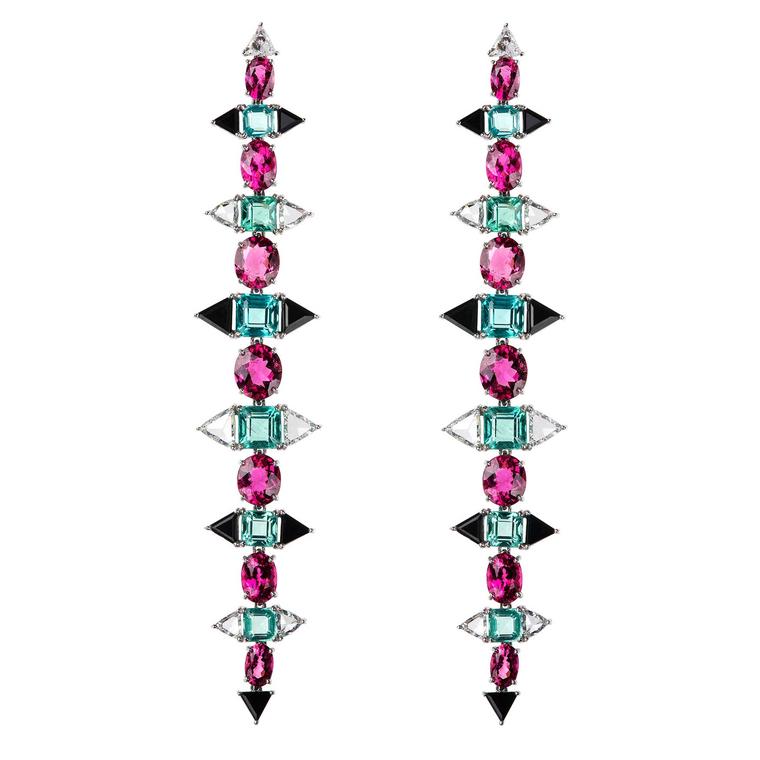
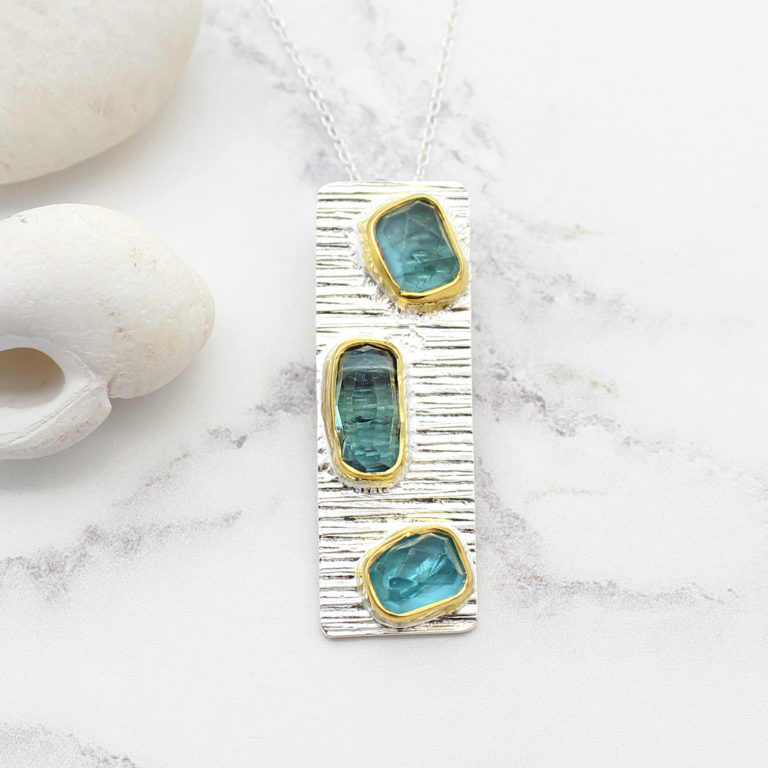
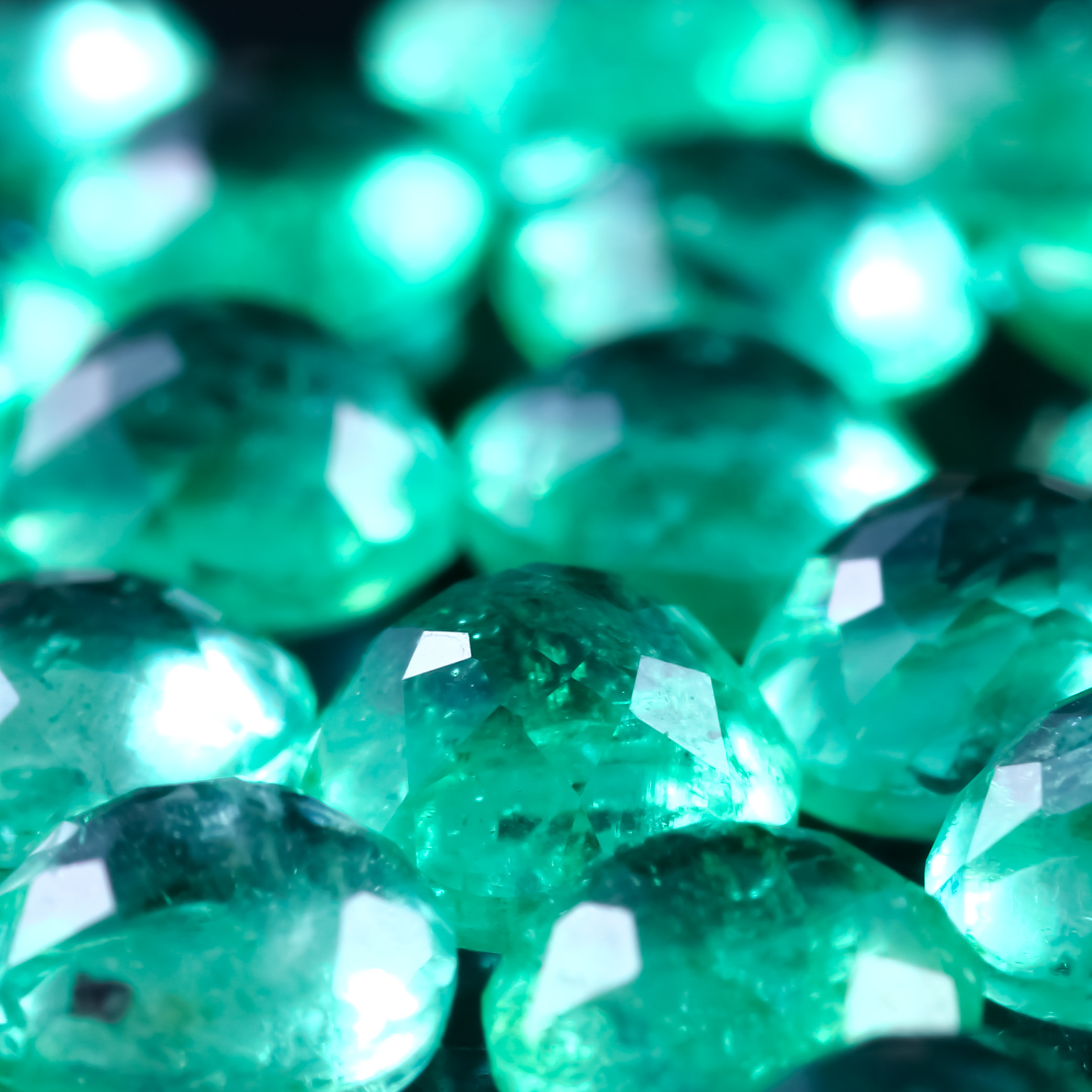
I’m talking about apatite of course, although you might be mistaken for thinking that you were looking at some sublime pieces of paraiba tourmaline. Apatite actually takes its name from the Greek ‘apate’ which means ‘to deceive’, which really is the perfect name for it. It is a shade of gemstone that is just very unusual, very hard to find and which really only has paraiba as a similar colour. Bright, neon aqua, it is a beautiful stone in its own right, although it is a lot cheaper than paraiba. It’s also a lot softer; at 5 on the Mohs scale, its going to scratch fairly easily and even break, so it should really be reserved for either special occasion jewellery or be put in settings where it’s not going to get rough treatment. If you’re going to put it in a ring, it’s probably not for everyday use or for, ahem, doing the washing up in. It’s hard to cut, hard to polish and so it would be easy to dismiss this stone, but one look at it and you’ll be lost, I promise. Treat it nicely and you’ll be rewarded with a breathtaking gem. There’s plenty of lower grade material on the market, and this is lovely in its own right; it makes for a very nice dark blue to teal opaque stone. But the transparent material is the most eye-catching and as it grows in small crystals, larger stones are pretty rare.
Interestingly apatite is part of a group of minerals that is abundant in nature. It’s found in the human body as tooth enamel and bone, and in rocks from the moon. It’s also the world’s most common source of phosphorus, and so some forms of apatite are used to make fertilizers and chemicals. When I read that I had to check it, as it seems so extraordinary. I’ve been selling apatite for a long time now and it is a very steady seller. Even though it is unusual, I think the colour is so beguiling that people don’t worry so much that they haven’t heard of it.
The oval mixed cut apatite stones in the header image are now available on discount at around £35 per stone; an absolute bargain! To check out all of our apatite, click here
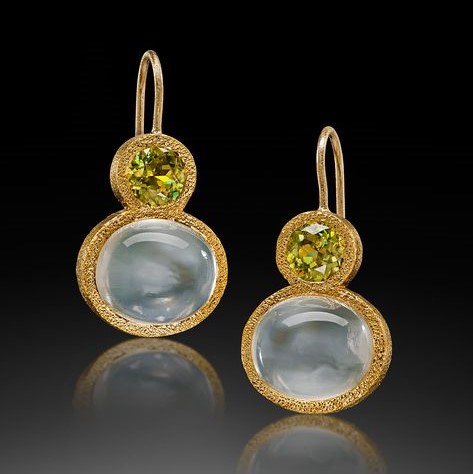
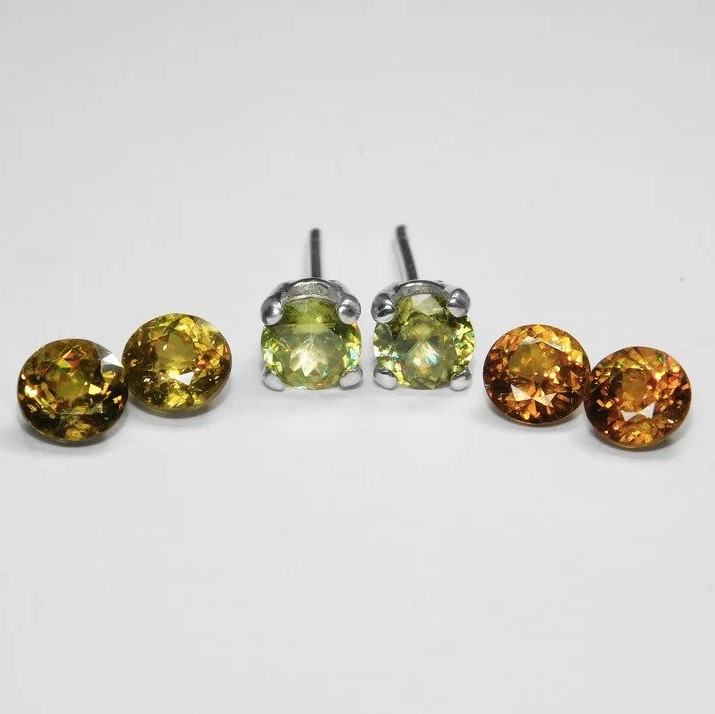
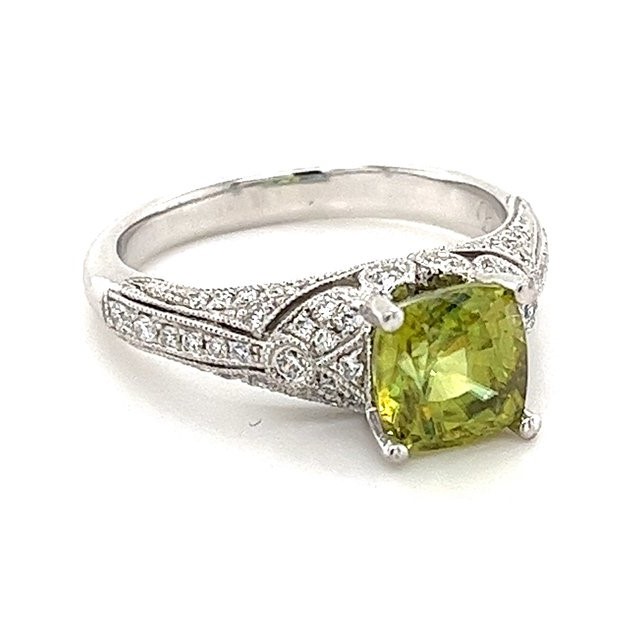
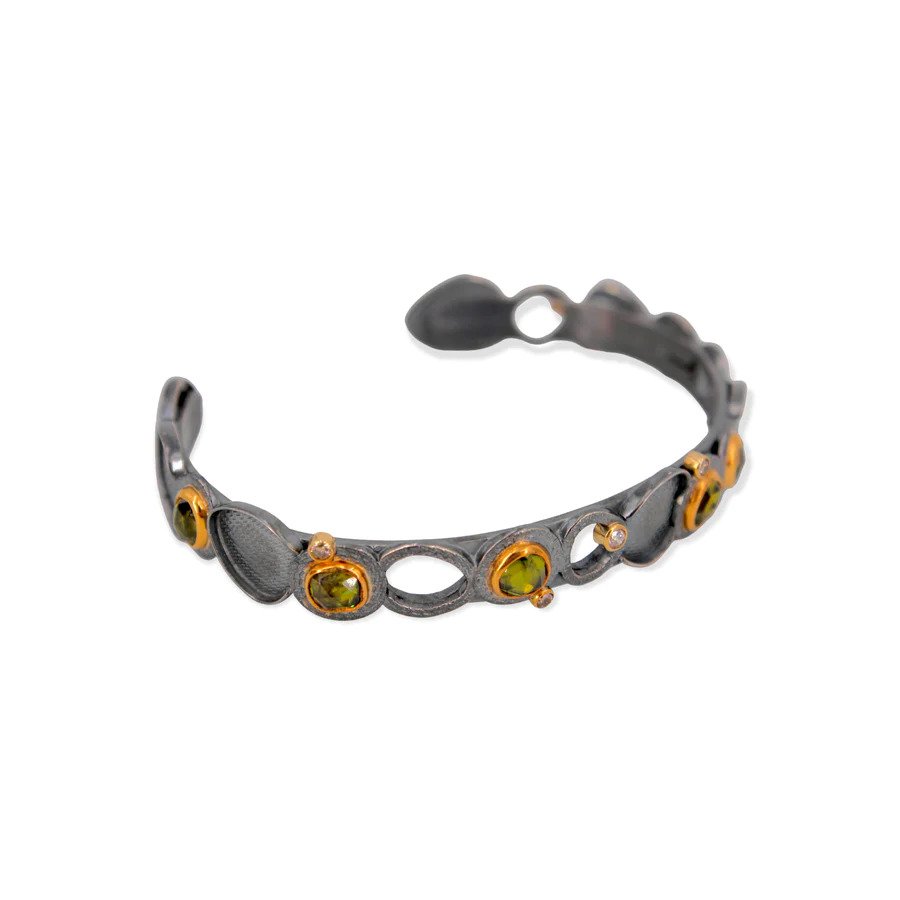
If you think that sphene makes you sound like you have a speech impediment, you can always go for its alternative name: titanite. Either way there’s a good chance that you have never heard of this incredibly beautiful, unusual and lively stone. Sphene has more fire than a diamond; its dispersion – that is, its ability to separate white light into the colours of the spectrum – is higher than a diamond. This fire is obvious to the naked eye and is even more extreme under incandescent light. It is hard to describe the colour of this stone as it has strong pleochroism and will change colour according to the angle it’s being viewed but think autumn leaves, many-coloured and flashed through with oranges and yellows. Most sought after is a bright, chrome green. It’s hard to find it completely clean; it normally will have needles, mistiness and veils but this in no way detracts from the beauty of this most unusual stone. It’s soft – 5-5.5 Mohs, which means really it’s best for necklaces and earrings, maybe you could get away with an occasional use ring, especially if it’s in a protected setting, but do give it a go, you’ll be amazed.
Sphene was discovered in 1785 but not named until 1801, with the name deriving from the Greek word for ‘wedge’ – which is not the most romantic entymology, and also I’d have thought a name that applies to quite a lot of crystals! Its alternate name, titanate, derives from the presence of titanium in the mineral. It’s always been considered a bit of a collectors gem, due to its scarcity but if you’ve never used it, give it a try. It really is unique.
I currently have sphene rose cuts in 3mm-5mm including half sizes, and you can find it all by clicking here
Yes, it’s May and the birthstone for this month is emerald and it’s time for me to do my customary post about emerald alternatives. Not that I have anything against emerald per se, I don’t want the Emerald Appreciation Society on my back, but I just think that there are many alternatives to emerald that are both cost-effective and just as beautiful, and less likely to break on setting, or in general use. I’m always surprised by emerald engagement rings, for example, as emerald is a brittle and often included stone, prone to breakage. Not a great ring stone. Why is it often so brittle and included? The jury is out; it could be that that is just how it grows; it could be an artefact of how it is mined, which is often using explosives. Because it is such an included stone, some 95% of emerald is routinely fracture-filled, either with oil or resin. It’s completely accepted by the trade, and it should be disclosed to the customer on purchase so if you are buying emerald, make sure you are clear about this.
Here’s a few alternatives, ranked according to my personal opinion! I’m not talking about imitations and synthetics here; simply what might you use if you want a green stone and want to get a bit more bang for your bucks.
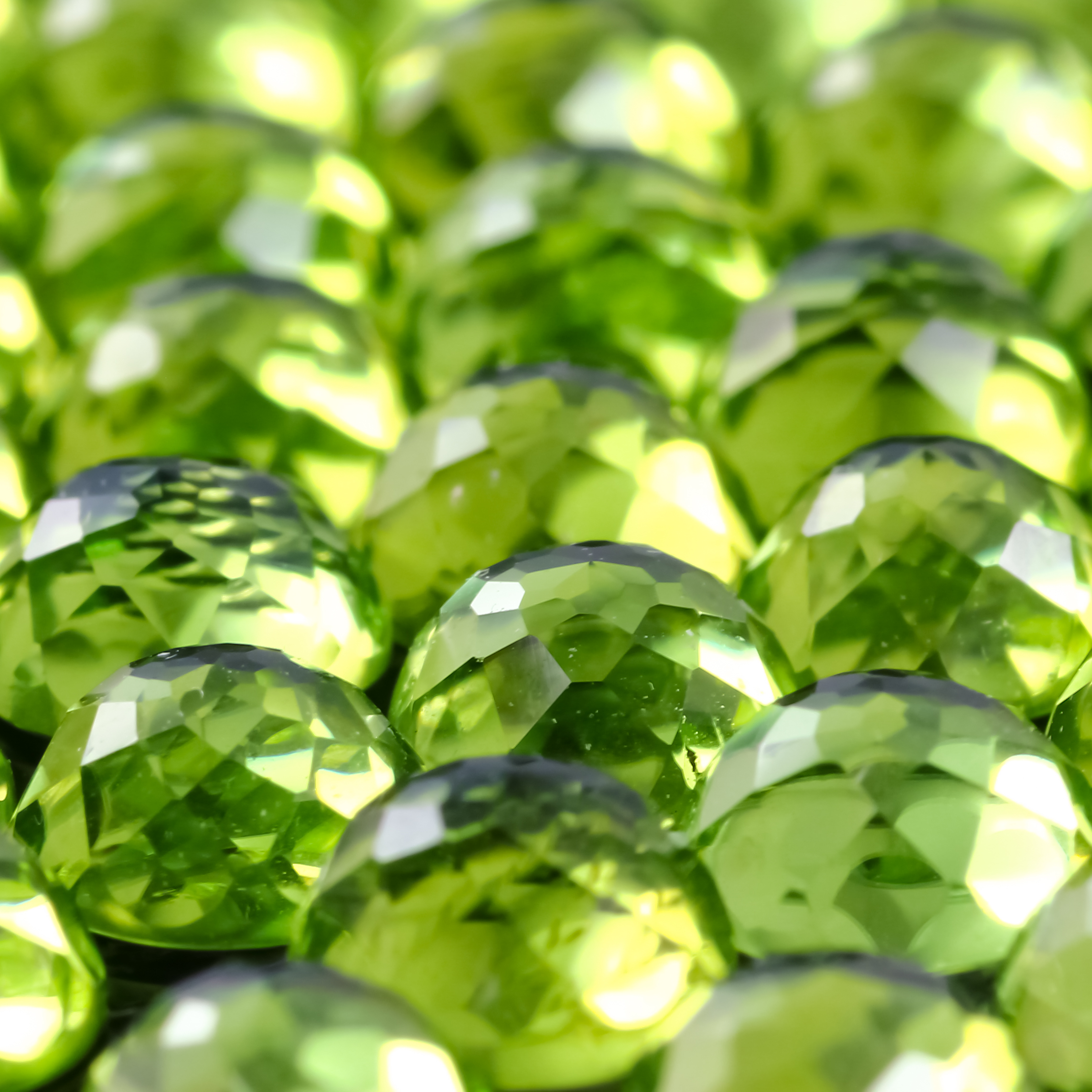
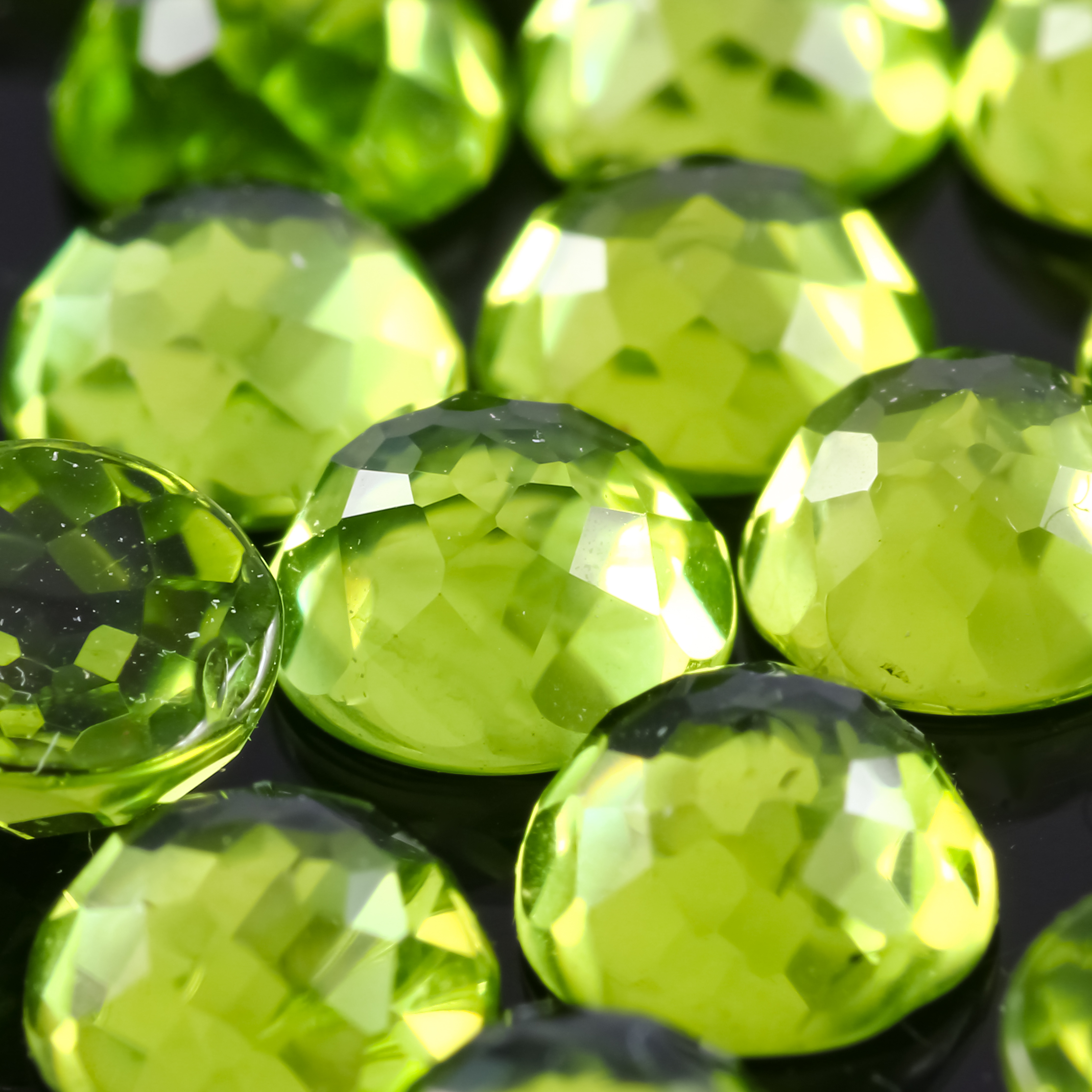
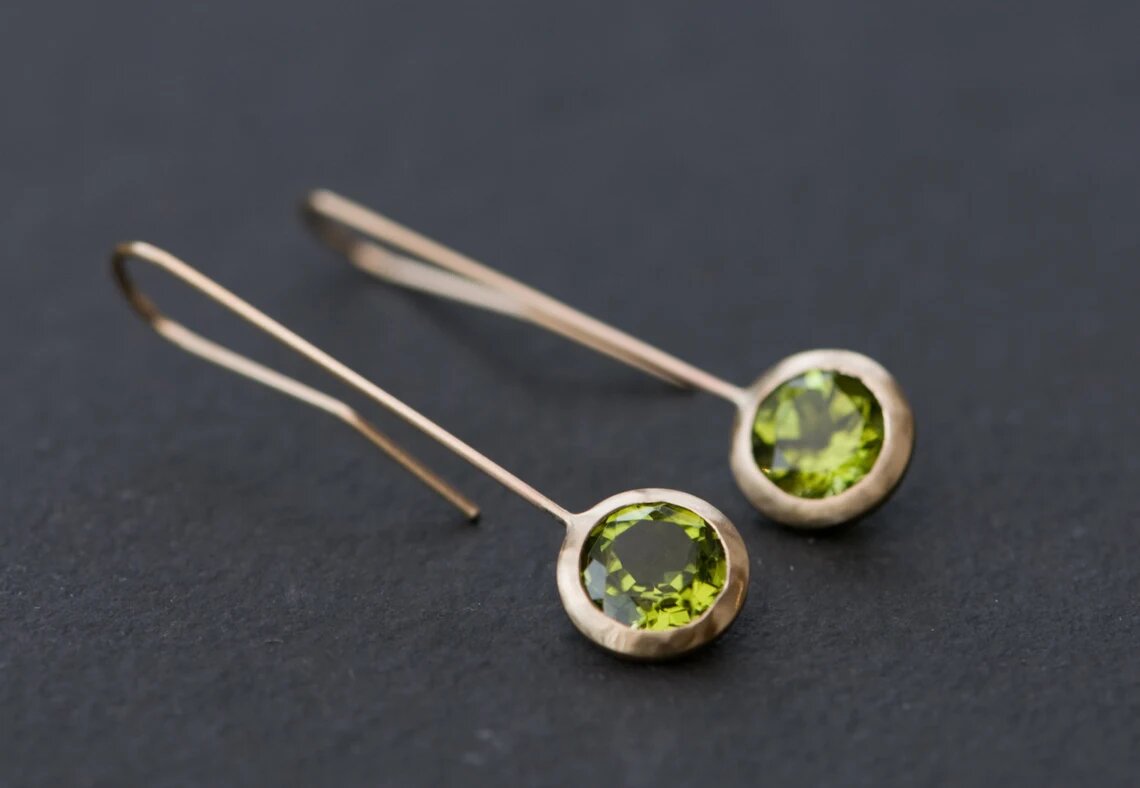
It’s a bit too yellow to be a particularly convincing substitute, and it can have a bit of an oily lustre but it is the most affordable untreated green gem, and it has in the past been mistaken for emerald. It is speculated that Cleopatra’s famous emerald collection was in fact peridot. It isn’t particularly difficult to find clean quality up to around 6mm; after that it gets a bit harder to find clean quality and whilst its characteristic lily-pad inclusions are rather beautiful, you also often get small, black mineral inclusions which are less appealing. I have clean quality up to 6mm but my 8mm stones are sprinkled with these tiny black inclusions. It is possible to get clean quality at this size, but expect to pay around 5 times the price. Peridot looks particularly beautiful with gold, which draws out the warm, gold tones. It isn’t, however, a great ring stone as it is rather soft – 6.5-7 on the Mohs scale – and it doesn’t take much for facet edges to become abraded. It’s iron that causes its attractive yellowish-green tones and most of it comes from China and Arizona in the USA. You have to be a bit careful with it – plunging in cold water after soldering can crack it and ultrasonic cleaning can wreck it. Below you can see how the warm gold of the setting picks up and complements the warmth of the stones.
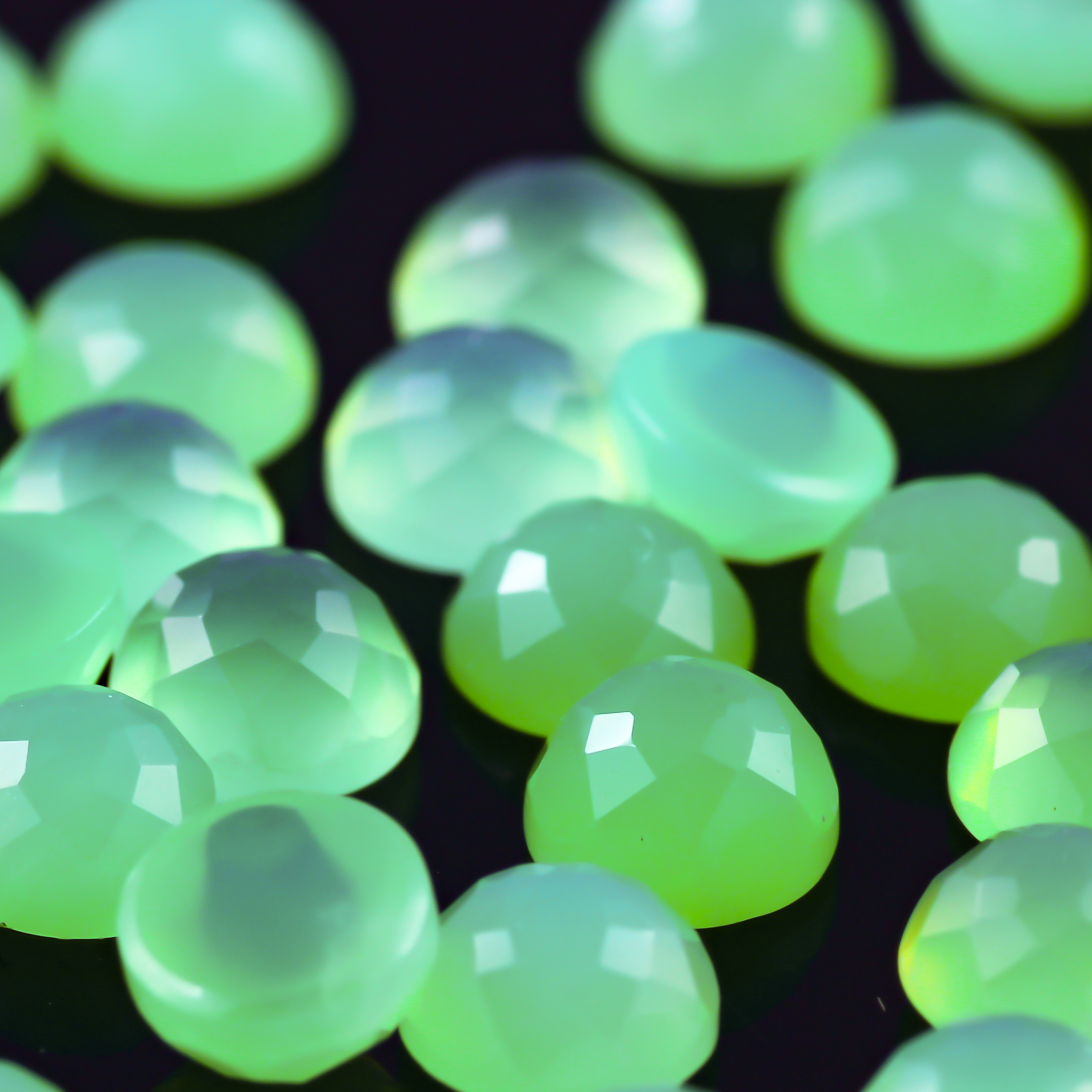
This will substitute for translucent emerald – the kind you often see in polki cuts and beads. The kind of emerald that is used for this is often very included and often has those blackish inclusions. The colour and lustre can be poor, so lovely chrysoprase can be a good option if you want a brighter colour and cleaner look. Chrysoprase means ‘golden apple’ in Greek, and indeed, its best colour is a zingy apple green with just a touch of yellow. This stone is coloured by nickel and makes fantastic earrings. Again, it is really complemented by yellow metal settings but it is also quite soft – 6-7 on the Mohs scale, so is best suited to earrings or pendants that don’t get a lot of rough treatment. These two earrings below are a perfect example of the kind of clean, opaque material with that lovely emerald-like blue-green shade.
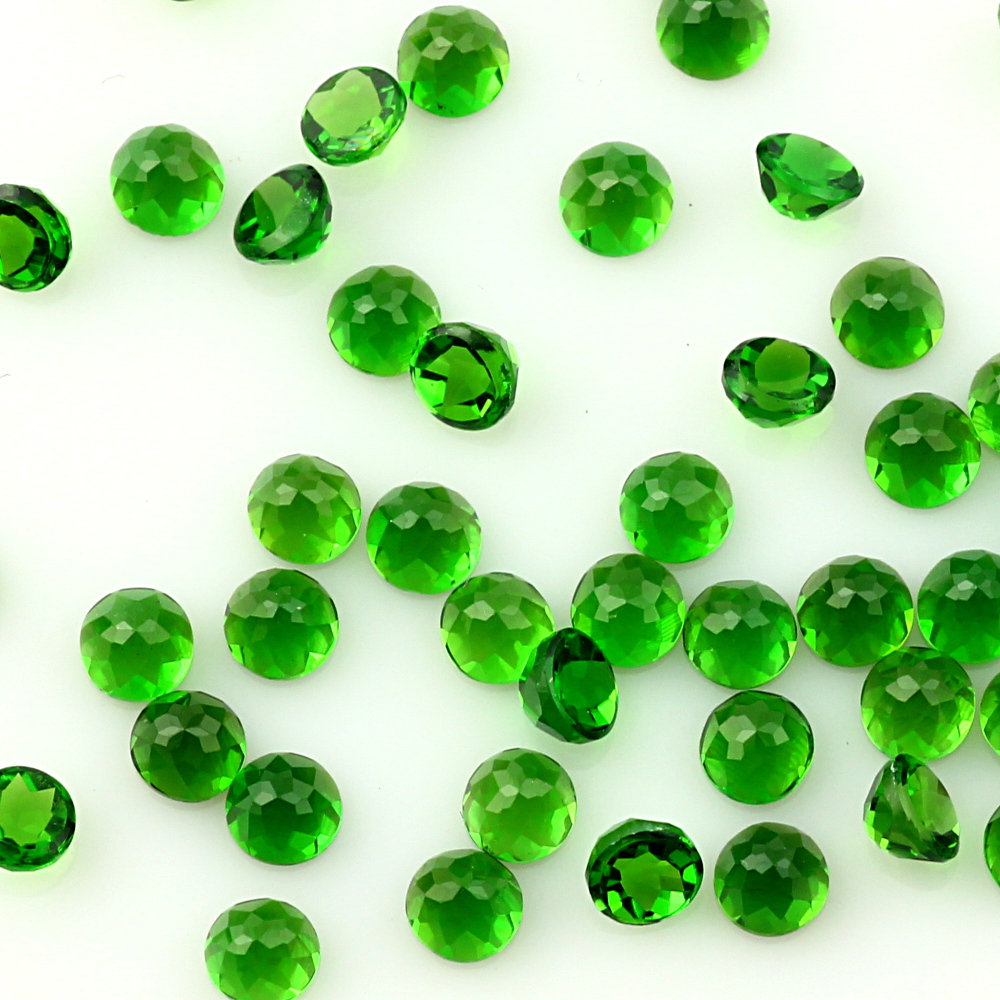
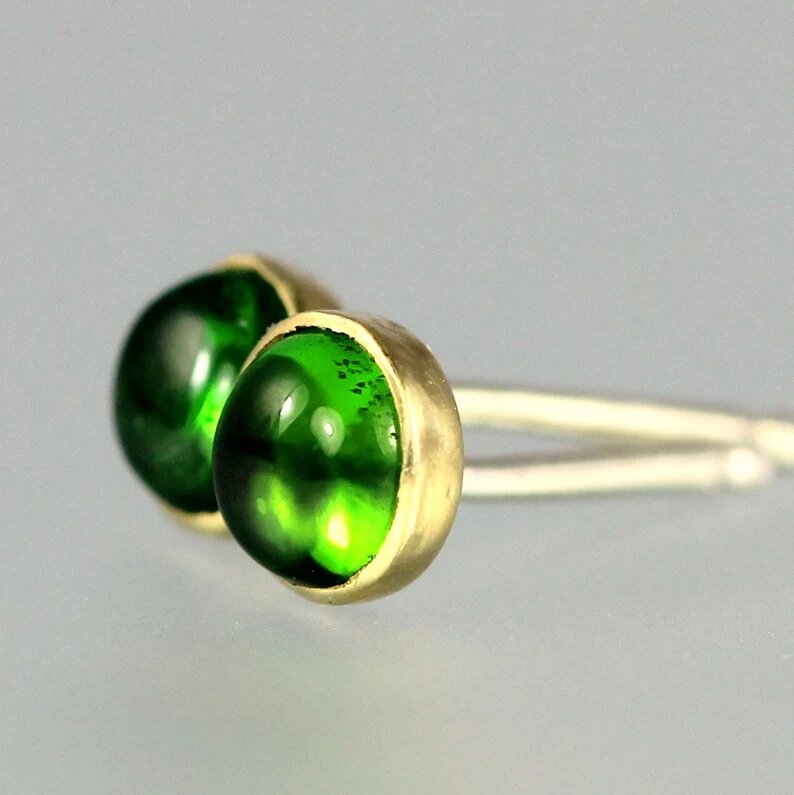
This is an excellent choice as it is a stone that is not routinely treated and tends to display much better clarity than emerald. A fantastic, saturated green with great sparkle, it is coloured by the same elements as emerald; chromium or vanadium. In some cases this may be too good, as it tends to look dark in larger sizes; it needs careful cutting to maintain a good, open colour. The flip side of this means that it retains good saturation even in small sizes. It is pretty soft – 5.5-6 on the Mohs scale and so is not really tough enough to make a good ring stone. This also means that facet edges will abrade over time. Below you can really see the density of colour even in the tiny studs on Isueszabo’s stud earrings.
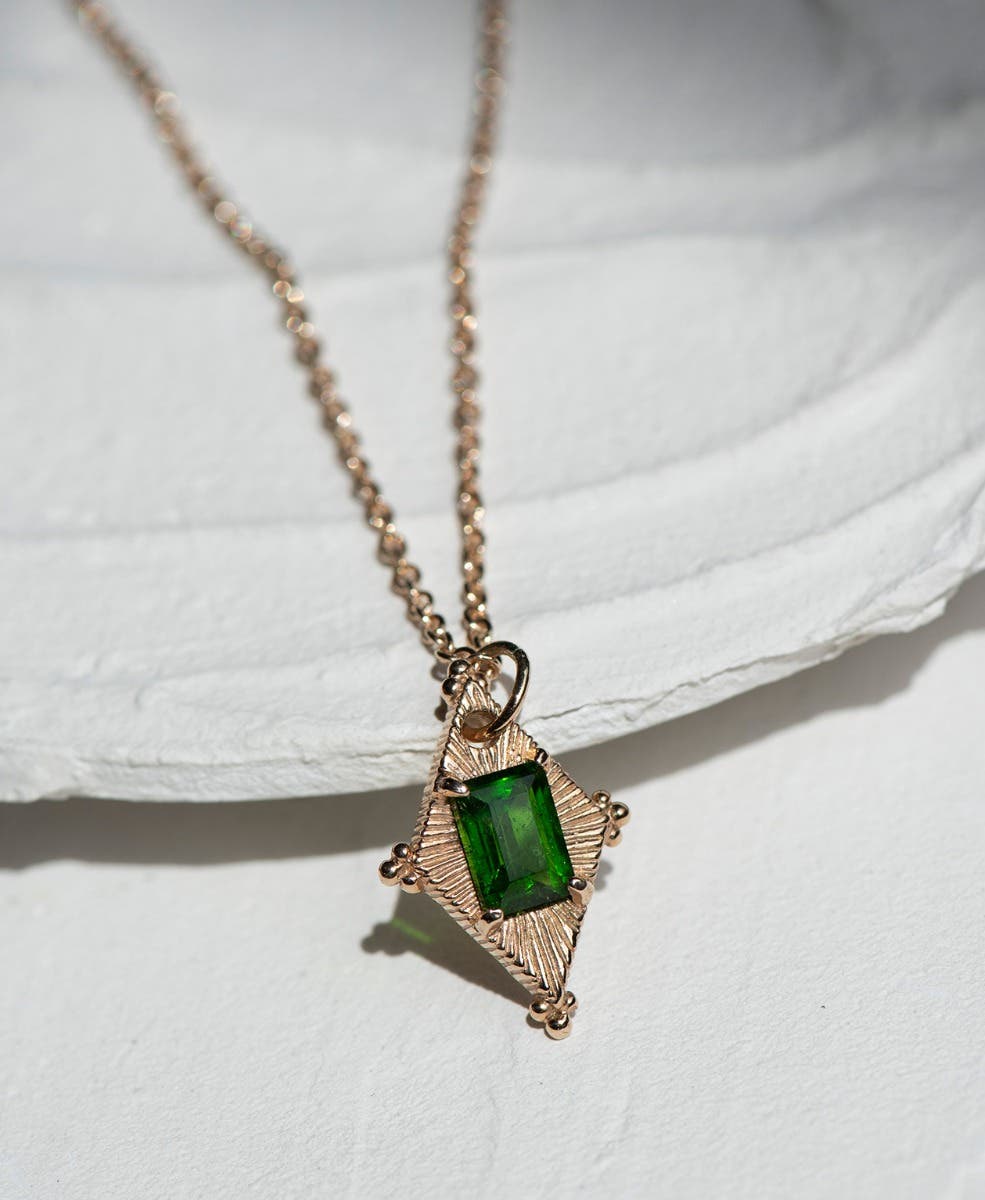
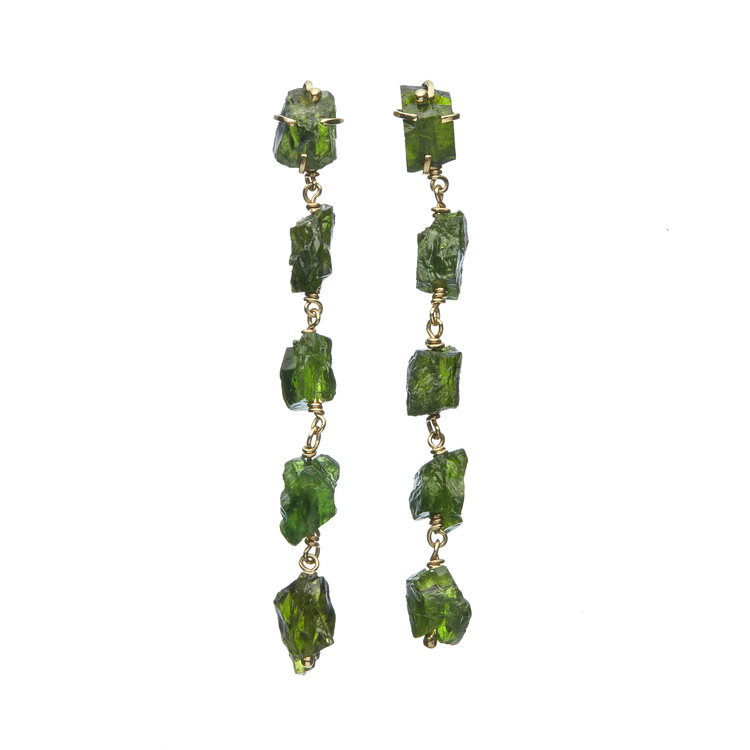
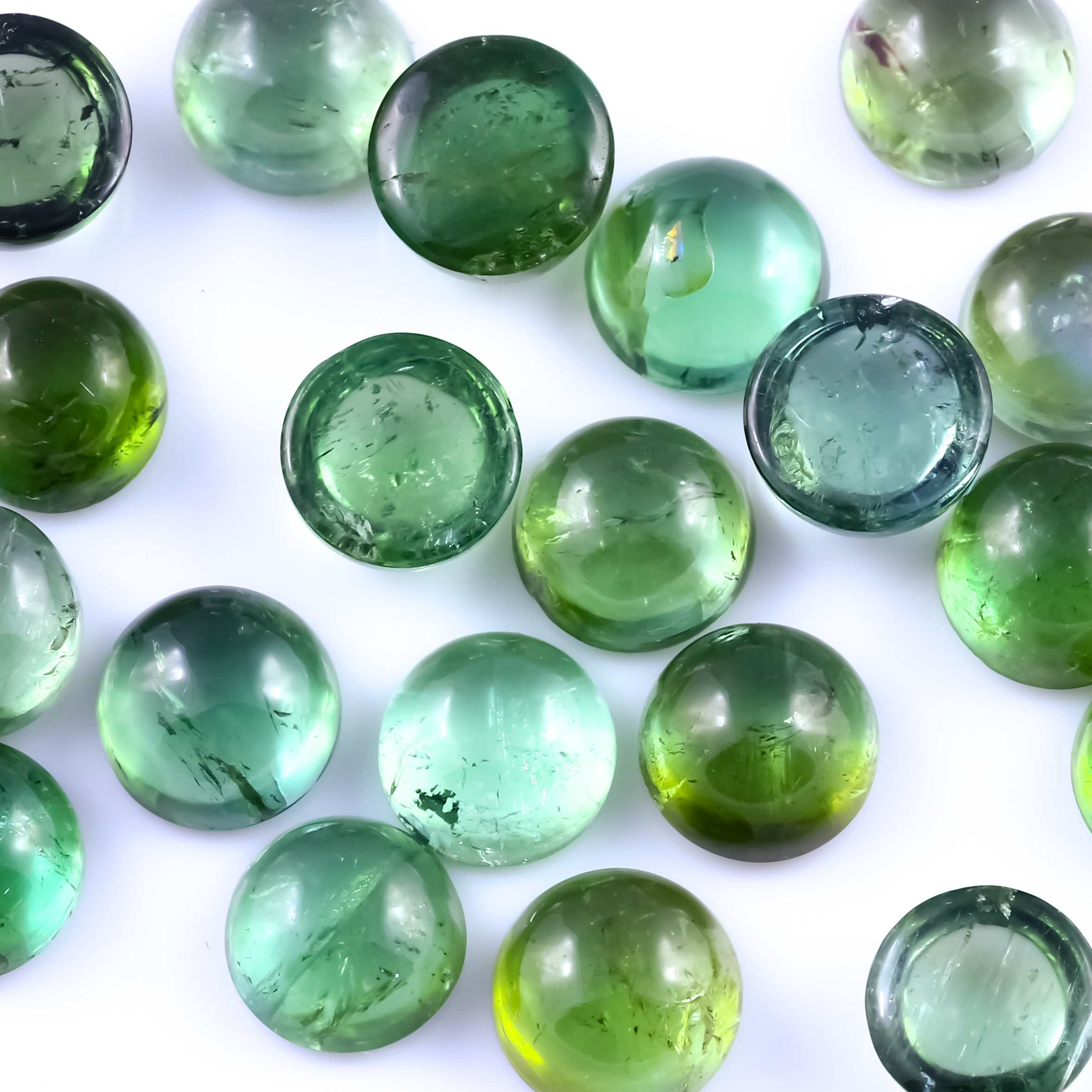
Tourmaline comes in a dazzling array of colours, which makes it an excellent option. Although some green tourmaline shades quite yellow, the brighter grass greens are lively enough to make an excellent alternative. High quality chrome tourmaline certainly can rival emerald and tsavorite. Highly regarded as a stone in its own right, it is coloured by the elements iron and possibly titanium, and the brightest green stones contain traces of chromium and vanadium, like emerald. Measuring 7-7.5 on the Mohs scale, it’s the hardest so far of our potential substitutes and can be used with care in rings. Bot of the earrings below demonstrate the colour shade range that tourmaline can display and I love the arrangement of the different colours.
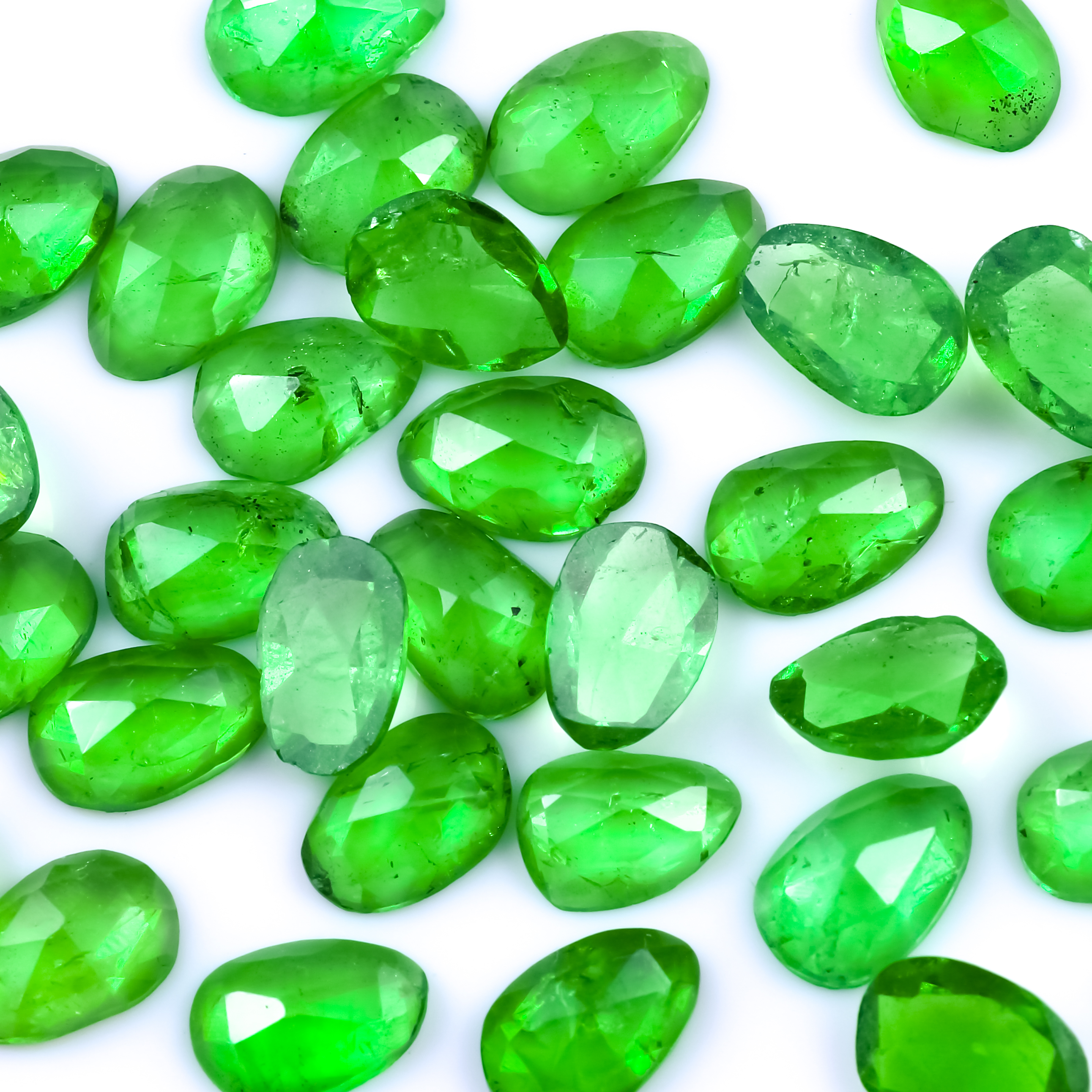
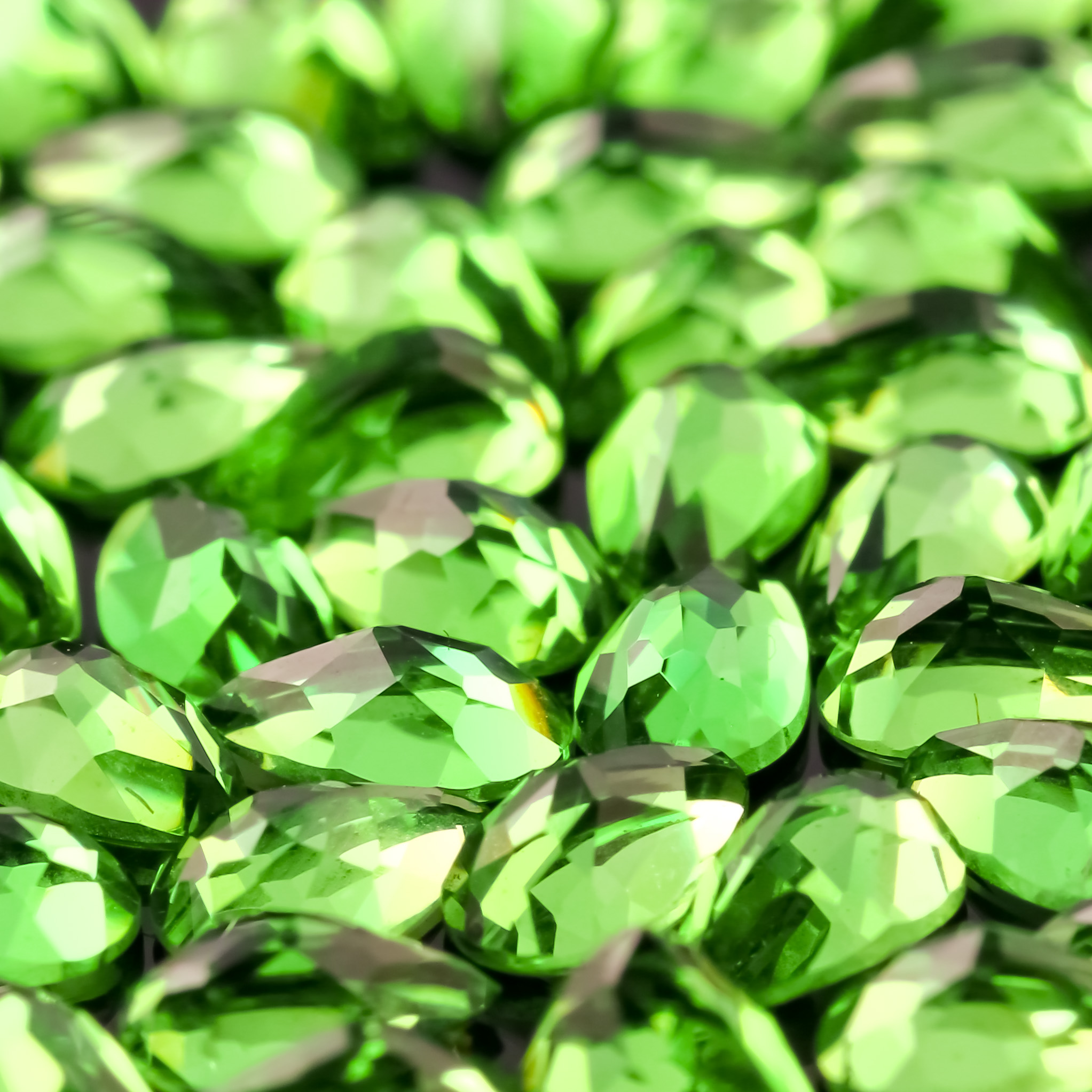
In my view, the best option. Like tourmaline, garnet comes in an array of colours, although it’s possible that this is not quite so well known. For many, garnet refers to the dark and dusty jewellery belonging to your grandmother. The green versions of garnet are tsavorite and demantoid, and the most appropriate of these as an emerald alternative is tsavorite. It’s not the cheapest, but it’s vibrant green, it’s not hard to find in clean quality and as it is garnet, it also has great brilliance and fire. Yes, fire. Garnet is often so dark that you can’t see this, but with tsavorite you often can. Its colour is caused by the element vanadium, like emerald, and indeed the colour can often rival that of emerald. It’s one of my favourite stones and at 7-7.5 on the Mohs scale it can make a ring stone. You can see how beautiful it is both in the larger rings stone below left and in smaller stones on the right.
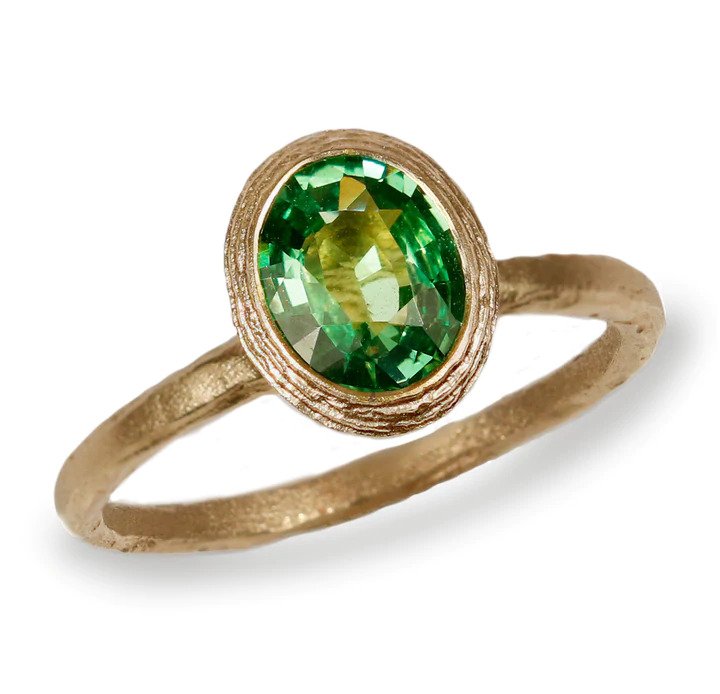
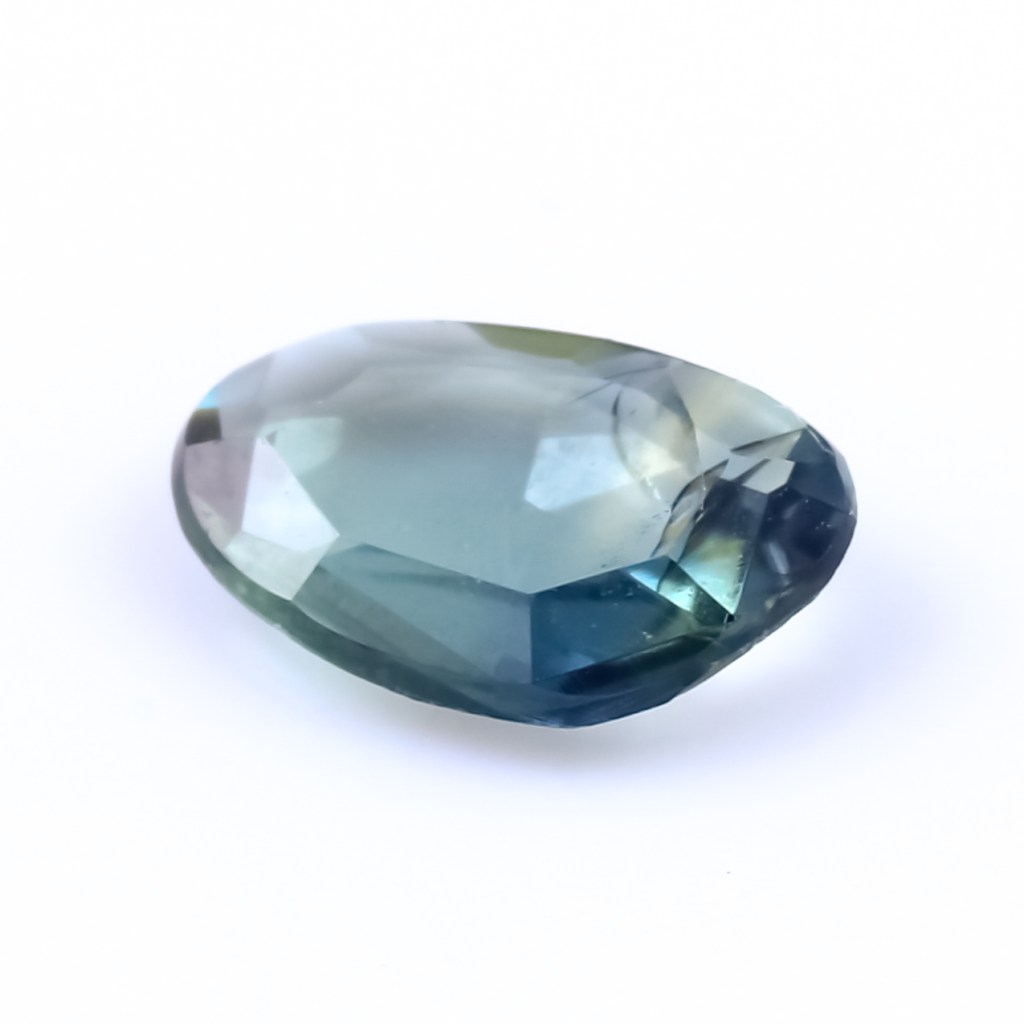
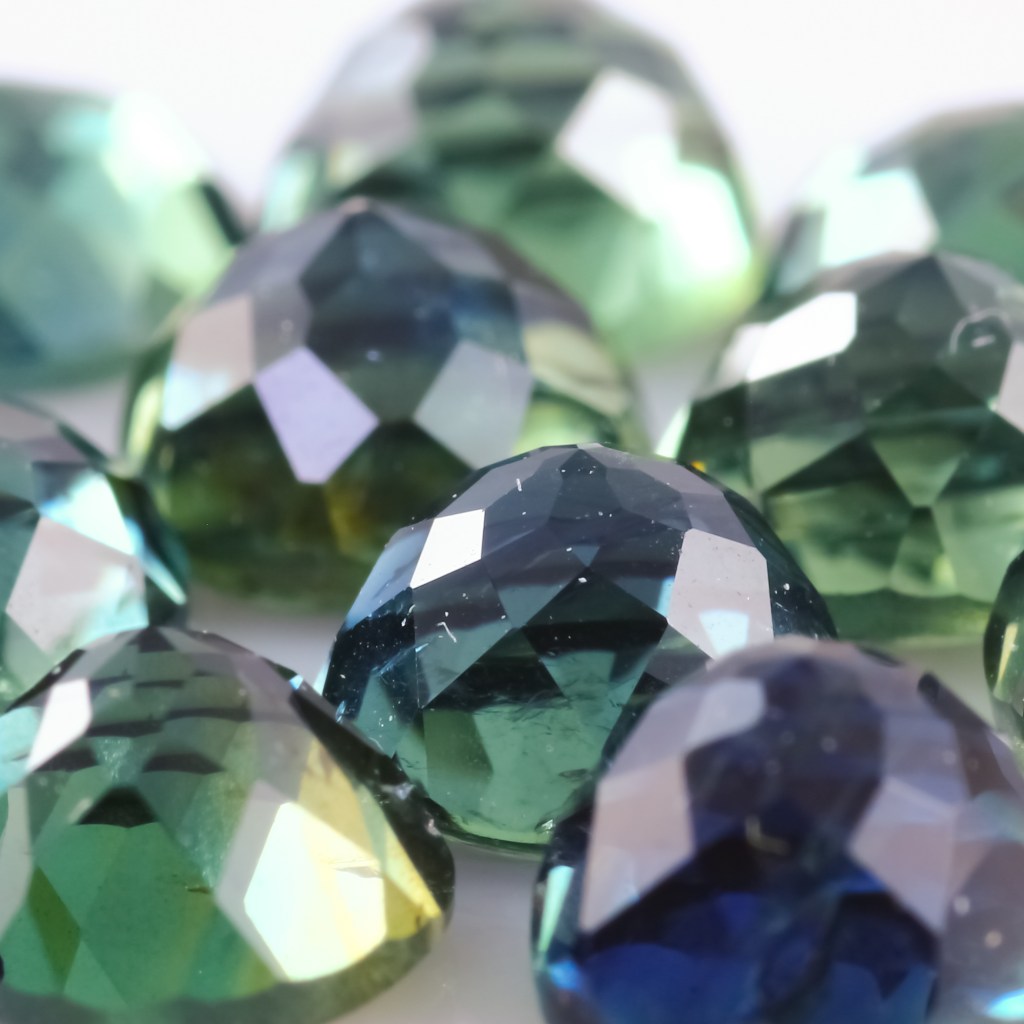
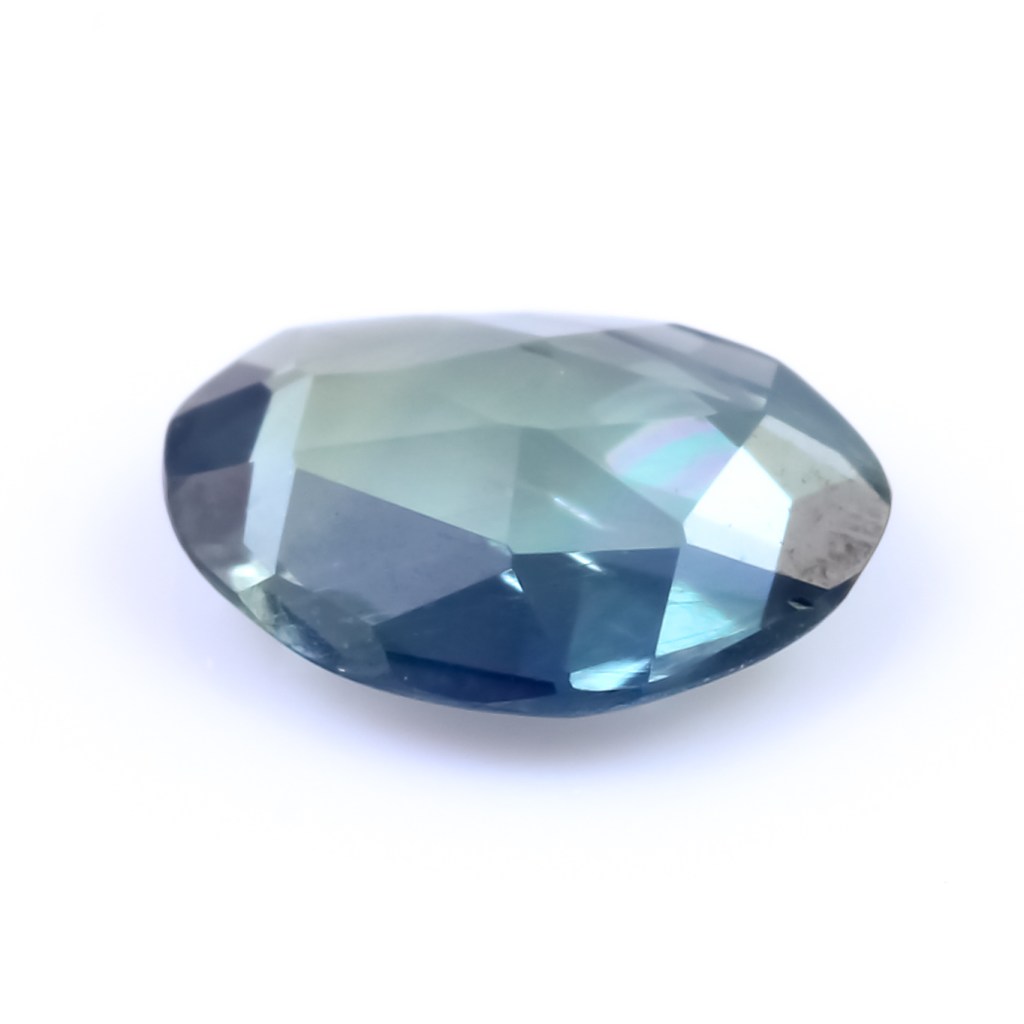
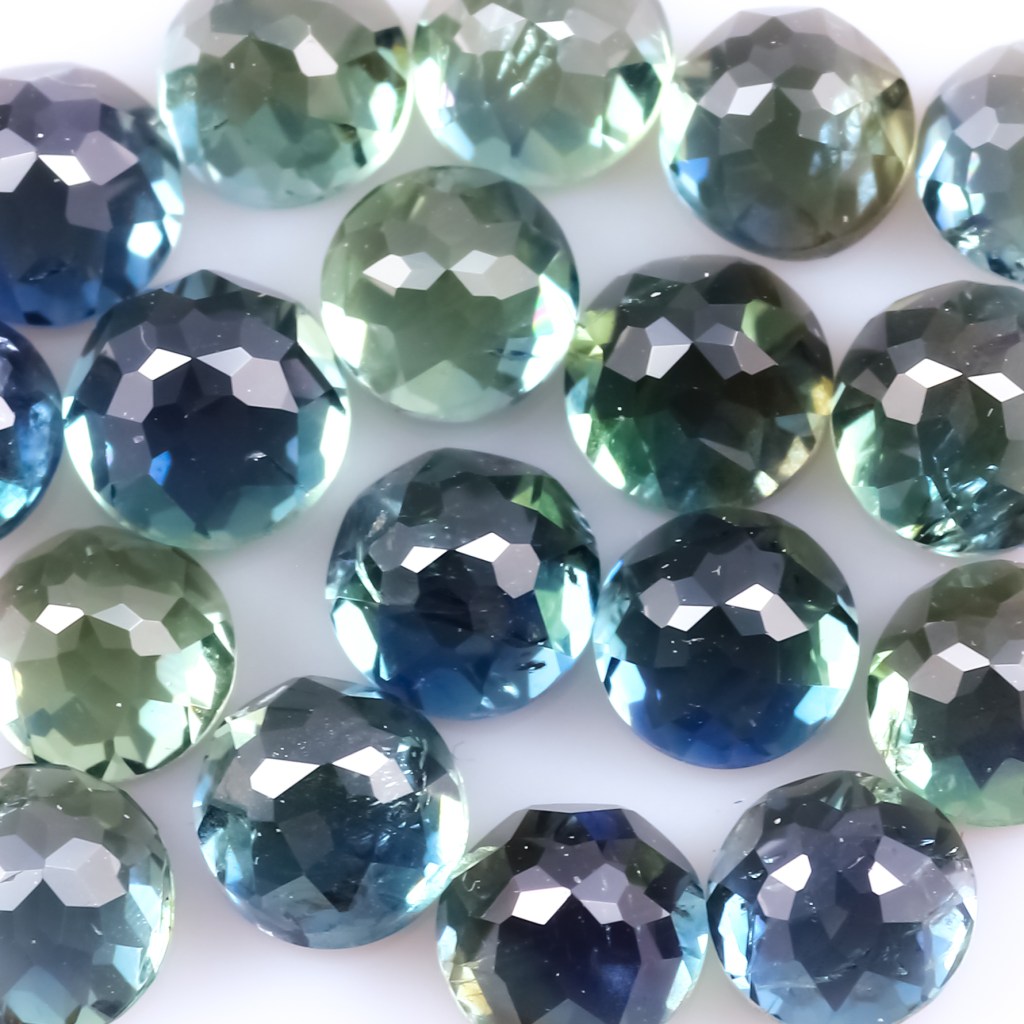
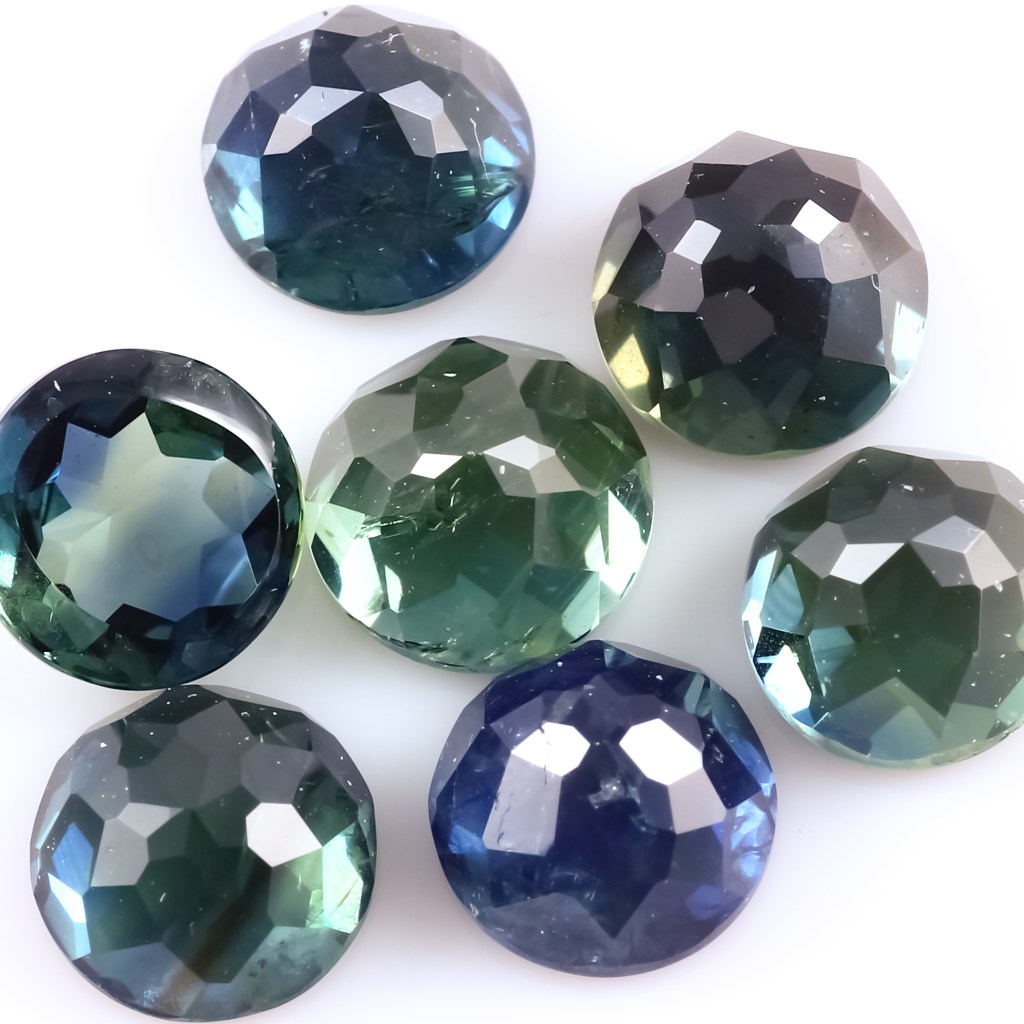
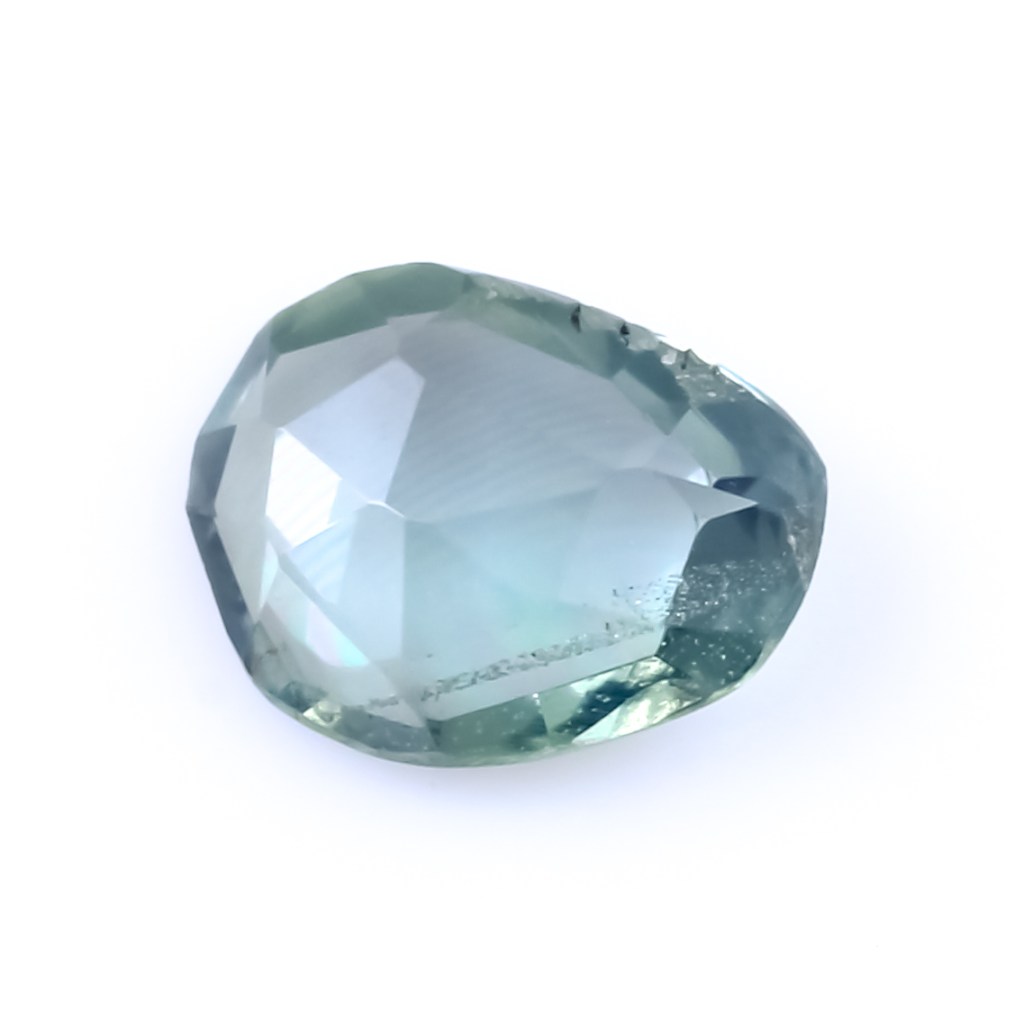
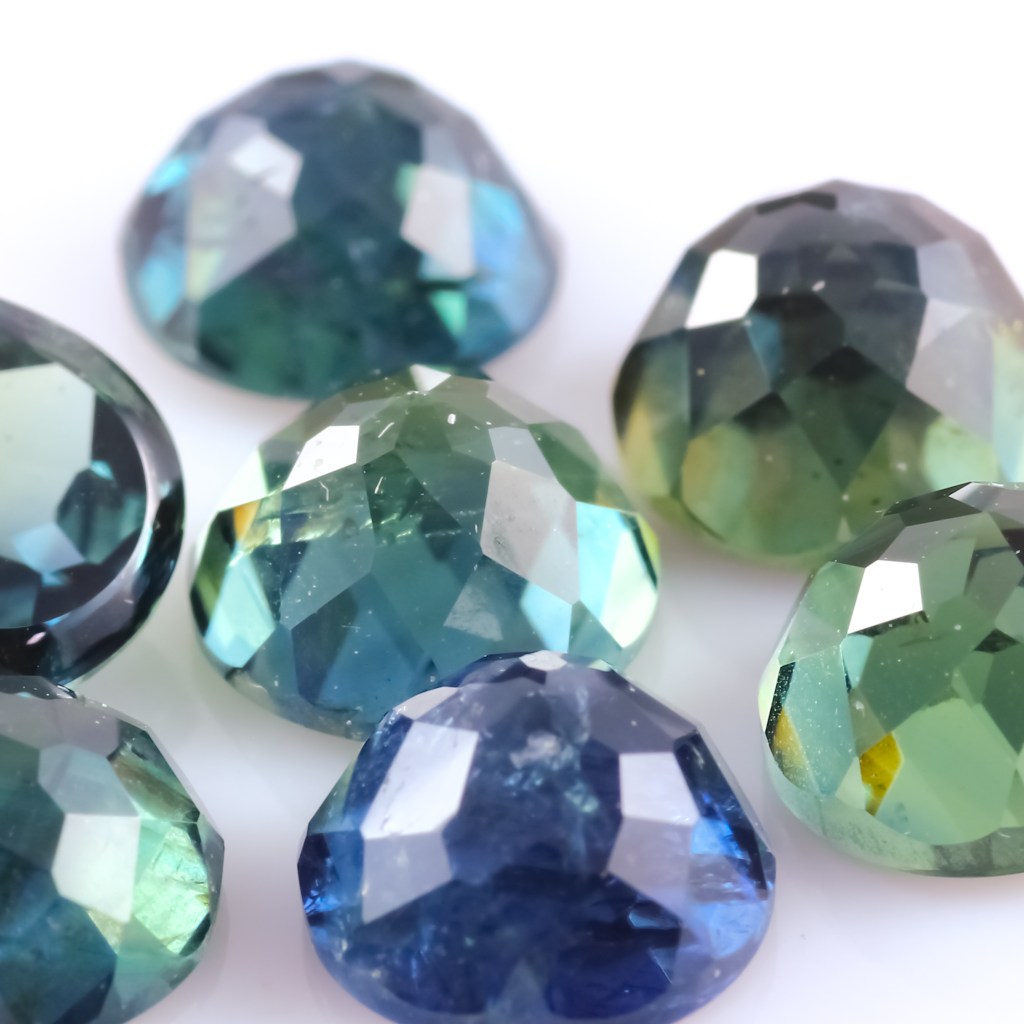
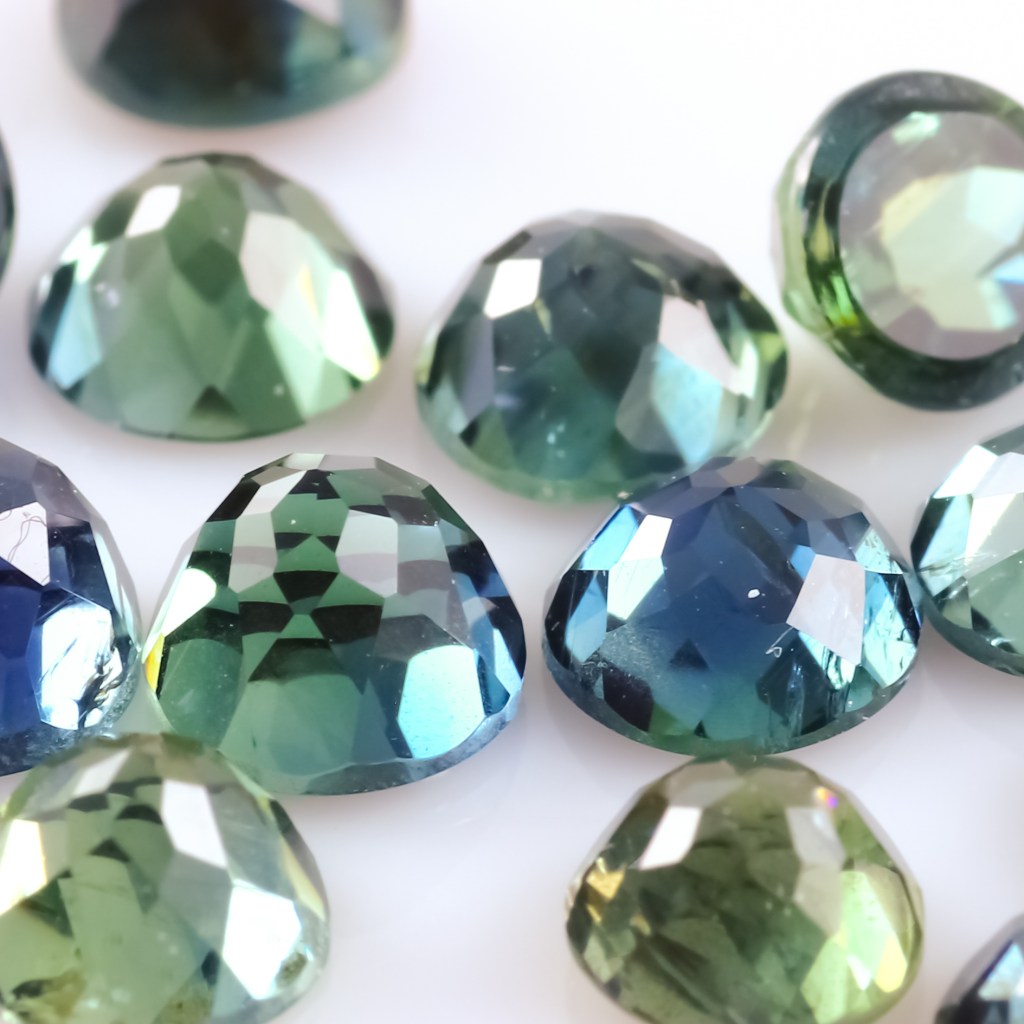
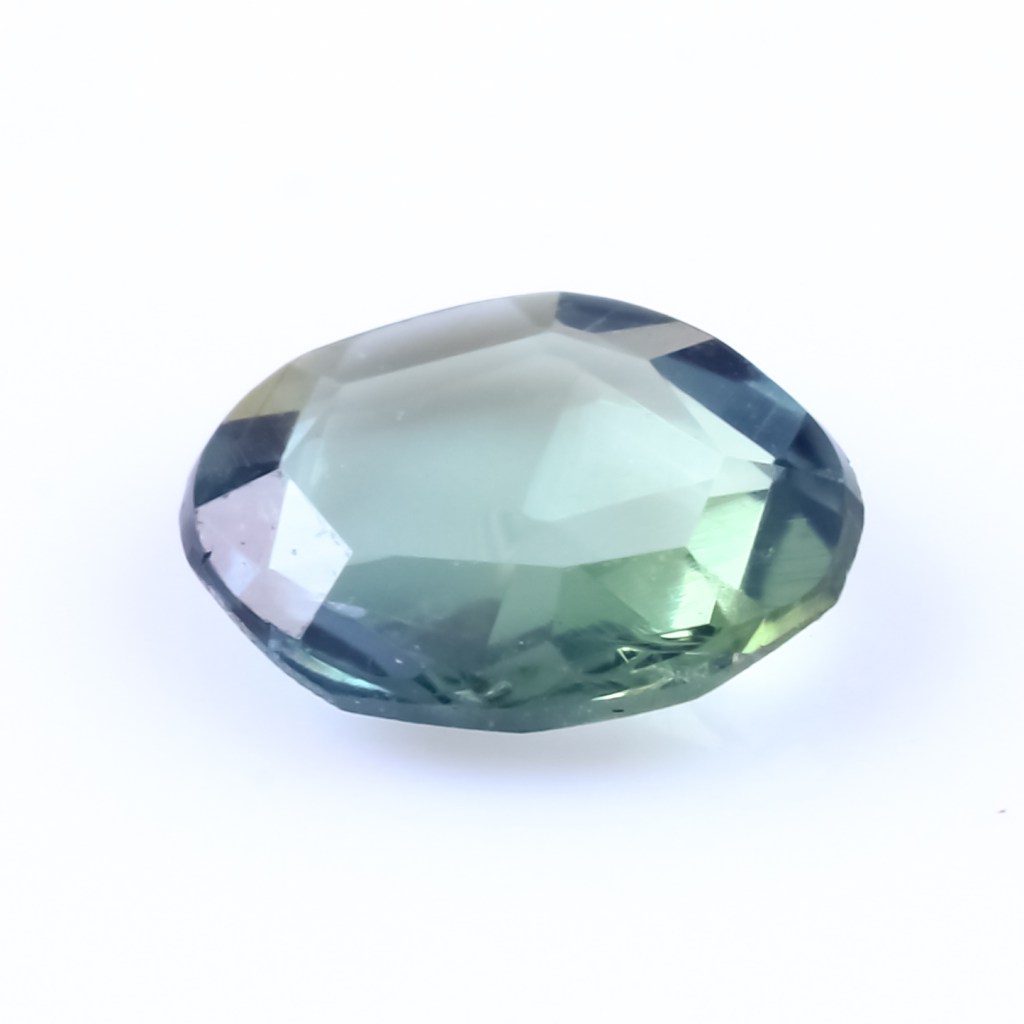
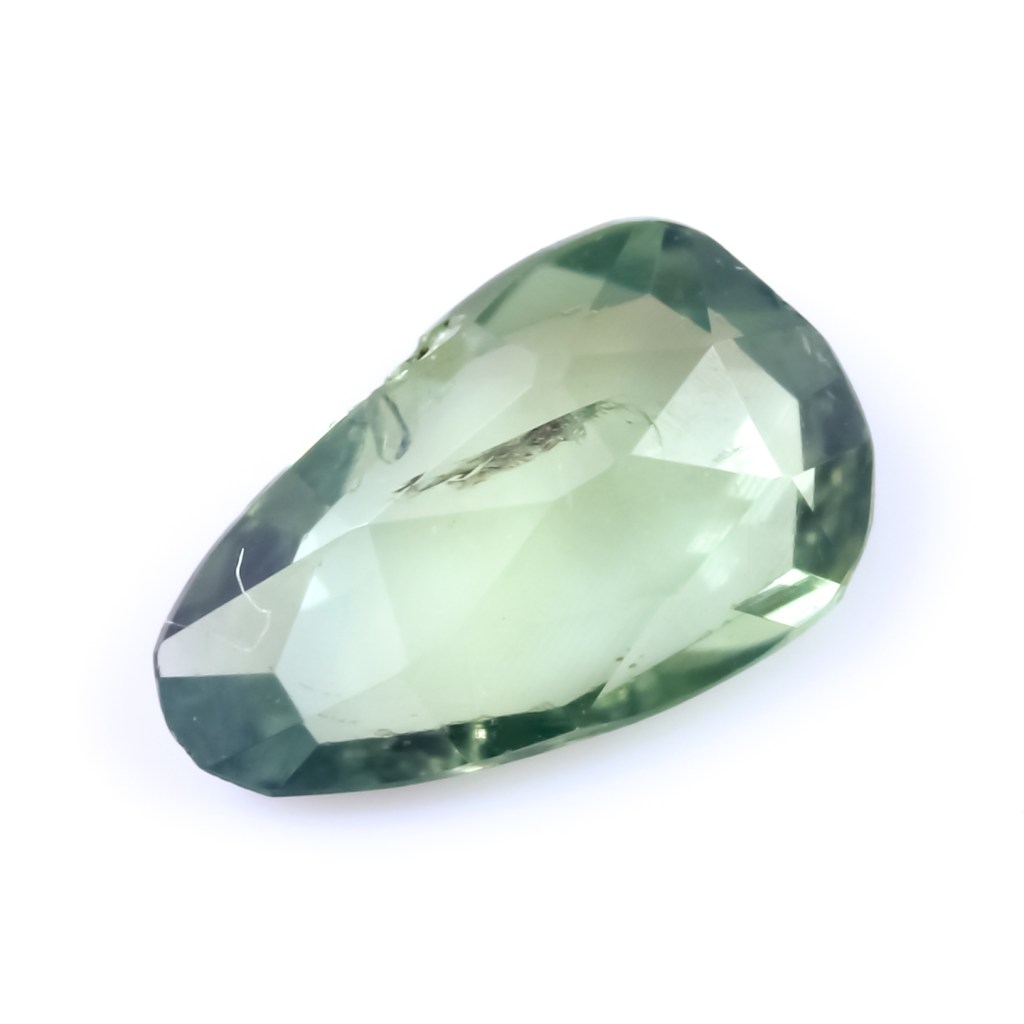
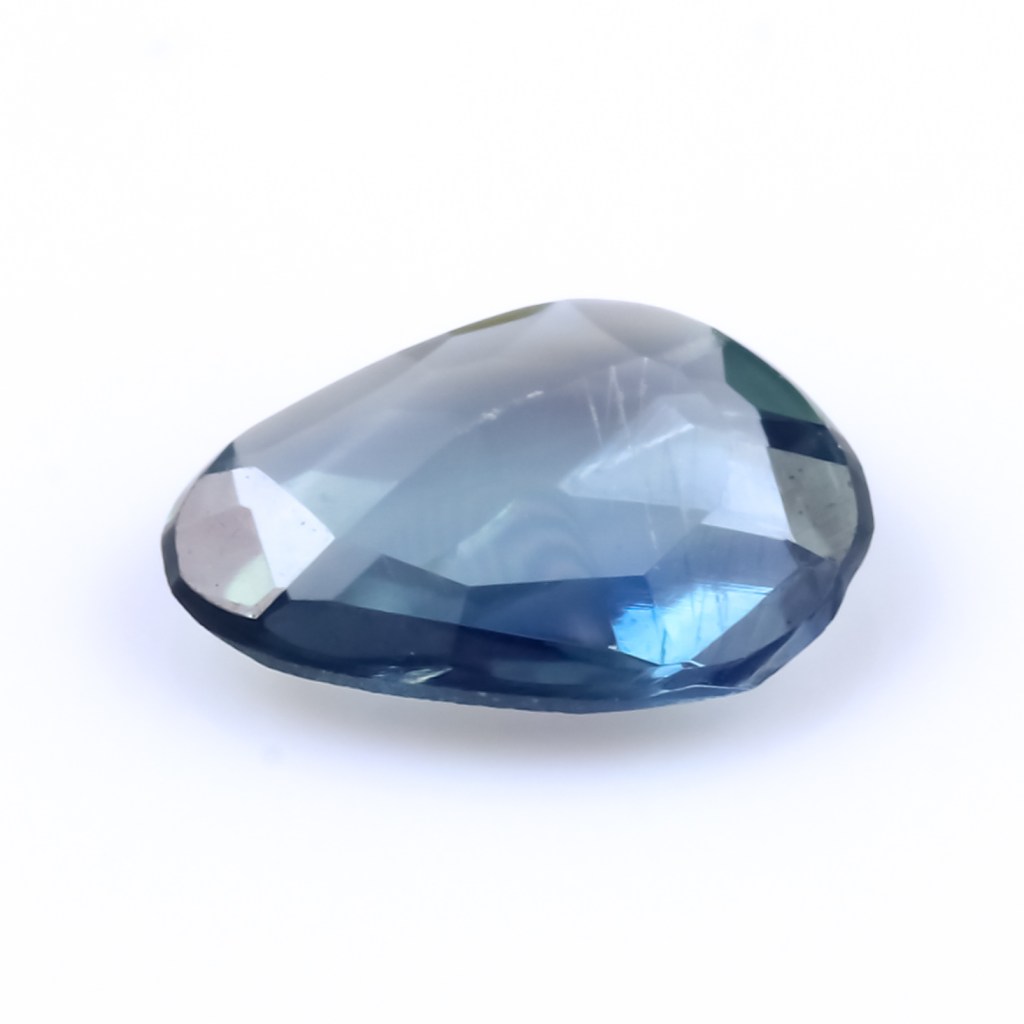
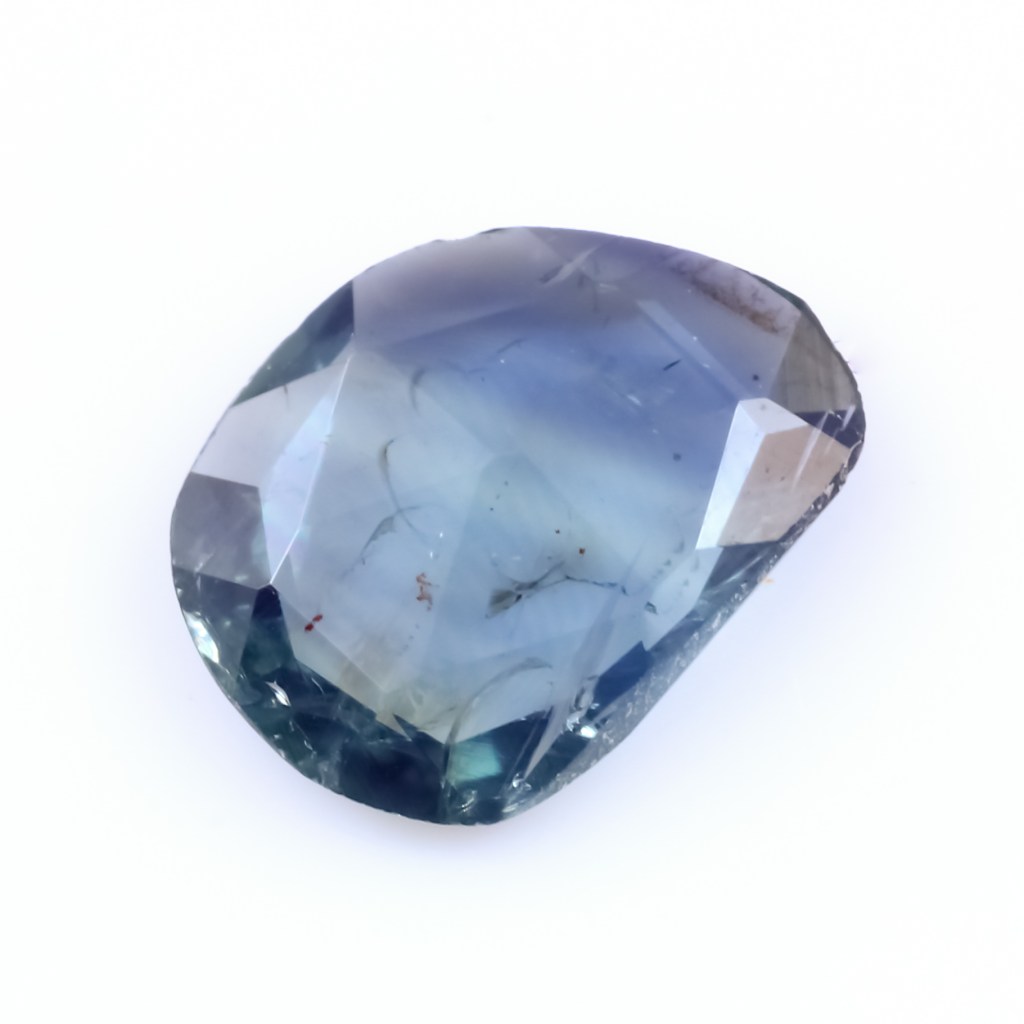
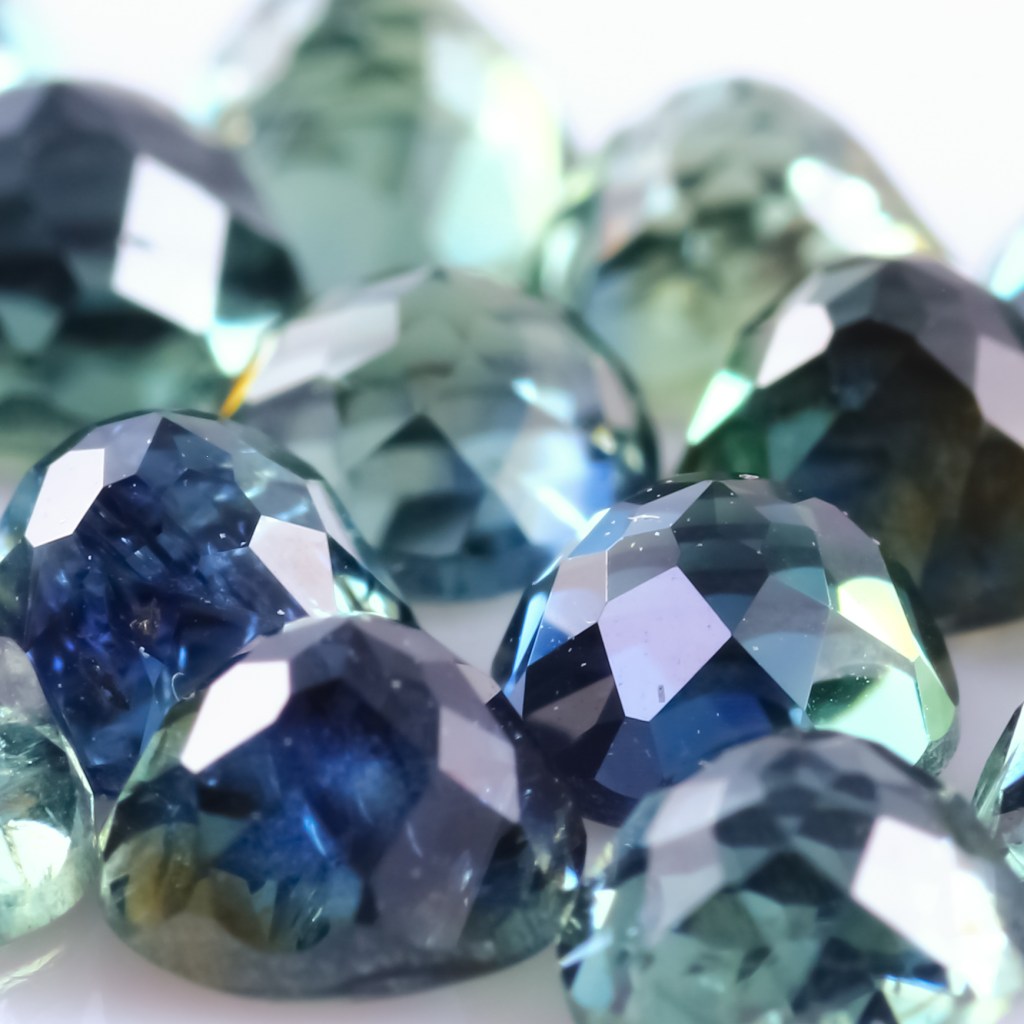
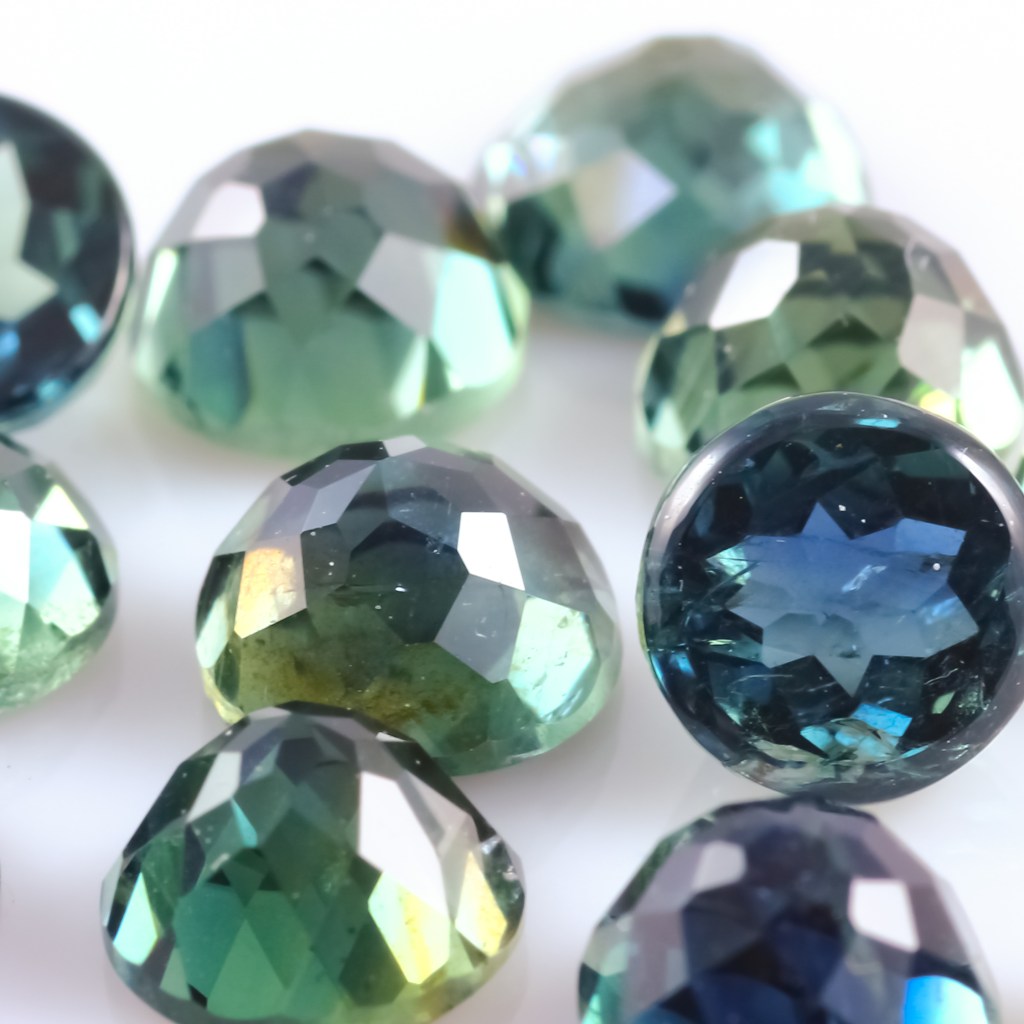
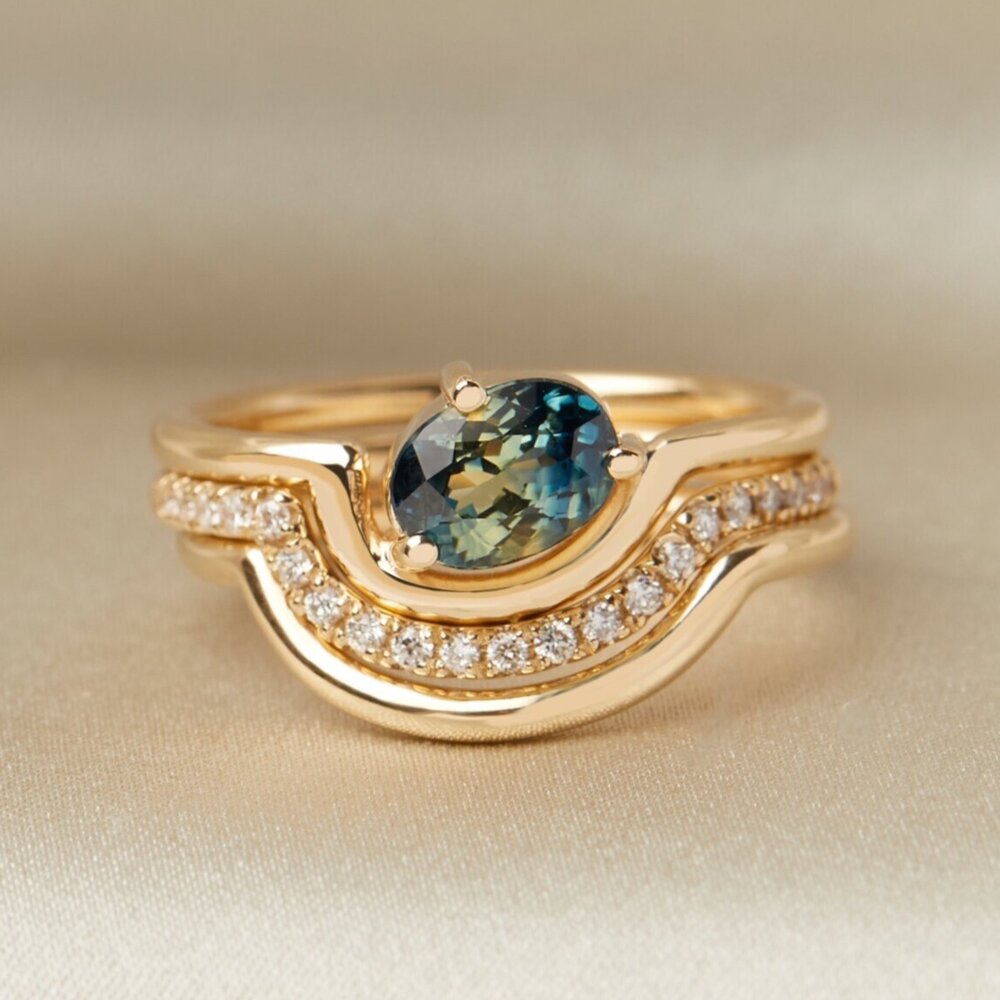
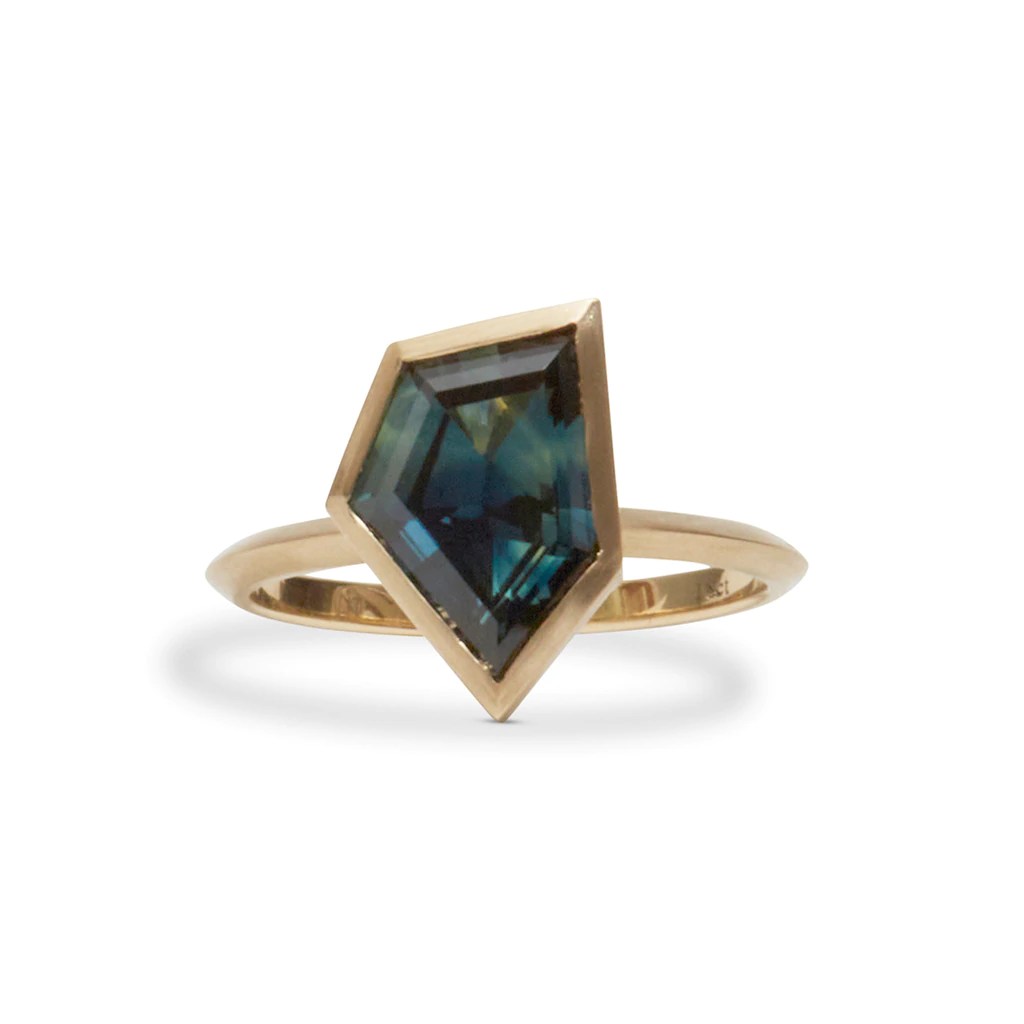
Australian sapphire is popular. Otherwise known as teal sapphire, I know this partly because when I took delivery of stocks of it in calibrated rose cuts and polkis, it pretty much sold out immediately. It’s not hard to understand why – I generally struggle to keep stocks of anything in the teal colour family as it is found in so few stones – tourmaline is the other main stone which displays this colour, and even Santa Maria Aquamarine a bit, and they are all very popular. The Australian sapphire has something extra, however, as it is very often parti-coloured, displaying blues, greens and yellows in the same stone, making it appear pleochroic, shimmering and completely unique. It isn’t pleochroic as such – which is seeing different colours from different angles according to the light properties of the stone, it is actual colour-zoning within the stone. You can see this below in Lindsay Lewis’ Sway Ring Set – the blues and greens across the stone – I also love the orientation of this stone – so unusual.
It’s a fairly recently popular stone, too. When it is dug out of the ground, it can appear dull and rather dark. It is often filled with so much silk that it can appear oily. It requires heat treatment and sometimes bleaching to bring out its beauty, and traditionally it is treated in Thailand, where conrundum treatments have long been a speciality. You can get it in blue shades, but more common is the green-blue, and more rarely it comes in yellows, or greenish yellows. I’m seeing it more and more in jewellery as the market is becoming more used to it, and it makes an economical and unique alternative to bright blue sapphire.
Below right, you can see the silk in the Eden Philippa ring, giving it a lovely velvety appearance, and on the left is Melanie Katsalidis’ Elevate ring, the clean setting showcasing beautifully the the colour variation of this beautiful stone.
Melanie Katsalidis Freeform Australian Parti-Sapphire Elevate Ring, $9200 AUDEden Philippa Australian Sapphire ring $6480 CAD
I have sold out of most of my calibrated stones, although I do have some 5mm rose cuts – including a lovely yellow and green one – plus some rose cut freefoms (polki). To shop all of my Australian sapphire, click here
Which is how I see the Pantone colours this year. When I first saw ‘Illuminating’ and ‘Ultimate Grey’ I’ll admit I thought they were a bit uninspiring. I’m still not sure that grey is actually a colour. However, actually I think they work really well for jewellers, not least because they can refer to either your setting metal or your stones. Gold for yellow, white metals for grey. Then with stones, the choice is not huge but it is particularly beautiful with a flexible price range.
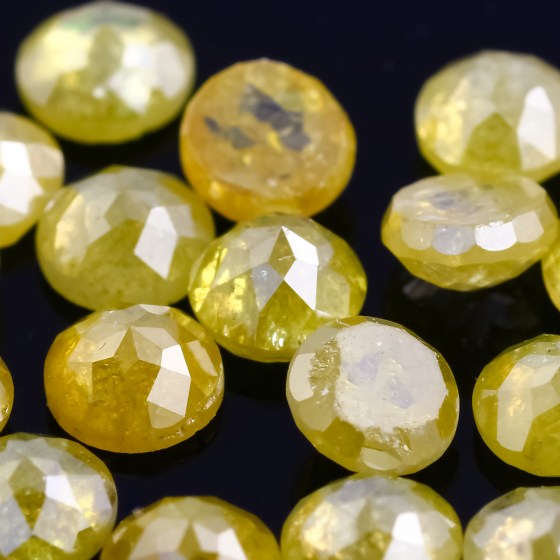
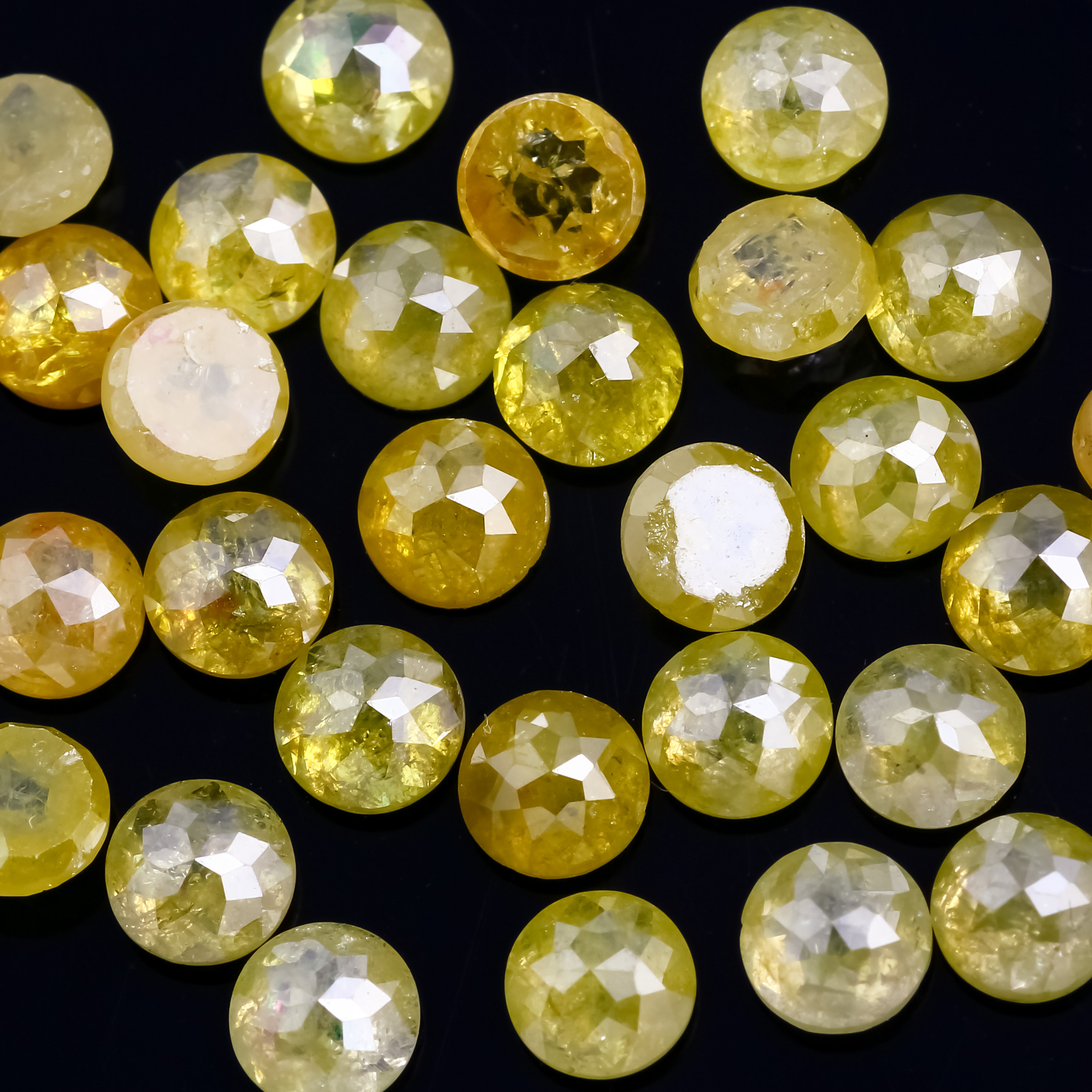
At the more inexpensive range there is lemon quartz with a cool, greenish overtone. This is a great stone for having cut in large sizes as it isn’t hard to find clean specimens and the carat price is reasonable even for large stones. Citrine runs from pale straw through to a deep almost orange-yellow and I think looks awesome with white metals. Golden rutilated quartz would often work, and these stones can be real showstoppers. More unusual stones might be tourmaline which again will come in any shade from pale yellow to deep gold, yellow beryl, which is often quite light or chrysoberyl. I have introduced some yellow diamond rose cuts in my shop; clean yellow diamond is very expensive but the included variety still offers plenty of glitter without making a hole in your pocket.
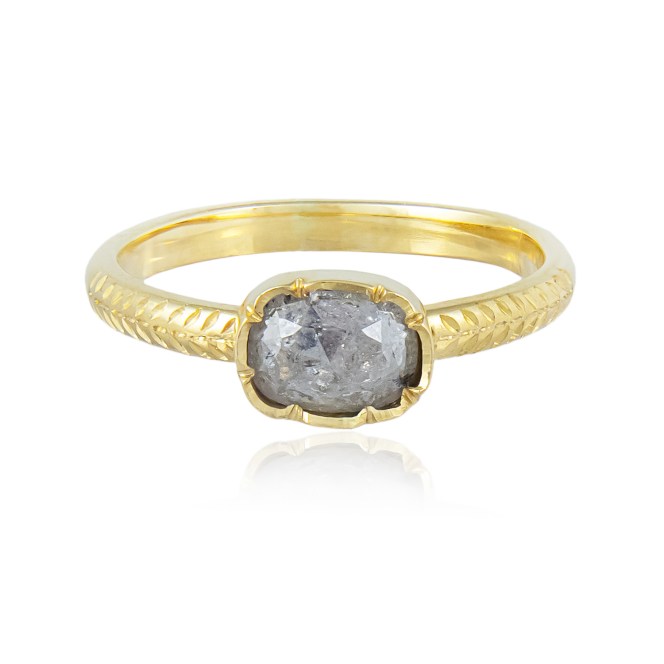
Grey stones can be simple grey moonstones; a very underrated stone that is really wearable and flexible; it just goes with everything and has an understated beauty, especially when combined with the chatoyancy that glides across the stone. Grey pearls can be pricey Tahitian or inexpensive freshwater varieties and there are all varieties of haematite, specularite and agates as well. I also have some lovely speckled grey diamonds, which like the yellow have amazing brilliance.
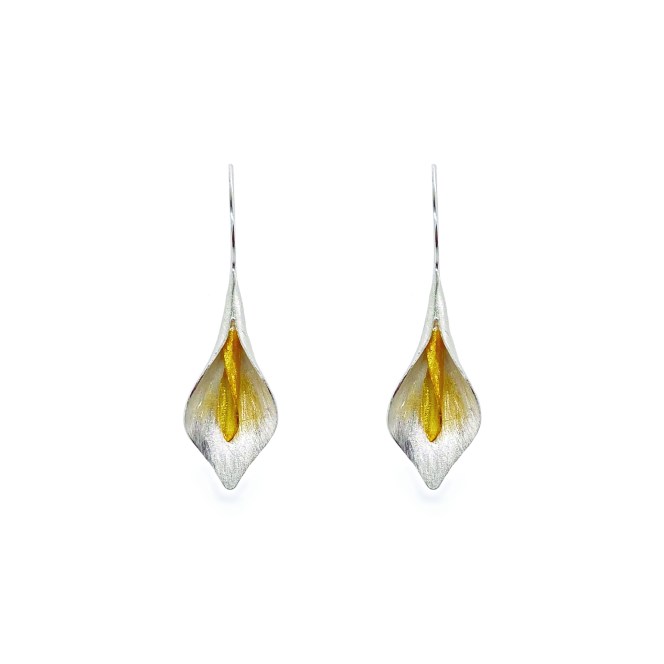
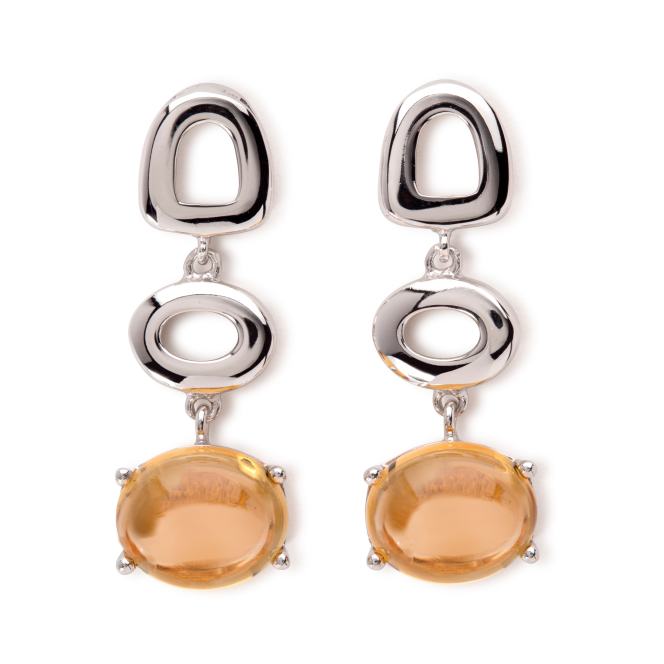
Below from left, I love Sarah Alexander’s multi-gemstone earrings; the mixed gemstones in different shapes and sizes and the use of colour. Natalie Perry’s ring is a pefect example of a non-traditional diamond ring, and I do prefer this style, with more included stones and irregular shapes; so much more exciting than the classic diamond solitaire. Sarah Alexanders silver and vermeil earrings demonstrate how you can work these colours using just metals and I love the chunky styling of Maviada’s white gold and citrine earrings; lovely big cabochons set in pleasingly rounded and chunky white gold.
Sarah Alexander Sahara Sun multi gemstone statement drop Earrings, £125.00
Natalie Perry Flower Set Salt and Pepper Diamond Ring, £2,400.00
Sarah Alexander Calla Earrings, £65.00
Maviada St Tropez 18k White Gold and Citrine Earrings, £1,950
To shop all of my Pantone 2021 themed stones, click here
Snappy title, I know! But I think that is the first thing I need to say about it. Cubic Zirconia is a synthetic diamond substitute – and I’m not a snob about it, it is very nice and sparkly and firey. However, zircon is a natural gemstone, dug up out of the earth and it actually comes in a variety of colours – red, blue, green, amber and yellowy, pinky browns. Some of these are natural, and some via treatment. Clear zircon has a brilliance and fire that matches diamonds – and in fact has been used as a substitute – however it is easily distinguished as it is doubly refractive and much softer, so you’ll see abrading along facet edges on older pieces. The second thing I want to say about it is that I don’t understand why it isn’t more popular. I’m not alone in this, as you can see the fire even in the coloured stones, and it is a really nice and not too expensive stone to work with. The most common colour is a sort of bright blue – like a light version of London Blue Topaz, and I have stocked this in the past. However, new in stock I have natural brown coloured zircon and I just love it. It’s kind of like a champagne diamond without the price tag! It’s hard to describe the colour, it’s a lovely, warm pale pinky-brown and I have it in 2mm, 3mm and 4mm rose cuts.
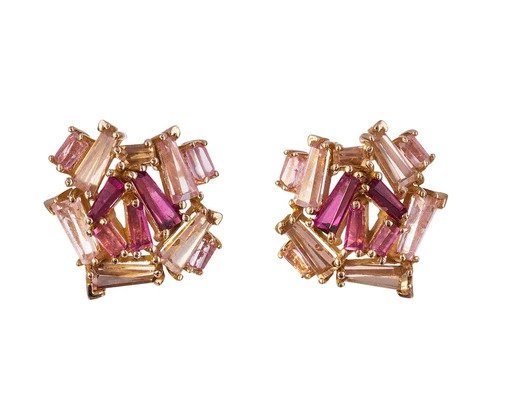
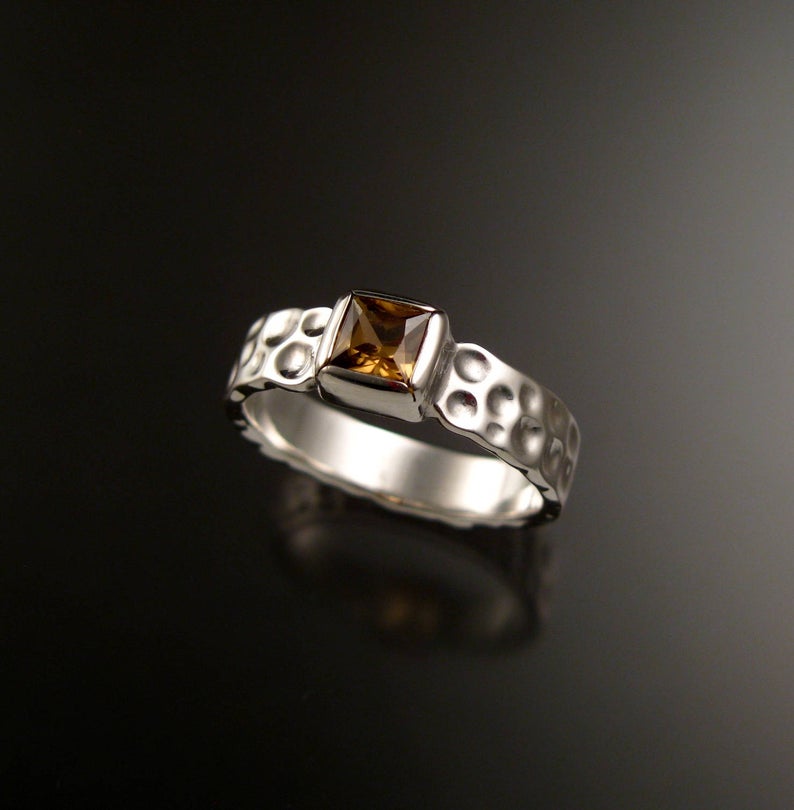
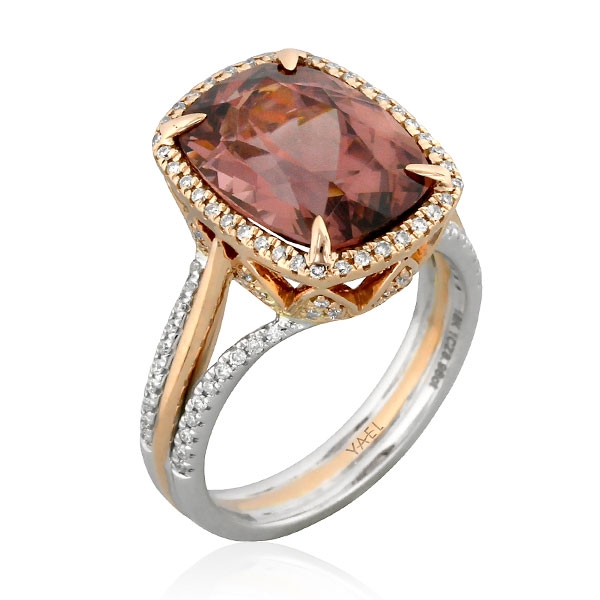
Below you can see some examples – the pink of the tourmaline and peach of the moonstone in Nak Armstrong’s earrings lends the zircon a glowing warmth, whilst the silver on Stone Fever’s ring allows the colour to sing. I love the Yael Designs ring, and it’s surprising because if I saw that ring I’d myself assume it was a topaz or even a sapphire, but the fire that you’d get from a zircon that size would be quite something.
Nak Armstrong Tourmaline Peach Moonstone and Zircon Earrings
Stone Fever Zircon square Moonscape ring handcrafted in Sterling Silver





















 Joopy Gems | The Blog