Tourmaline is a Many-Coloured Thing

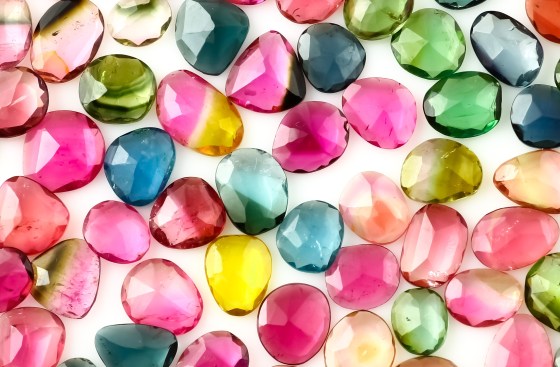
Joopy Gems Bi-Colour Tourmaline Polki mix

John Ruskin said, ‘The making of tourmaline is more like a medieval doctor’s prescription than the making of a respectable mineral’. This refers to the extraordinary colour range of tourmaline, completely unparalleled, which amusingly does not necessarily relate to the chemical composition. Yes, that’s correct; there is no simple relationship between composition and colour! And tourmaline stones are named more for their colour than their composition. It’s complicated, but lets break it down a bit.
The name comes from the Sinhalese word ‘toromalli’ meaning ‘mixed gems’, a term that the Dutch merchants in Sri Lanka applied to the rough, water-worn pebbles found in the gem gravels. It has been routinely confused with other gems; emerald, ruby for example, and it wasn’t until a few centuries after the first stone had been discovered, and confused with emerald, that it was recognised as a separate species. It is small differences in chemical composition that give tourmaline its differing colours. If you look at tourmaline as being a collection of related mineral species that have the same crystal structure but slightly differing chemical and physical properties, that helps to explain. They are all silicates – silicates being compositions of silicon and oxygen, and making up some 95% of the earth’s minerals, so very common. They all share certain elements – fluorine, boron, aluminium, but contain differing levels of other elements: sodium, lithium, calcium, magnesium, manganese, titanium, copper, and iron.
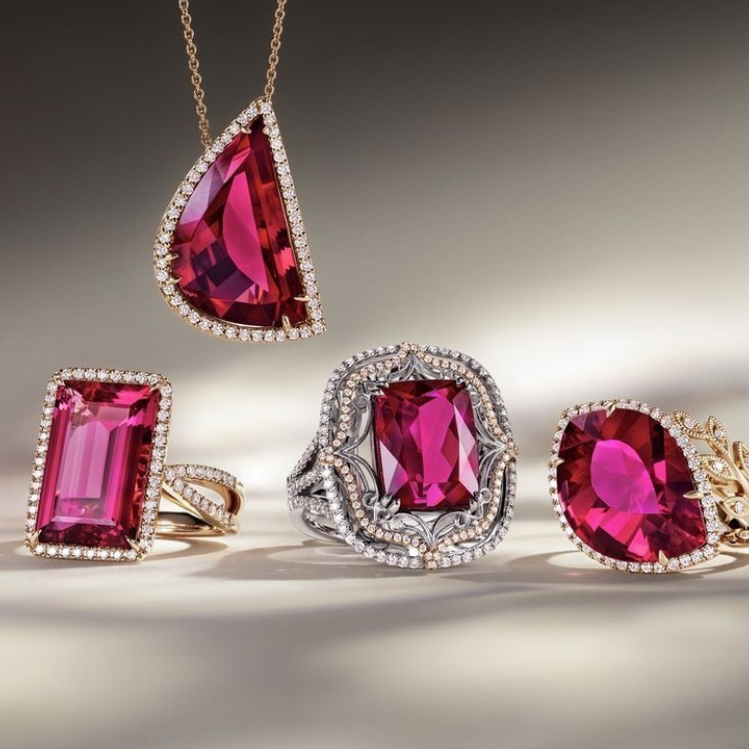
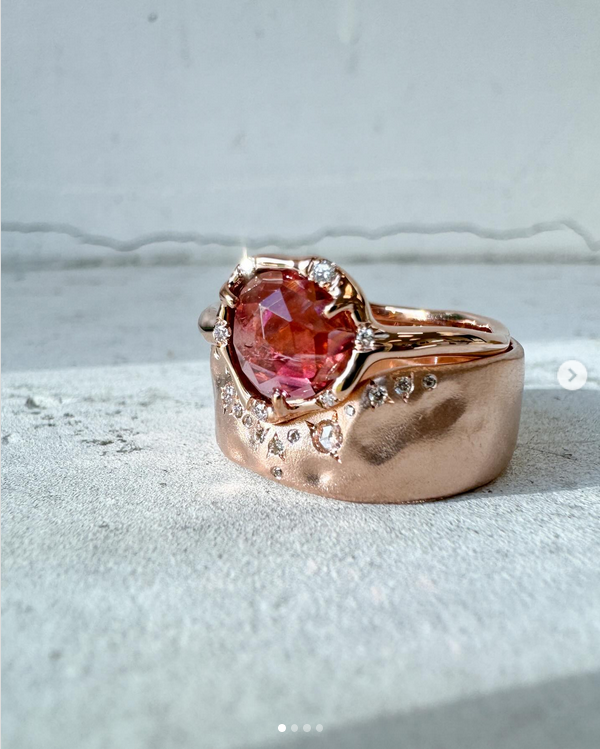
A tourmaline’s chemical and physical properties are used to define its species: elbaite, liddicoatite,
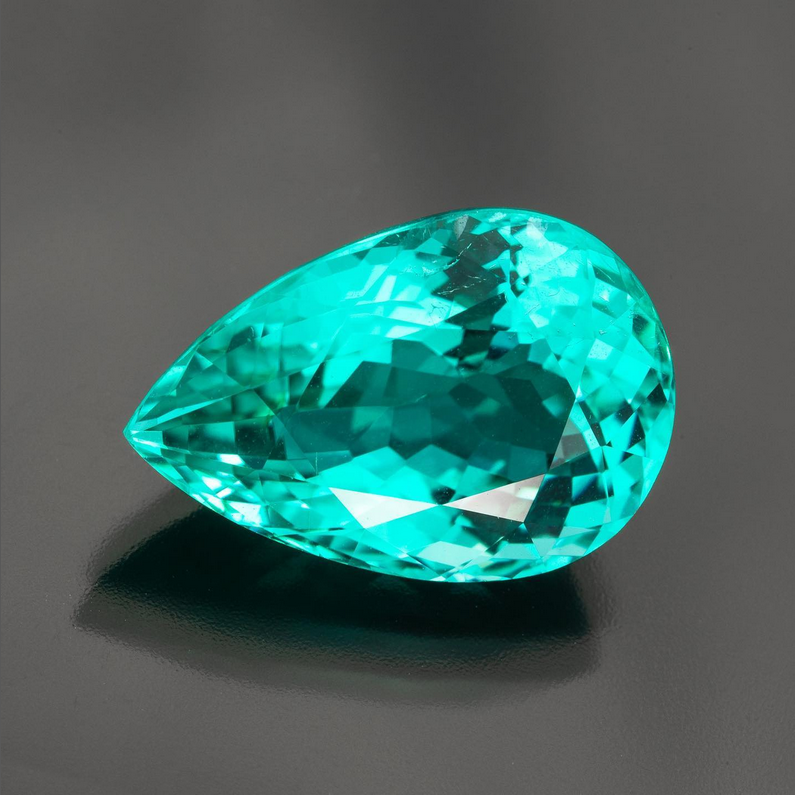
dravite, uvite, and schorl. However, each species will demonstrate a variety of colours. So you can’t say elbaite is pink, liddicoatite green and so on, although schorl is always black. This is what I mean when I say that tourmaline is referred to by colour rather than species. So intense hot pink tourmaline is called rubellite, blue to teal is called indicolite, green tourmaline is verdelite and paraiba is an intense neon turquoise, named for the state in which the gem producing mine was found.
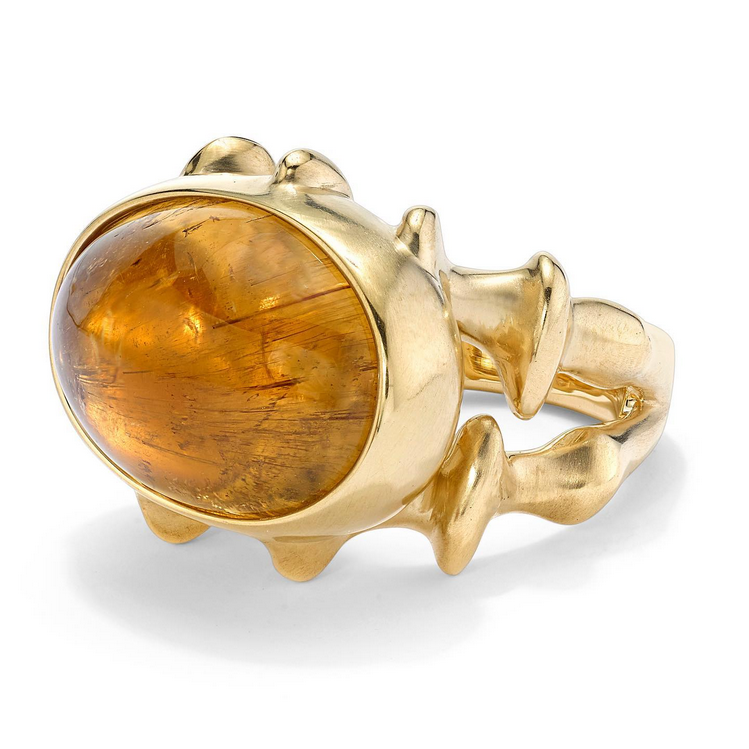
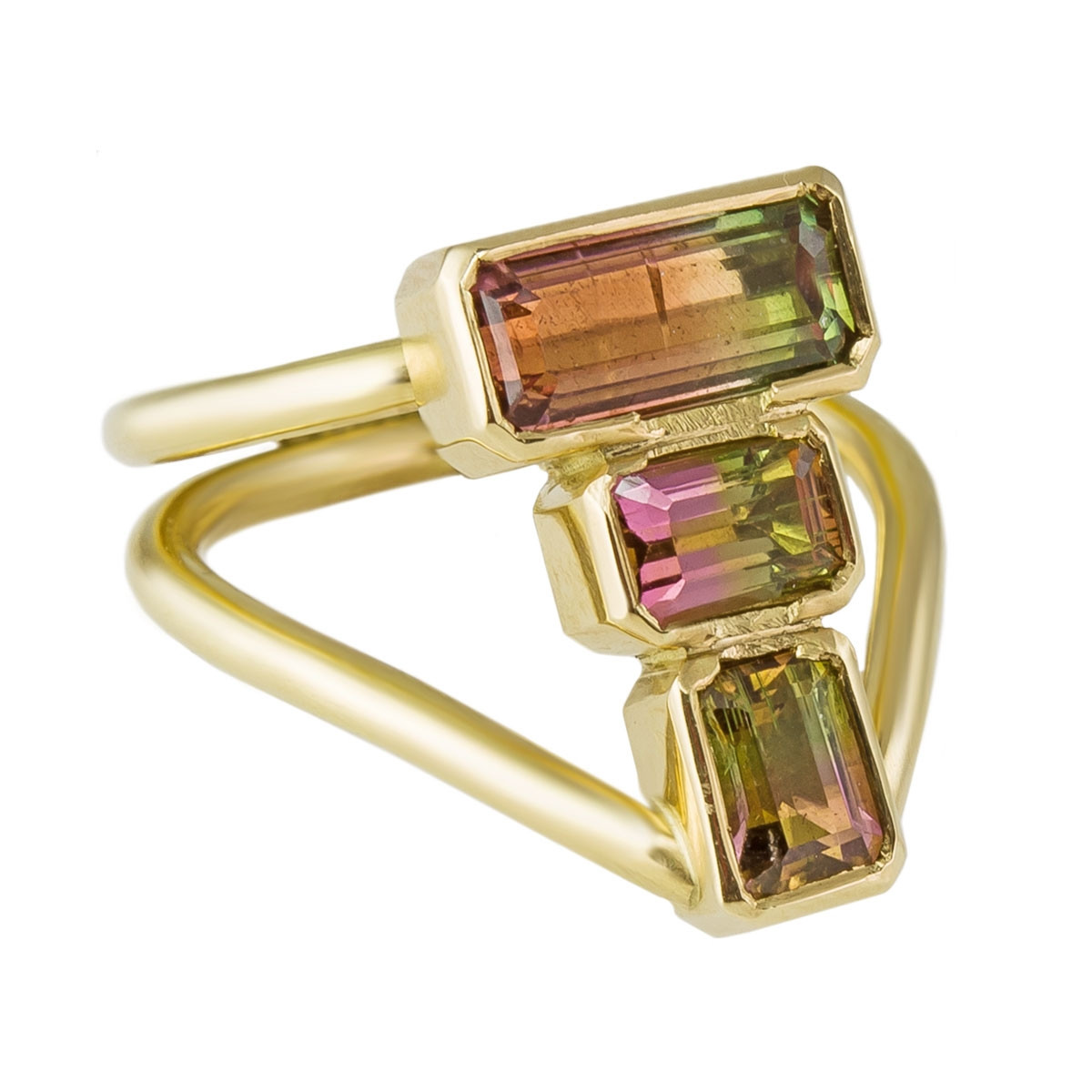
The most fascinating, though, for me is the parti-colour and bi-colour stones. This tends to happen with the liddicoatite species, and it occurs when the trace elements change in either concentration or composition during the crystal’s growth. This can give rise to really striking patterns, and these stones can be cut as slices if the colour zoning occurs parallel to the length of the stone, familiarly known as ‘watermelon’ tourmaline. This term was coined for those stones with the bright pink interior and green rim, but can and is used for any slice with particolour characteristics. Alternatively the zoning can take place across the length of the stone which gives the half and half effect on a long crystal. Another very valuable type of tourmaline is known as chrome tourmaline, and this is a very vibrant green colour, and this is of either the dravite or uvite species, or a combination of both. Whilst these normally produce yellow to brown coloured crystals, when vanadium or chromium is present, they will come up bright green.
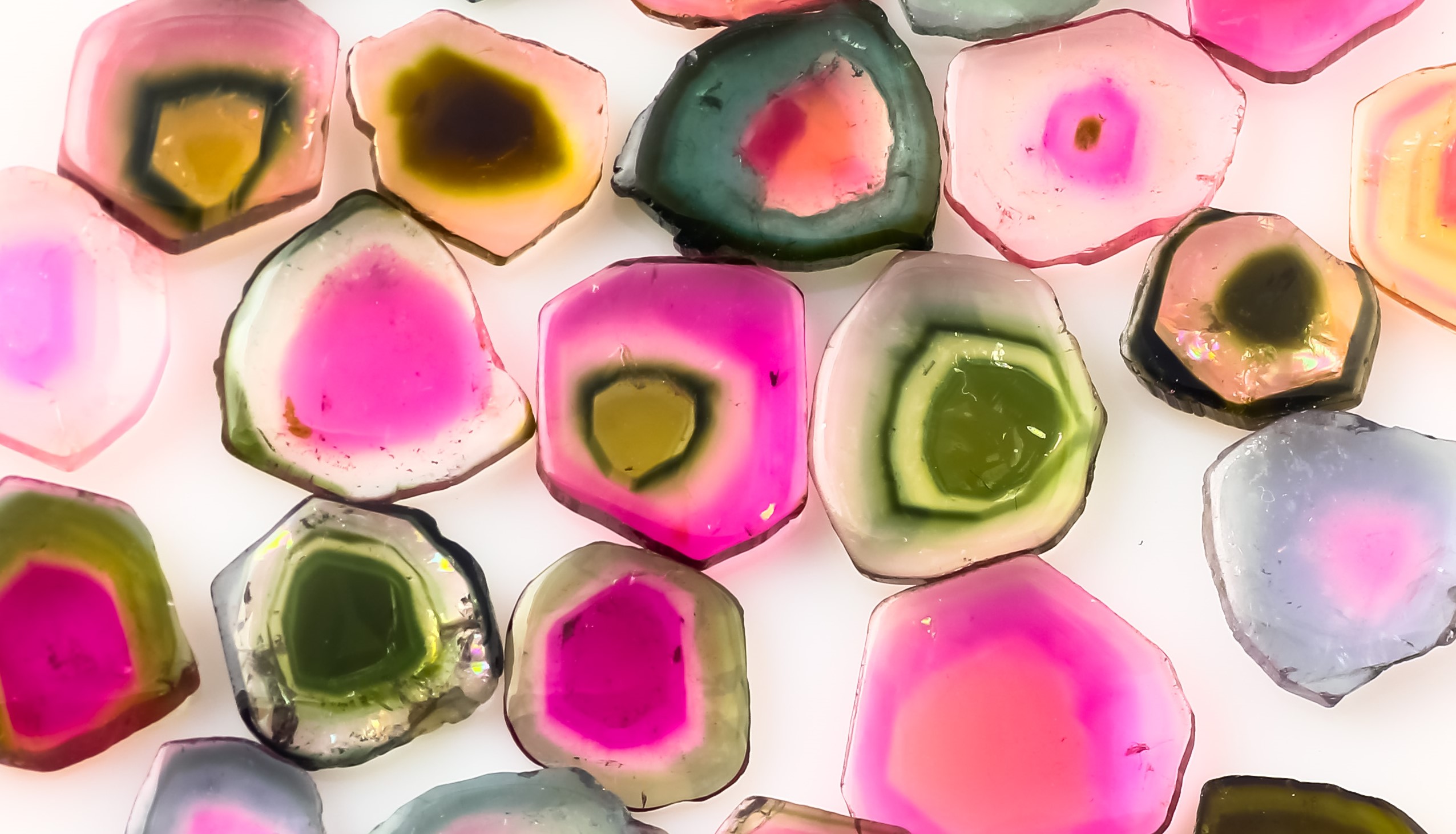
Joopy Gems Watermelon Tourmaline Mix

Because tourmaline crystals tend to grow long and narrow, with those very distinctive striations down the sides, you often find them in very non-standard sizes and they can be harder to find in more familiar, calibrated forms. You can only really cut them along the length as the stones tend to be dead down the length, or in very thin slices. Tourmaline is extremely strongly pleochroic, and one colour is typically much darker than the other. When you consider also that tourmaline absorbs more light down the length of the stone rather than across the width, a crystal that appears, say, light green across the width of the stone may well appear almost black down the length.
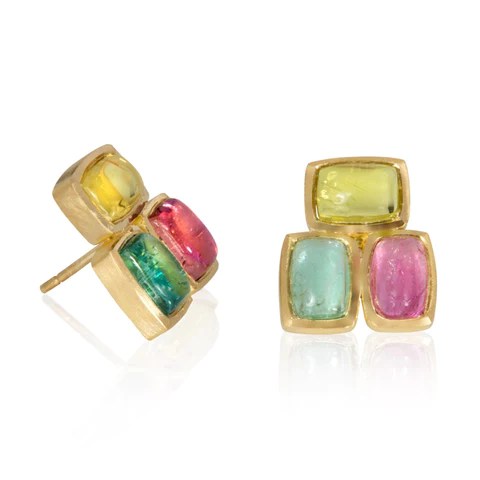
You can also get chatoyant tourmaline, although the fibres are relatively coarse, and tourminalted quartz. Schorl is not used much these days but was popular in Victorian times as mourning jewellery, as it was a great deal tougher than jet. As always, to shop my tourmaline, click here

joopygems.com

Perfect pears

This slideshow requires JavaScript.

I’m so in love with these: beautiful rose-cut pears in a variety of exciting stones. A while ago I had some 3x4mm rose cut sapphire pears, and they were really popular, but I struggled to replace them, as it’s always a bit difficult finding nice quality sapphire at a price-point that doesn’t make you choke on your morning tea. Then I had a brainwave: tanzanite! The same colour and effect but much more plentiful and at a price that won’t stick in your gullet. I mentioned it to a customer and she said, ‘oh, how about opal? How about rainbow moonstone?’ So I said good plan and went to my supplier who said, ‘Pink tourmaline! Green tourmaline!’ So now we have all of those things. The tourmaline is not going to hang around. I don’t have a lot of it and it’s clean. I’ve already sold a fair amount of it. The tanzanite, moonstone and opal I have plenty of. The opal is very, very powerful. I mean, not in a mystical way; the play of colour is super-strong. It’s white Ethiopian material, so the play-of-colour appears suspended in the stone. The rainbow moonstone is AA grade, so a few wisps and veils but excellent clarity and strong adularescence. The tanzanite is light blue/violet depending on the angle of view, the pleochroic little so-and-so. I’ve got light pink and dark pink tourmaline and it is stunning, and green tourmaline as well which is unusual and which never hangs around long in its rose-cut form. Prices start at $6.10 for a light pink tourmaline stone rising to $10 for a dark pink. Everything else is in between!

You can find them on the Hong Kong site here, and on the US site here.

joopygems.com

joopygemsusa.com

Pink does not stink, part 1

This slideshow requires JavaScript.

Alright, I admit it; when my older daughter went through her pink phase, which lasted for years I could not wait for it to end. But there is something about pink tourmaline which is simply irresistable, and I’ve just listed a whole new bunch of free-size cabochons and mixed cuts. These here are the mixed cuts; small to medium in size and a really gorgeous selection from pale petal pink through bubble-gum and and apricot to deep, vibrant fuchsia. Some of these absolutely glow. Not just pink either; I have a couple of really gorgeous yellows; a warm sunshine and sharp citrus as well as a couple of bluish-greens. I do adore tourmaline; it is my favourite stone, and one of the things I love is the colour range, so many different shades. Legend has it that this is because it travelled along a rainbow and picked up all of the different colours. It’s also supposed to inspire creativity. Whether or not you believe that, I can see any one of these pieces holding their own in a piece of jewellery and let me tell you, these stones appear pretty clean. One of the things I love about tourmaline is the pleochroism, and you can see that face-up in these two pears below: the apricot and the pink alternating as you turn the stones in the light.

Tourmaline is often rather included; growth tubes, liquid inclusions are common and frequently eye-visible. Generally the dominant value-factor is the colour, and with darker stones, this will mask the inclusions. I aim for accuracy and detail in my pictures, which show up every single speck – due to the macro lens and the fact that they are blown up several times past their actual size. This is good because it means that you can see exactly what you are getting but on the other hand be aware that a lot of these tiny inclusions are not easily obvious to the naked eye and do not impact lustre. Above are the pinks, but below, I also have these gorgeous yellows and greens, below. To shop all tourmaline mixed cuts, click here.

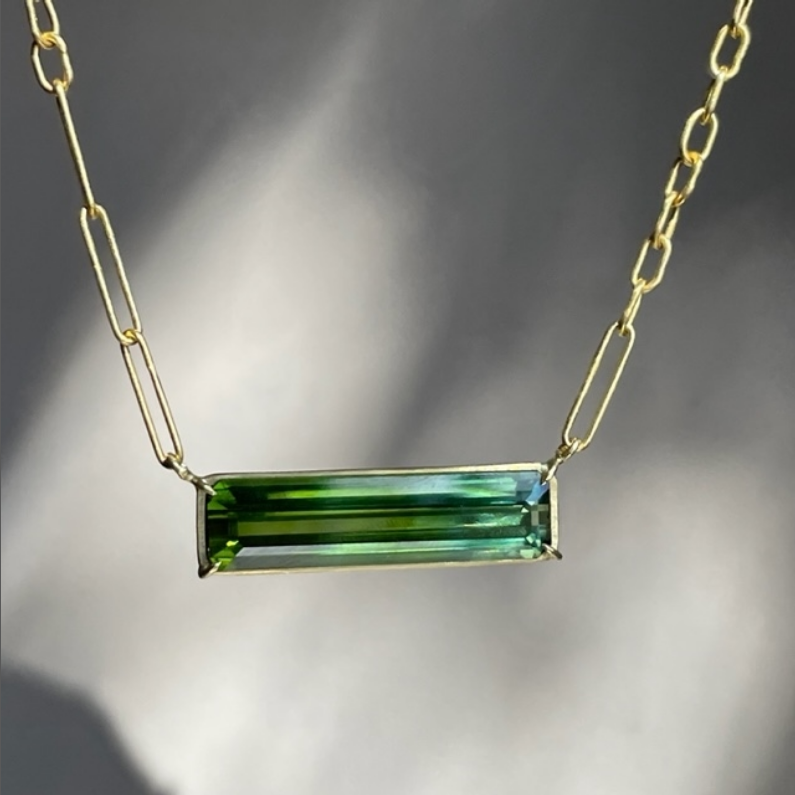
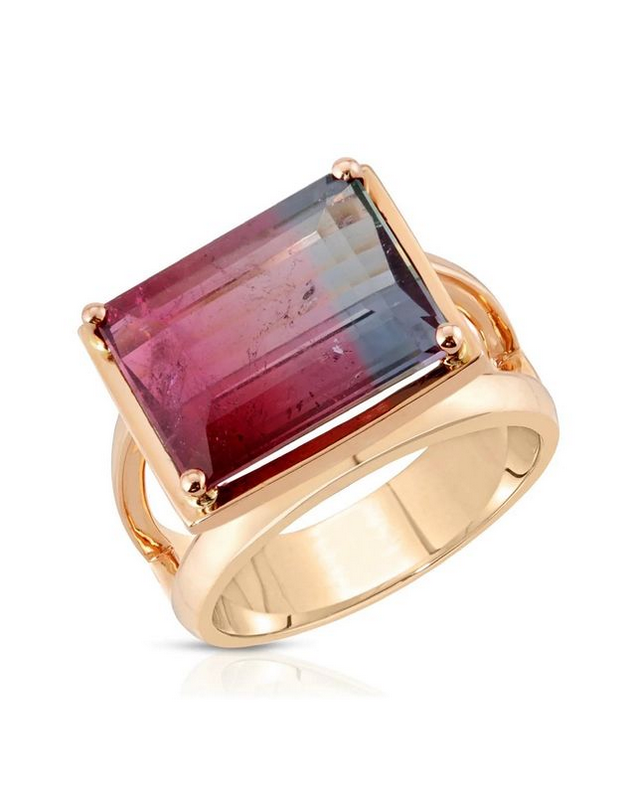
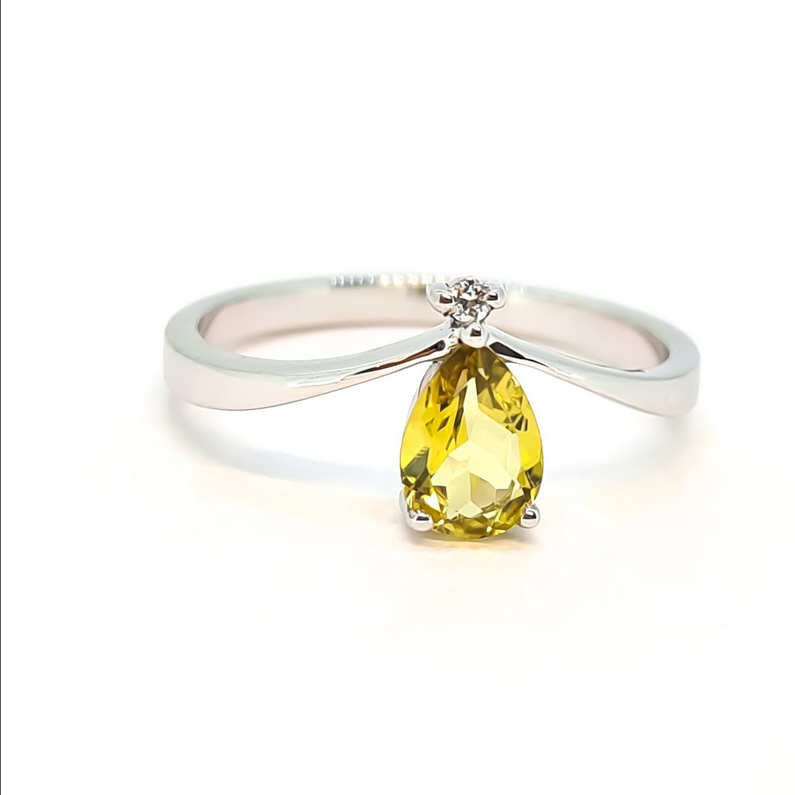
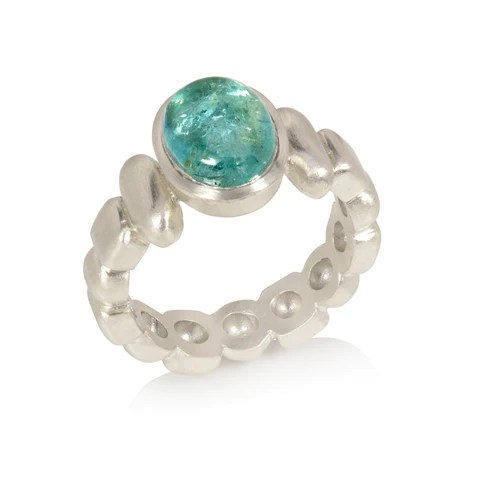
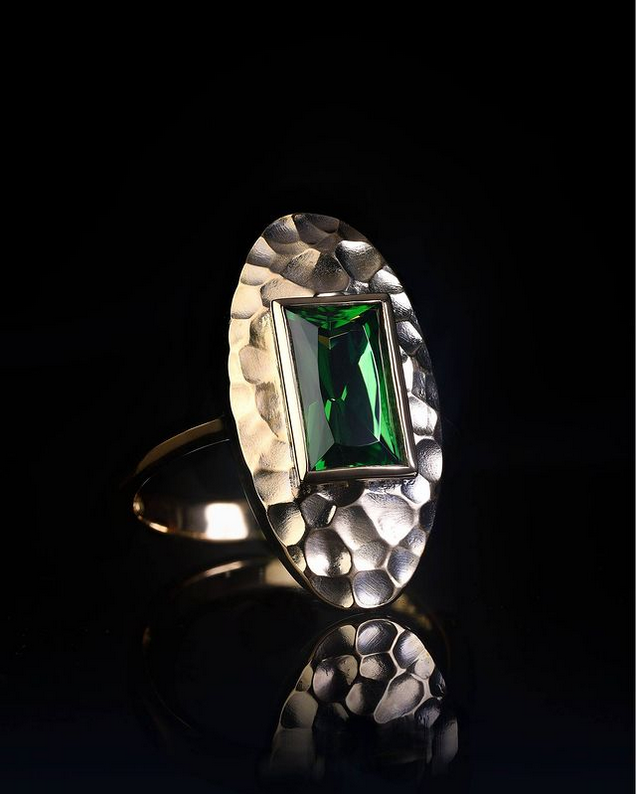
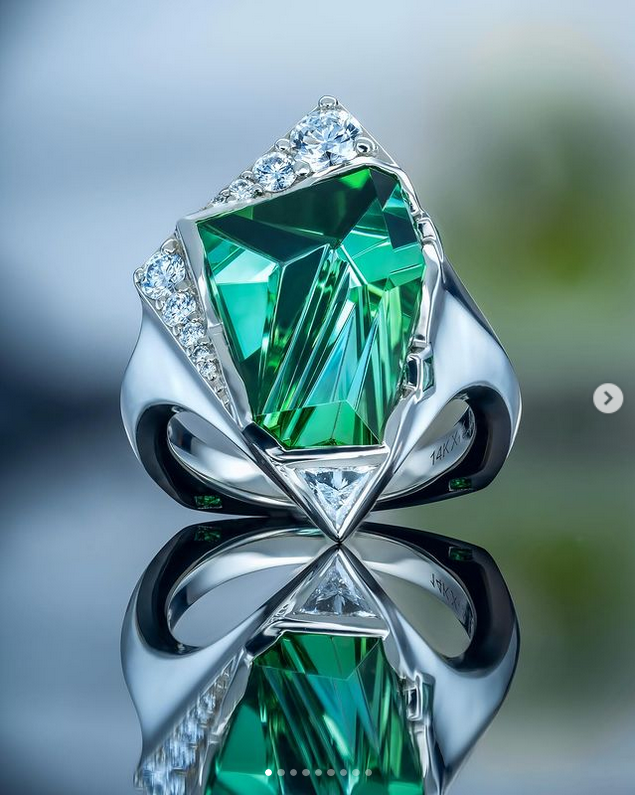
From left, clockwise, I love the heavy and sinuous lines of Cassandra Goads ‘Deux Poires’ Pink tourmaline and gold ring. The gold perfectly draws out the warm pink tones and I love the weight of it. To the right above is Luxury by Design’s green tourmaline, silver and gold ring. This is a classic long and thin tourmaline crystal and love that the band is as wide as the crystal is long – a full 12mm meaning that this is one chunky ring! And finally, I’ve written about Stone Fever Jewelry before, as I love the tactile texturing of the metal. If I had one of his rings, I’d be touching it all day long. Below right is another warm gold and tourmaline ring; this time an orange-pink trillion set in a textured band.

joopygems.com

Pretty popular pink tourmaline rose cuts

This slideshow requires JavaScript.

I can never get enough of this stuff; when I do have it, it goes fast, and when I run out I have to scrabble for more. So when I do get it, it’s always exciting. This is rose cut pink tourmaline in 3mm, 4mm and 5mm rounds. Plenty of the 3mm and 4mm, less of the 5mm so if that’s your bag, grab it! Good saturation, this is moderately included, although you know the photos make them look so much more included than they appear in life. I love my macro lens but it does rather have the effect of making the stones appear as though you are looking at them through a loupe. Tourmaline is so varied and comes in so many colours that for years, people were confused about their actual identity; indeed the name comes from the word ‘toramalli’, which in Sinahlese means ‘mixed gems’. Myth has it that its dazzling range of colours is because it travelled along a rainbow and gathered all the rainbow’s hues. It’s a nice image! You can find the rose cuts here; prices start from $3.35 for a 3mm stone up to $14 for a 5mm. To shop all tourmaline, click here.

joopygems.com

April 2016 newsletter (and what a great one it is!)

Newsletter banner 2

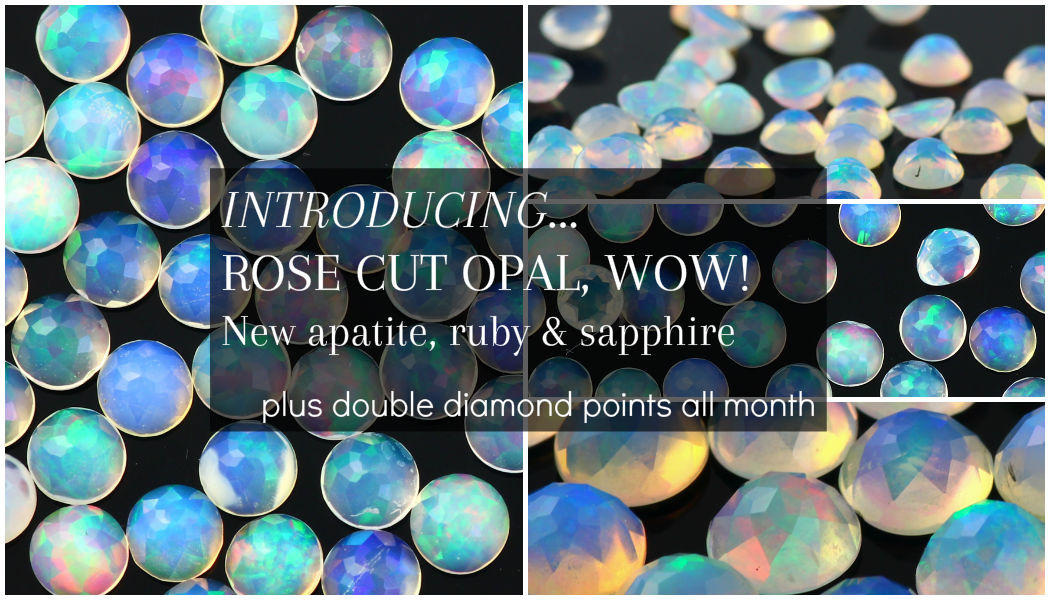
My April newsletter is out, and I have some really fantastic new stones; rose cut opal, apatite, pink tourmaline, rainbow moonstone ruby and sapphire. All desirable, beautiful and hard-to-find. Plus for those of you who are signed up to my loyalty points scheme, it’s double points all month! And for those of you who are not, why not sign up? You can earn points for introducing a friend, for liking me on Facebook, following on Instagram and Twitter…even for just having a birthday. This month it’s 2 points for every dollar spent; 400 for joining up. And at just 500 points you start to earn money off your future orders.

Click here for my newsletter; click here to open an account and sign up to my points scheme.

joopygems.com