
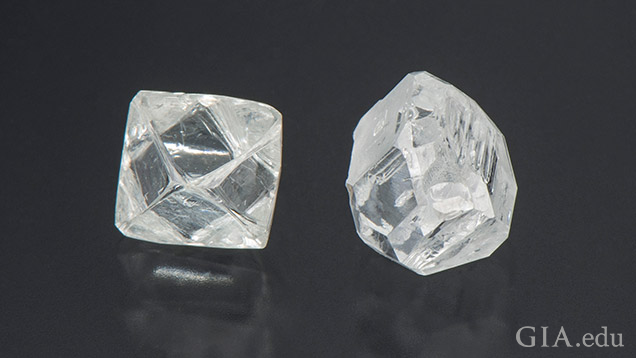
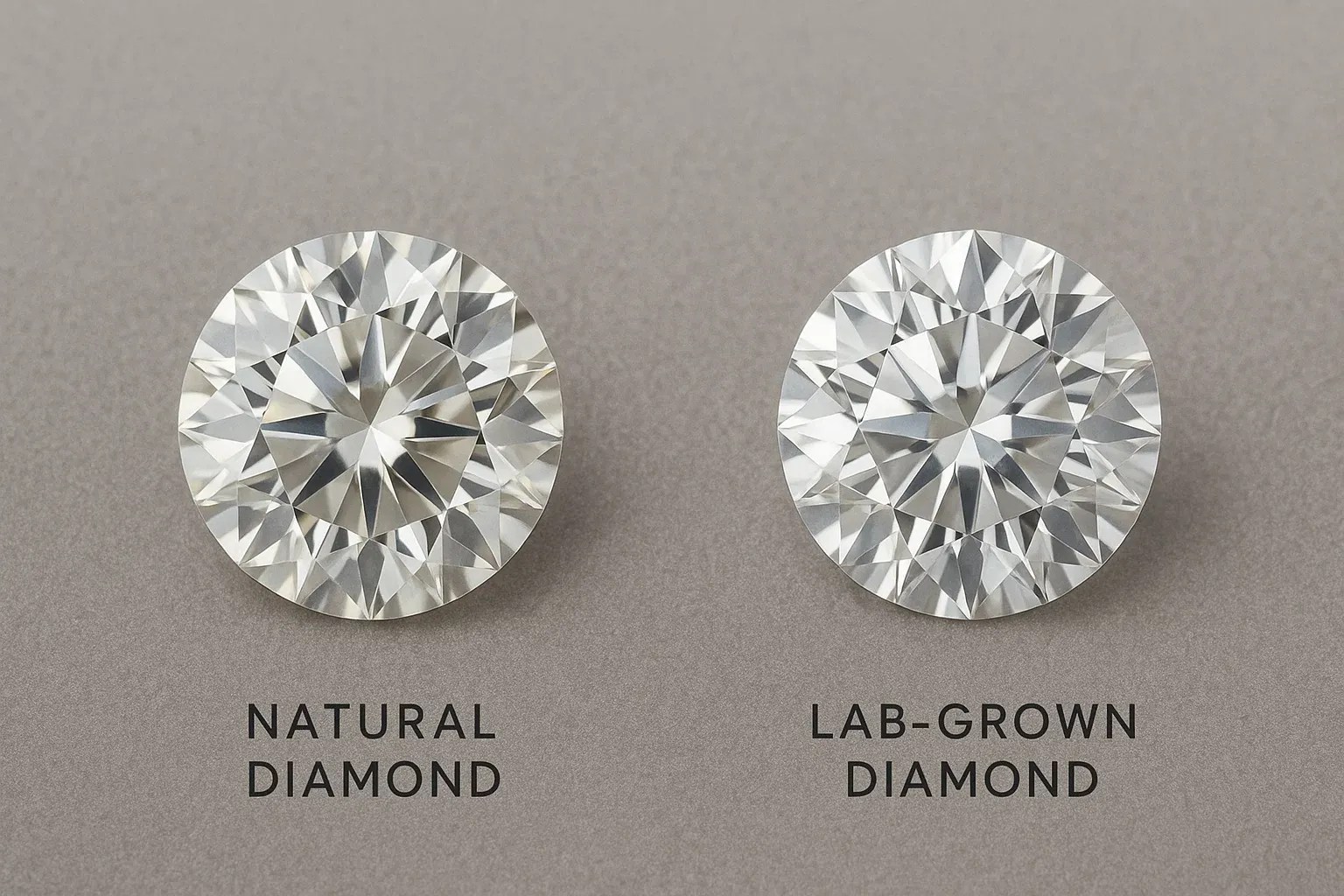
I’ve been meaning to write about this for a while: the stone that’s been making the diamond trade extremely twitchy for the last few years, and why it’s different to, say, a synthetic sapphire. First things first: a lab grown diamond isn’t a fake diamond, and it isn’t a simulant like cubic zirconia or moissanite. It’s chemically, physically and optically the same as a diamond that’s been dug out of the ground: same carbon lattice, same fire, same hardness, same everything. The difference is that instead of being cooked under the mantle for a billion-odd years, it’s grown in a lab over a few weeks. Lab grown diamonds aren’t a new phenomenon; they’ve been around for years, but it’s just in the past few with the advent of the HPHT – high pressure, high temperature – technique that they’ve really socked the life out of the natural diamond market. If you put one of these lab grown stones and a loose mined stone side by side, even a gemologist needs specialist equipment to tell them apart.
Why “disruptive” isn’t just marketing spin here
The price has fallen off a cliff, and it’s still falling (just more slowly now). A one-carat lab grown stone that would have set you back somewhere north of $3,000 per carat back in 2020 is now trading at a fraction of that — wholesale prices are down something like 90-odd percent since tracking began, and even this year they’re still sliding, just not at the terrifying pace we saw a couple of years ago. Larger stones have taken the biggest hit, because that’s where the old margins used to hide.
It’s eaten well over a third of the engagement ring market. Depending on whose numbers you believe, lab grown stones now account for somewhere between 35% and 55% of U.S. engagement rings, up from practically nothing a decade ago. That is not a niche alternative anymore; that’s mainstream. The natural diamond trade has had to respond, whether it wanted to or not. Certification bodies have had to build entirely new grading and disclosure systems just to keep the two apart on paper. Major mining houses have launched their own lab grown lines, then quietly walked them back when the economics stopped making sense. That’s what real disruption looks like: not a niche product nibbling at the edges, but one that forces the incumbents to restructure around it.
Why the price collapsed so fast
With a mined diamond, scarcity is baked into the value — every stone is a genuinely finite, one-off object that took the earth an unfathomable amount of time to make, and mining it is expensive, disruptive and slow. With a lab grown stone, scarcity simply isn’t part of the equation. It’s a manufactured product, and manufactured products behave like manufactured products: as the technology (CVD and HPHT growth methods, if you want the acronyms) got faster and cheaper, and as more growers came online, prices did what prices always do in that situation. They fell towards the cost of production, and then more or less stayed there. That’s the disruptive bit in a nutshell. You can’t disrupt a market by being a slightly cheaper version of the same scarce thing. You disrupt it by removing scarcity from the equation entirely.
Why this doesn’t apply to coloured stones in the same way
This is the bit I always want people to understand, because it’s the difference between a genuinely disruptive product and a bit of a gimmick. Lab grown diamonds are disruptive precisely because they’re identical to the real thing, atom for atom, and nobody can eyeball the difference. Lab grown coloured stones, on the other hand, very often just don’t manage that trick. A lot of synthetic sapphire, ruby and emerald on the market has a colour that’s too saturated, too even, too clean — it reads as glassy and flat rather than alive, because it’s missing the inclusions, the subtle colour zoning and the slight imperfections that give a natural stone depth. It depends a bit on the method – pulled corundum looks very fake; flux grown a bit less. But diamond doesn’t have that problem at all, because diamond is colourless (top colour, anyway) and structurally quite simple compared to something like corundum or beryl, which is exactly why growers cracked it first and cracked it so convincingly. There’s no subtle internal colour play to fail to replicate, no pleochroism to get wrong, nothing for the eye to catch out.
Where that leaves the natural diamond trade
Not obsolete, but definitely repositioned. Natural diamonds are increasingly being marketed on the one thing lab growns can’t offer: geological rarity and the story of something that’s been sitting in the ground since before there were multicellular organisms on land. That’s a real point of difference, and plenty of buyers still want it. But “it’s an investment” as a sales pitch has taken a battering, on both sides of the aisle – lab growns re-sell for a fraction of what you paid (often 20-40%), and natural stones haven’t exactly been storming ahead either. If anyone still tells you a diamond is a good investment, regardless of how it was made, I’d proceed with caution.
What this means if you’re buying, or making
If you’re after size and sparkle for the budget, lab grown is an extraordinary deal right now, genuinely — you can buy a much bigger, cleaner stone than you could have dreamed of a few years back. If you’re after rarity, heritage or resale value, mined is still where that lives, though you’re paying for the story as much as the stone. And if you’re a maker, it’s worth knowing your customer’s motivation before you steer them either way, because the two are increasingly not competing for the same emotional reasons at all — one’s about permanence and provenance, the other’s about “look how big I could go.”
Either way, it’s a genuinely fascinating stretch of gem history to be watching unfold in real time, and I don’t think it’s finished yet.
joopygems.com

