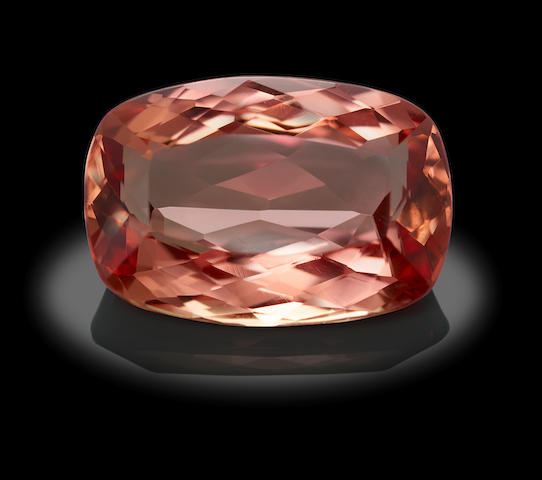
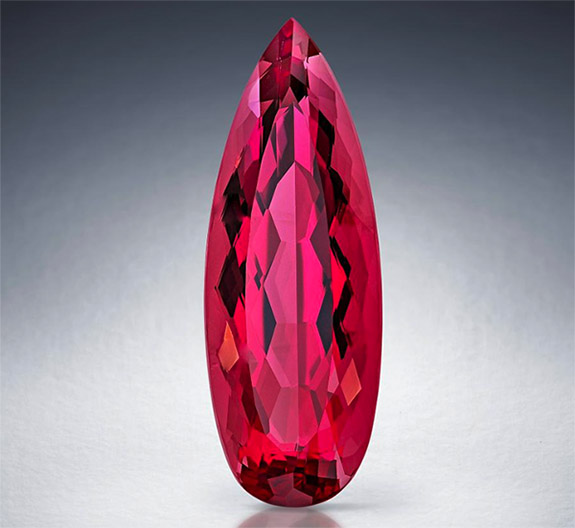
NMNH G11638
Brazil, Minas Gerais
48.86 ct
Gift of Coralyn W. Whitney in 2018.
The Whitney Flame Topaz, Smithsonian Institute
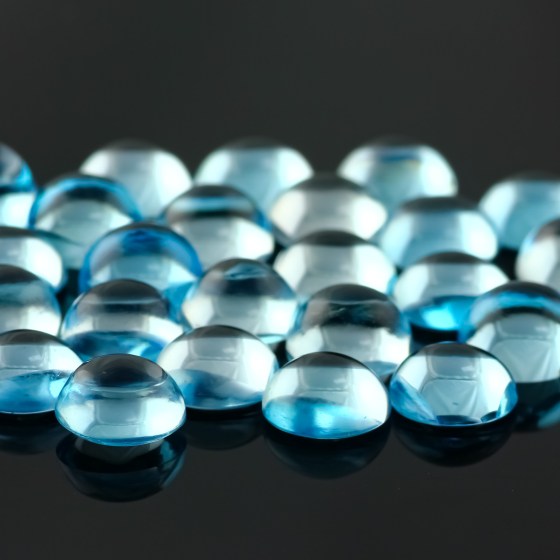
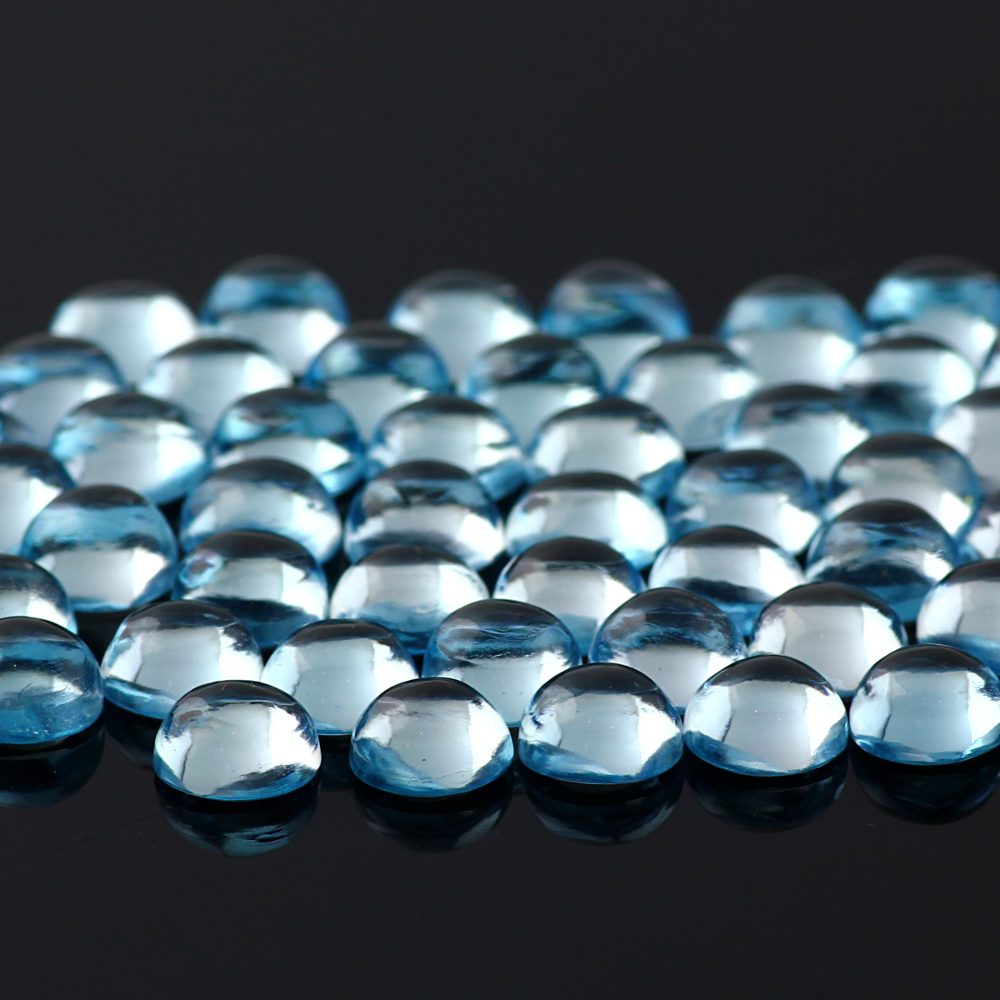
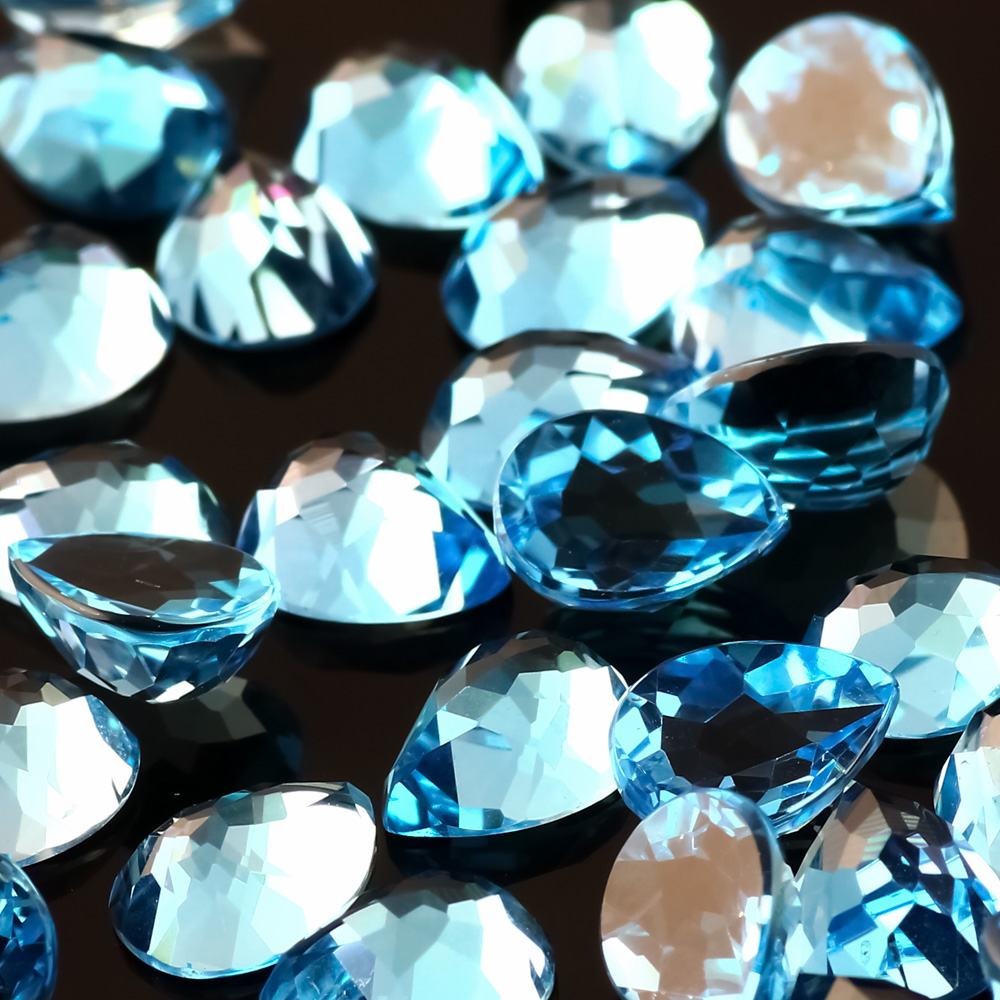
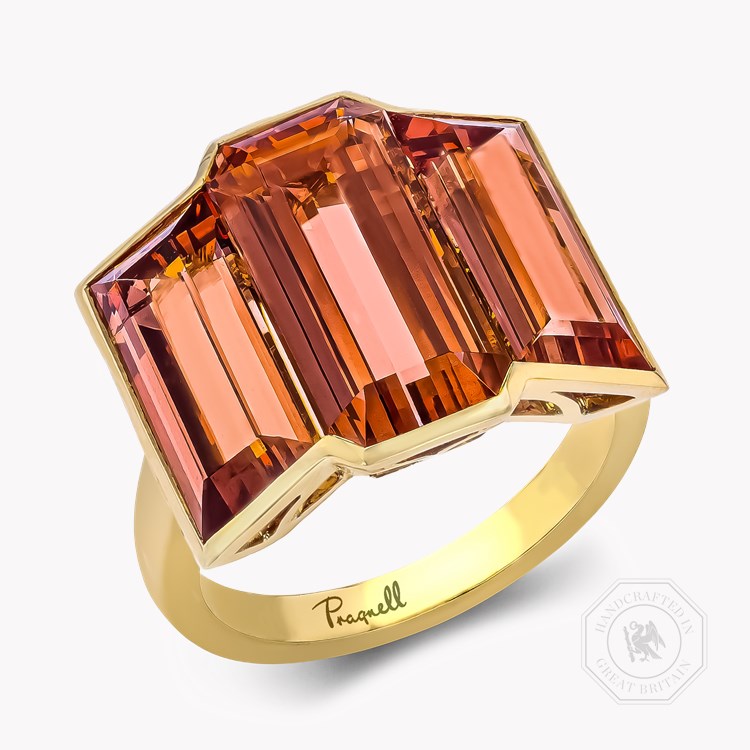
It’s November, which means topaz is having its annual moment, so I thought it was high time I wrote about my favourite member of the family. Most people picture topaz as either colourless or that very familiar blue stone running through the blues from pale to bright to sophisticated Prussian but there was a time when all yellow stones were believed to be topaz and all topaz thought to be yellow. When Sybil Fawlty said, ‘it’s all a little bit topaz’, she wasn’t talking blue. The finest of all is Imperial Topaz; one of my favourite stones and at its best its a glowing red with a flush of peachy-pink running through it, running all the way through a deep sherry colour, to peach to pink. The colour of sunset, basically. See above the absolutely gorgeous speciman sitting in the Smithsonian. Another distinctive characteristic is pleochroism – which turns even the more yellow stones deeper orange at the ends. This beautiful, contemporary ring from Pragnell demonstrates the gorgeous peachy orange shades this stone can achieve.
What makes it “imperial”?
The story goes that the name was coined in nineteenth-century Russia, where the orange-pink topaz newly discovered in the Urals was reserved for the Tsar and his family. These Russian deposits are now mined out and nowadays the finest imperial topaz comes almost entirely from the area around Ouro Preto in Minas Gerais, Brazil. The colour comes from traces of chromium, the same element that makes ruby red and emerald green. Pure topaz is colourless; it’s the impurities that give it all its character.
As usual with a name that sounds this grand, it’s worth being a little cautious as “imperial” gets stuck on anything from pale yellow or peach to deep golden orange. The most prized stones are a rich pinkish-orange, sometimes called “sherry” when they lean browner and the name is also applied to orangey stones that display any kind of reddish pleochroism. Also look out for coated or surface-treated colourless topaz sold under all sorts of sunset-inspired names; this is a very different thing and should cost a great deal less.
The lore
The word ‘topaz’ itself is a bit of a mystery. One theory takes it from Topazios, an island in the Red Sea that Pliny wrote about, shrouded in fog and apparently very hard to find. The twist is that the gem from that island was almost certainly peridot, so the ancients may have named a stone after the wrong mineral. The other theory is that it comes from the Sanskrit tapas, meaning fire, which suits imperial topaz very as it does have a fiery glow. Wherever the name came from, topaz picked up a long list of powers. It was said to calm anger, soothe the mind and keep travellers safe, and, as with so many stones, the medieval belief was that it would warn you if your wine had been poisoned.
A few things worth knowing
- It’s heavy: Topaz has a high specific gravity, around 3.5 against quartz at 2.65. So a 10mm imperial topaz weighs noticeably more in carats than a 10mm citrine, which is worth remembering when you’re comparing prices per carat.
- Hard, but not tough: Topaz is an 8 on the Mohs scale, but it also has perfect cleavage in one direction, so a sharp knock at the wrong angle can split it. Bezels and protective settings are really well suited to this stone
- Pink topaz is usually heated. Natural pink topaz is properly rare. Much of what’s on the market started life as a yellowish-brown stone and was heated to bring out the pink, which is standard practice but ought to be disclosed
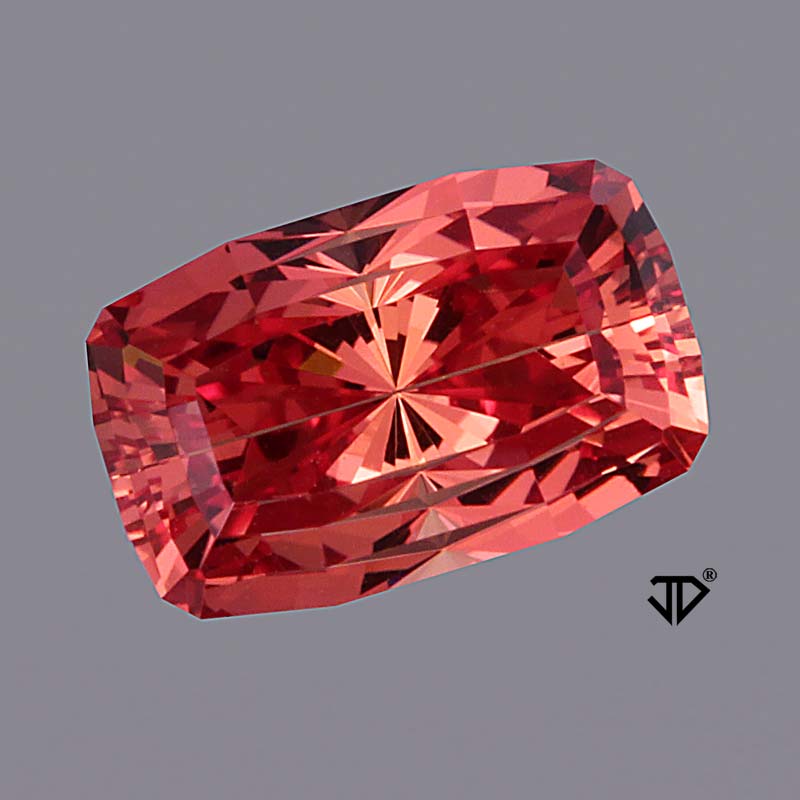
If you haven’t checked out John Dyer gemstones, I suggest you take a look. The most unbelievable cutting; it’s practically witchcraft with light.
Design notes
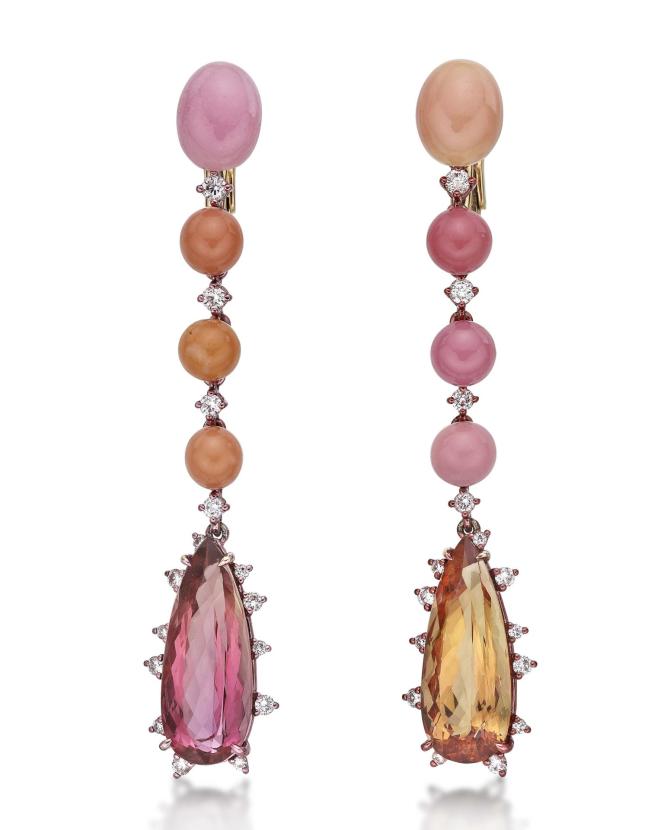
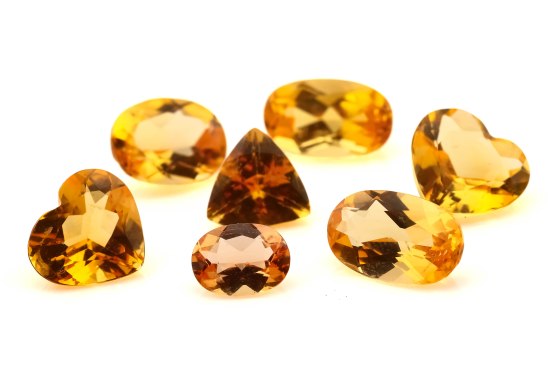
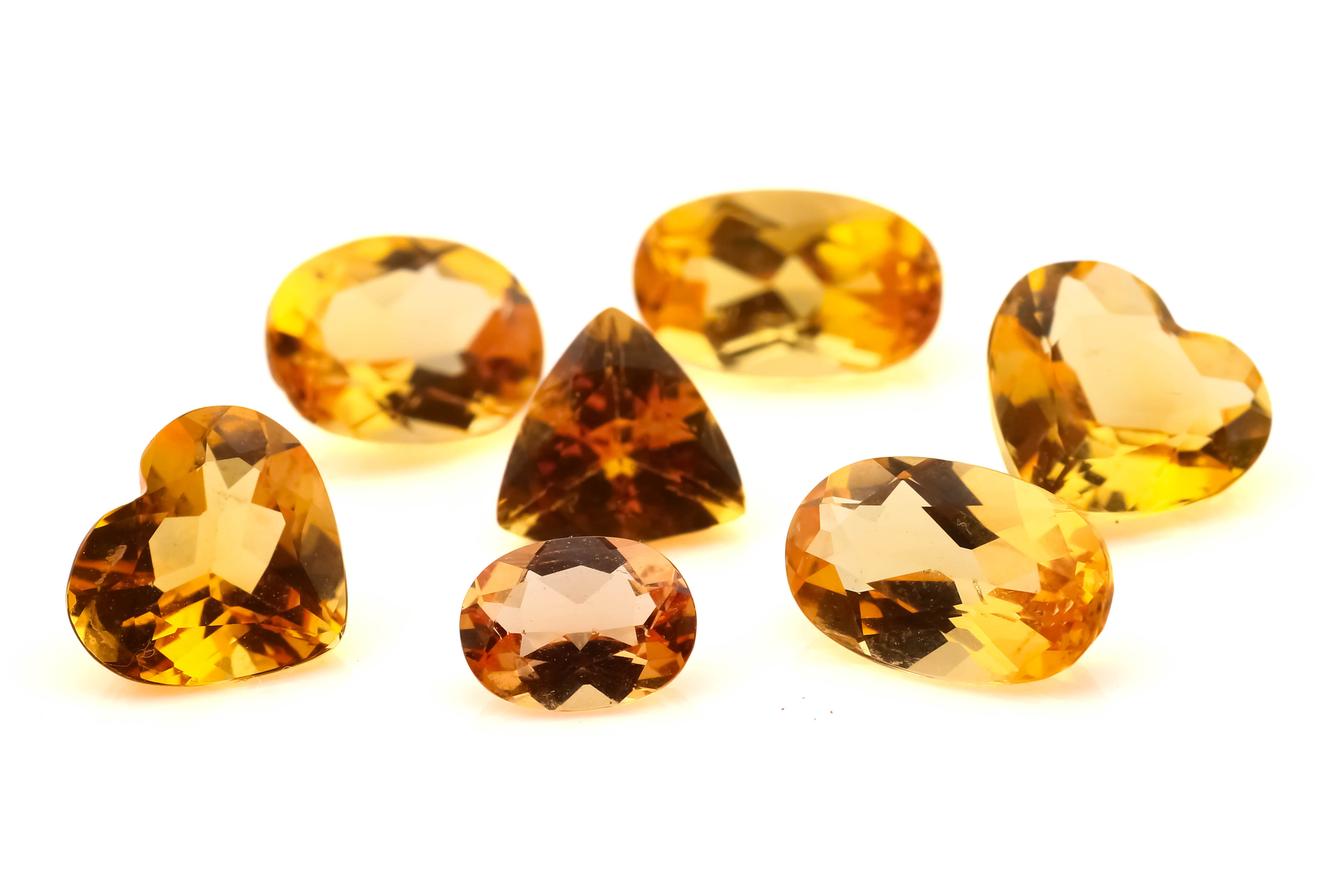
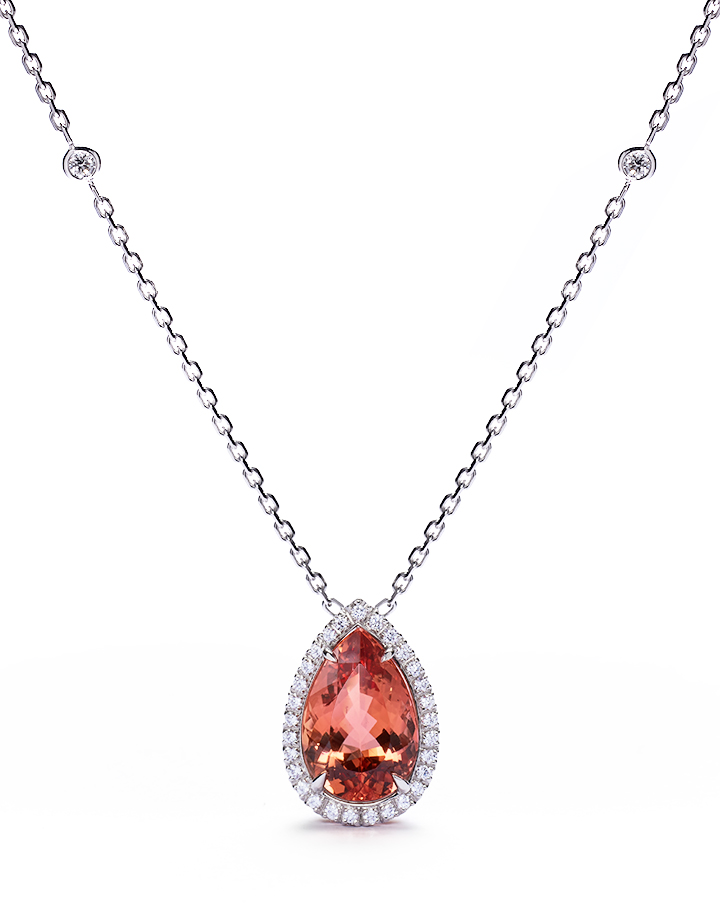
Imperial topaz loves warmth. Yellow and rose gold both make it glow, and I think rose gold in particular brings out the pink in the stone and makes it look almost lit from within White metals will give it a cleaner, more contemporary finish.. I’d love to hear if you’ve worked with imperial topaz, or whether you’re a November baby who’s be assumed that your birthstone is so often just “the lairy blue one”. You can browse my topaz here: I’ve just listed some lovely yellow stones, and the price of these is really keen, so do check them out.
joopygems.com